
Visit to Iceland
CHAPTER VIThe weather soon cleared up, and I continued my journey to the Geyser and to Mount Hecla on the 24th June. On the first day, when we rode to Thingvalla, we passed no new scenery, but saw instead an extremely beautiful atmospheric phenomenon.
As we approached the lake, some thin mist-clouds lowered over it and over the earth, so that it seemed as if it would rain. One portion ofthe firmament glowed with the brightest blue; while the other part was obscured by thick clouds, through which the sun was just breaking. Some of its rays reached the clouds of mist, and illuminated them in a wonderfully beautiful manner. The most delicate shades of colour seemed breathed, as it were, over them like a dissolving rainbow, whose glowing colours were intermingled and yet singly perceptible. This play of colours continued for half an hour, then faded gradually till it vanished entirely, and the ordinary atmosphere took its place. It wasone of the most beautiful appearances I had ever witnessed. June 25th. The roads separate about a mile behind the little town of Thingvalla; the one to the left goes to Reikholt, the right-hand one leads to the Geyser. We rode for some time along the shores of the lake, and foundat the end of the valley an awful chasm in the rock, similar to the one of Almanagiau, which we had passed on such a wretched road. The contiguous valley bore a great resemblance to that of Thingvalla; but the third one was again fearful. Lava covered it, and was quite overgrown with that whitish moss, which has a beautiful appearance when it only covers a portion of the lava, and when black masses rise above it, butwhich here presented a most monotonous aspect. We also passed two grottoes which opened at our feet. At the entrance of one stood a pillar of rock supporting an immense slab of lava, which formed an awe-inspiring portal. I had unfortunately not known of the existence of these caves, and was consequently unprepared to visit them. Torches, at least, would have been requisite. But I subsequently heard that they were not at all deep, and contained nothing ofinterest. In the course of the day we passed through valleys such as I had seen nowhere else in Iceland. Beautiful meadow-lawns, perfectly level, covered the country for miles. These rich valleys were, of course, tolerably well populated; we frequently passed three or four contiguous cottages, and saw horses, cows, and sheep grazing on these fields in considerable numbers. The mountains which bounded these valleys on the left seemed to me very remarkable; they were partly brown, black, or dark blue, like the others; but the bulk of which they were composed I considered to be fine loam-soil layers, if I may trust my imperfect mineralogical knowledge. Some of these mountains were topped by large isolated lava rocks, real giants; and it seemed inexplicable to me how they could stand on the soft soil beneath. In one of these valleys we passed a considerable lake, on and around which rose circling clouds of steam proceeding from hot springs, but of no great size. But after we had already travelled about twenty-five miles, we came to the most remarkable object I had ever met with; this was a river with a most peculiar bed. This river-bed is broad and somewhat steep; it consists of lava strata, and is divided lengthwise in the middle by a cleft eighteen to twenty feet deep, and fifteen to eighteen feet broad, towards which the bubbling and surging waters rush, so that the sound is heard at some distance. A little wooden bridge, which stands in the middle of the stream, and over which the high waves constantly play, leads over the chasm. Any one not aware of the fact can hardly explain this appearance to himself, nor understand the noise and surging of the stream. The little bridge in the centre would be taken for the ruins of a fallen bridge, and the chasm is not seen from the shore, because the foaming waves overtop it. An indescribable fear would seize upon the traveller when he beheld the venturous guide ride into the stream, and was obliged to follow without pity or mercy. The priest of Thingvalla had prepared me for the scene, and had advised me to walkover the bridge; but as the water at this season stood sohigh that the waves from both sides dashed two feet above the bridge, I could not descend from my horse, and was obliged to ride across. The whole passage through the stream is so peculiar, that it must be seen, and can scarcely be described. The water gushes and plays on all sides with fearful force; it rushes into the chasm with impetuous violence, forms waterfalls on both sides, and breaks itself on the projecting rocks. Not far from the bridge the cleft terminates; and the whole breadth of the waters falls over rocks thirty to forty feet high. The nearer we approached the centre, the deeper, more violent, and impetuous grew the stream, and the more deafening was the noise. The horses became restless and shy; and when we came to the bridge, they began to tremble, they reared, they turned to all sides but the right one, and refused to obey the bridle. With infinite trouble we at last succeeded in bringing them across this dangerous place. The valley which is traversed by this peculiar river is narrow, and quite enclosed by lava mountains and hills; the inanimate, silent nature around is perfectly adapted to imprint this scene for ever on the traveller’s memory. This remarkable stream had been the last difficulty; and now we proceeded quietly and safely through the beautiful valleys till we approached the Geyser, which a projecting hillock enviously concealed from my anxiously curious gaze. At last this hillock was passed; and I sawthe Geyser with its surrounding scenery, with its immense steam pillars, and the clouds and cloudlets rising from it. The hill was about two miles distant from the Geyser and the other hot springs. There they were, boiling and bubbling all around, and through the midst lay the road to the basin. Eighty paces from it we halted. And now I stood before the chief object of my journey; I saw it, it was so near me, and yet I did not venture to approach it. But a peasant who had followed us from one of the neighbouring cottages, and had probablyguessed my anxiety and my fear, took me by the hand and constituted himselfmy cicerone. He had unfortunately, it being Sunday, paid too great a devotion to the brandy-bottle, so that he staggered rather than walked, andI hesitated to trust myself to the guidance of this man, not knowing whether he had reason enough left to distinguish how far we might with safety venture. My guide, who had accompanied me from Reikjavik, assured me indeed that I might trust him in spite of his intoxication, and that he would himself go with us to translate the peasant’s Icelandicjargon into Danish; but nevertheless I followed with great trepidation. He led me to the margin of the basin of the great Geyser, which lies on the top of a gentle elevation of about ten feet, and contains the outer andthe inner basins. The diameter of the outer basin may be about thirtyfeet; that of the inner one six to seven feet. Both were filled to the brim, the water was pure as crystal, but boiled and bubbled only slightly. We soon left this spot; for when the basins are quite filled with water it is very dangerous to approach them, as they may empty themselves any moment by an eruption. We therefore went to inspect the other springs. My unsteady guide pointed those out which we might unhesitatingly approach, and warned me from the others. Then we returned to the great Geyser, where he gave me some precautionary rules, in case of an intervening eruption, and then left me to prepare some accommodation for mystay. I will briefly enumerate the rules he gave me. “The pillar of water always rises perpendicularly, and the overflowing water has its chief outlets on one and the same side. Thewater does indeed escape on the other side, but only in inconsiderable quantities, and in shapeless little ducts, which one may easily evade. On this side one may therefore approach within forty paces even during the most violent eruptions. The eruption announces itselfby a dull roaring; and as soon as this is heard, the traveller must hastilyretire to the above-named distance, as the eruption always follows very quickly after the noise. The water, however, does not rise high everytime, often only very inconsiderably, so that, to see a very fine explosion, it is often necessary to stay some days here.” The French scholar, M. P. Geimard, has provided for the accommodation oftravellers with a truly noble disinterestedness. He traversed the whole of Iceland some years ago and left two large tents behind him; one here, and the other in Thingvalla. The one here is particularly appropriate, as travellers are frequently obliged, as stated above, to waitseveral days for a fine eruption. Every traveller certainly owes M. Geimard the warmest thanks for this convenience. A peasant, the same who guides travellers to the springs, has the charge of it, and is bound topitch it for any one for a fee of one or two florins. When my tent was ready it was nearly eleven o’clock. My companions retired, and I remained alone. It is usual to watch through the night in order not to miss an eruption. Now, although an alternate watching is no very arduous matter for several travellers, it became a very hard task for me alone, andan Icelandic peasant cannot be trusted; an eruption of Mount Hecla would scarcely arouse him. I sat sometimes before and sometimes in my tent, and listened with anxious expectation for the coming events; at last, after midnight—the witching hour—I heard some hollow sounds, as if a cannon were being fired at a great distance, and its echoing sounds were borne by the breeze. I rushed from my tent and expected subterranean noises, violent cracking and trembling of the earth, according to the descriptions I had read. I could scarcely repress a slight sensation of fear. To be alone at midnight in such a scene is certainly no joke. Many of my friends may remember my telling them, before my departure, that I expected I should need the most courage on my Icelandic journey during the nights at the Geyser. These hollow sounds were repeated, at very short intervals, thirteen times; and each time the basin overflowed and ejected a considerable quantity of water. The sounds did not seem to proceed from subterranean ragings, but from the violent agitation of the waters. In a minute and a half all was over; the water no longer overflowed, the caldron and basin remained filled, and I returned to my tent disappointed in every way. This phenomenon was repeated every two hours and a half, or, at the latest, every three hours and a half. I saw and heard nothing else all night, the next day, or the second night. I waited in vain for an eruption. When I had accustomed myself to these temporary effusions of my neighbour, I either indulged in a gentle slumber in the intermediate time, or I visited the other springs and explored. I wished to discover theboiling vapour and the coloured springs which many travellers assert they have seen here. All the hot-springs are united with a circumference of 800 to 900 paces:several of them are very remarkable, but the majority insignificant. They are situated in the angle of an immense valley at the foot of a hill, behind which extends a chain of mountains. The valley is entirely covered with grass, and the vegetation only decreases a little in the immediate vicinity of the springs. Cottages are built every wherein the neighbourhood; the nearest to the springs are only about 700 to 800 paces distant. I counted twelve large basins with boiling and gushing springs; of smaller ones there were many more. Among the gushing springs the Strokker is the most remarkable. It boils and bubbles with most extraordinary violence at a depth of about twenty feet, shoots up suddenly, and projects its waters into the air. Its eruptions sometimes last half an hour, and the column occasionally ascends to a height of forty feet. I witnessed several of its eruptions; but unfortunately not one of the largest. The highest I saw could not have been above thirty feet, and did not last more than a quarter of an hour. The Strokker is the only spring, except the Geyser, which has to be approached with great caution. The eruptions sometimes succeed each other quickly, and sometimes cease for a few hours, and are not preceded by any sign. Another spring spouts constantly, but never higher than three to four feet. A third one lies about four or five feet deep, in a rather broad basin, and produces only a few little bubbles. But this calmness is deceptive: it seldom lasts more than half a minute, rarely two or three minutes; then the springbegins to bubble, to boil, and to wave and spout to a height of two or three feet; without, however, reaching the level of the basin. In some springs I heard boiling and foaming like a gentle bellowing; but saw no water, sometimes not even steam, rising. Two of the most remarkable springs which can perhaps be found in the world are situated immediately above the Geyser, in two openings, which areseparated by a wall of rock scarcely a foot wide. This partition doesnot rise above the surface of the soil, but descends into the earth; the water boils slowly, and has an equable, moderate discharge. The beauty of these springs consists in their remarkable transparency. All the varied forms and caves, the projecting peaks, and edges of rock, are visible far down, until the eye is lost in the depths of darkness. But the greatest beauty of the spring is the splendid colouring proceeding from the rock; it is of the tenderest, most transparent, pale blue and green, and resembles the reflection of a Bengal flame. But what is most strange is, that this play of colour proceedsfrom the rock, and only extends eight to ten inches from it, while the other water is colourless as common water, only more transparent, and purer. I could not believe it at first, and thought it must be occasioned by the sun; I therefore visited the springs at different times, sometimes whenthe sun shone brightly, sometimes when it was obscured by clouds, once evenafter its setting; but the colouring always remained the same. One may fearlessly approach the brink of these springs. The platform which projects directly from them, and under which one can see in all directions, is indeed only a thin ledge of rock, but strong enough to prevent any accident. The beauty consists, as I have said, in the magical illumination, and in the transparency, by which all the caves and grottoes to the greatest depths become visible to the eye. Involuntarily I thought of Schiller’s Diver. [40] I seemed to see the goblet hang on the peaks and jags of the rock; I could fancy I saw the monsters rise from the bottom. It must be a peculiar pleasure to read this splendid poem in such an appropriate spot. I found scarcely any basins of Brodem or coloured waters. The onlyone of the kind which I saw was a small basin, in which a brownish-red substance, rather denser than water, was boiling. Another smaller spring, with dirty brown water, I should have quite overlooked, if I had not so industriously searched for these curiosities. At last, after long waiting, on the second day of my stay, on the 27th June, at half-past eight in the morning, I was destined to see an eruption of the Geyser in its greatest perfection. The peasant, who came dailyin the morning and in the evening to inquire whether I had already seen an eruption, was with me when the hollow sounds which precede it were again heard. We hastened out, and I again despaired of seeing any thing; the water only overflowed as usual, and the sound was already ceasing. But all at once, when the last sounds had scarcely died away, the explosion began. Words fail me when I try to describe it: such a magnificent and overpowering sight can only be seen once in a lifetime. All my expectations and suppositions were far surpassed. The waterspouted upwards with indescribable force and bulk; one pillar rose higher than the other; each seemed to emulate the other. When I had in some measure recovered from the surprise, and regained composure, I looked at the tent. How little, how dwarfish it seemed as compared to the height of these pillars of water! And yet it was about twenty feet high. It did, indeed, lie ten feet lower than the basin of the Geyser; but if tent had been raised above tent, these ten feet could only be deducted once, and I calculated, though my calculation may not be correct, that one would need to pile up five or six tents to have the height of one of the pillars. Without exaggeration, I think the largest spout rose above one hundred feet high, and was three to four feet in diameter. Fortunately I had looked at my watch at the beginning of the hollow sounds, the forerunners of the eruption, for during its continuance I should probably have forgotten to do so. The whole lasted four minutes, of which the greater half must have been taken up by the eruption itself. When this wonderful scene was over, the peasant accompanied me to the basin. We could now approach it and the boiler without danger, and examine both at leisure. There was now nothing to fear; the water hadentirely disappeared from the outer basin. We entered it and approached the inner basin, in which the water had sunk seven or eight feet, where it boiled and bubbled fiercely. With a hammer I broke some crust out of the outer as well as out of the inner basin; the former was white, the latter brown. I also tasted the water; it had not an unpleasant taste, and can only contain an inconsiderable proportion of sulphur, as the steam does not even smell of it. I went to the basin of the Geyser every half hour to observe how much time was required to fill it again. After an hour I could still descend into the outer basin; but half an hour later the inner basin was already full, and commenced to overflow. As long as the water only filled the inner basin it boiled violently; but the higher it rose in the outer one, the less it boiled, and nearly ceased when the basin was filled:it only threw little bubbles here and there. After a lapse of two hours—it was just noon—the basin was filled nearly to the brim; and while I stood beside it the water began again to bubble violently, and to emit the hollow sounds. I had scarcely time to retreat, for the pillars of water rose immediately. This time they spouted during the noise, and were more bulky than those of the first explosion, which might proceed from their not rising so high, andtherefore remaining more compact. Their height may have been from forty to fifty feet. The basins this time remained nearly as full after the eruption as before. I had now seen two eruptions of the Geyser, and felt amply compensated for my persevering patience and watchfulness. But I was destined to be more fortunate, and to experience its explosions in all their variety. The spring spouted again at seven o’clock in the evening, ascended higher than at noon, and brought up some stones, which looked like black spots and points in the white frothy water-column. And during the third night it presented itself under another phase: the water rose in dreadful, quickly-succeeding waves, without throwing rays; the basin overflowed violently, and generated such a mass of steam as is rarely seen. The wind accidentally blew it to the spot where I stood,and it enveloped me so closely that I could scarcely see a few feet off. But I perceived neither smell nor oppression, merely a slight degree of warmth. June 28th. As I had now seen the Geyser play so often and so beautifully, I orderedmy horses for nine o’clock this morning, to continue my journey. I made the more haste to leave, as a Dutch prince was expected, who had lately arrived at Reikjavik, with a large retinue, in a splendid man-of-war. I had the luck to see another eruption before my departure at half-past eight o’clock; and this one was nearly as beautiful as the first. This time also the outer basin was entirely emptied, and the inner one to a depth of six or seven feet. I could therefore again descend into the basin, and bid farewell to the Geyser at the very brink ofthe crater, which, of course, I did. I had now been three nights and two days in the immediate vicinity of the Geyser, and had witnessed five eruptions, of which two were of the mostconsiderable that had ever been known. But I can assure my readers that I did not find every thing as I had anticipated it according to the descriptions and accounts I had read. I never heard a greater noise than I have mentioned, and never felt any trembling of the earth, although I paid the greatest attention to every little circumstance, and held my head to the ground during an eruption. It is singular how many people repeat every thing they hear from others—how some, with an over-excited imagination, seem to see, hear,and feel things which do not exist; and how others, again, tell the most unblushing falsehoods. I met an example of this in Reikjavik, in the house of the apothecary Möller, in the person of an officer of a French frigate, who asserted that he had “ridden to the very edge of the crater of Mount Vesuvius.” He probably did not anticipate meeting any one in Reikjavik who had also been to the crater of Vesuvius. Nothing irritates me so much as such falsehoods and boastings; and I could not therefore resist asking him how he had managed that feat. I told him that I had been there, and feared danger as little as he could do; but that I had been compelled to descend from my donkey near the top of the mountain, and let my feet carry me the remainderof the journey. He seemed rather embarrassed, and pretended he had meant to say nearlyto the crater; but I feel convinced he will tellthis story so often that he will at last believe it himself. I hope I do not weary my readers by dwelling so long on the subject of the Geyser. I will now vary the subject by relating a few circumstances that came under my notice, which, though trifling in themselves, were yet very significant. The most unimportant facts of an almost unknown country are often interesting, and are often most conclusive evidences of the general character of the nation. I have already spoken of my intoxicated guide. It is yet inexplicable to me how he could have conducted me so safely in such a semi-conscious state; and had he not been the only one, I should certainly not have trusted myself to his guidance. Of the want of cleanliness of the Icelanders, no one who has not witnessed it can have any idea; and if I attempted to describe some of their nauseous habits, I might fill volumes. They seem to have no feeling of propriety, and I must, in this respect, rank them as far inferior to the Bedouins and Arabs—even to the Greenlanders. I can, therefore, not conceive how this nation could once have been distinguished for wealth, bravery, and civilisation. On this day I proceeded on my journey about twenty-eight miles farther to Skalholt. For the first five miles we retraced our former road; then we turned to the left and traversed the beautiful long valley in which the Geyser is situated. For many miles we could see its clouds of steam rising to the sky. The roads were tolerable only when they passed along the sides of hills and mountains; in the plains they were generally marshy and full of water. We sometimes lost all traces of a road, and only pushed on towards the quarter in which the place of our destination was situated; and feared withal to sink at every pace into the soft and unresisting soil. I found the indolence of the Icelandic peasants quite unpardonable. All the valleys through which we passed were large morasses richly overgrown with grass. If the single parishes would unite to dig trenches and drain the soil, they would have the finest meadows. This is proved near the many precipices where the water has an outlet; in these spots the grass grows most luxuriantly, and daisies andherbs flourish there, and even wild clover. A few cottages are generally congregated on these oases. Before arriving at the village of Thorfastädir, we already perceived Hecla surrounded by the beautiful jokuls. I arrived at Thorfastädir while a funeral was going on. As I entered the church the mourners were busily seeking courage and consolationin the brandy-bottle. The law commands, indeed, that this be not donein the church; but if every one obeyed the law, what need would there be ofjudges? The Icelanders must think so, else they would discontinue theunseemly practice. When the priest came, a psalm or a prayer—I could not tell which it was, being Icelandic—was so earnestly shouted by peasants under the leadership of the priest and elders, that the good people waxed quite warm and out of breath. Then the priest placed himself before the coffin, which, for want of room, had been laid on the backs of the seats, and with a very loud voice read a prayer which lasted more than half an hour. With this the ceremony within the church was concluded, and thecoffin was carried round the church to the grave, followed by the priest and the rest of the company. This grave was deeper than any I had ever seen. When the coffin had been lowered, the priest threw three handfuls of earth upon it, but none of the mourners followed his example. Among the earth which had been dug out of the grave I noticed four skulls, several human bones, and a board of a former coffin. These were all thrown in again upon the coffin, and the gravefilled in presence of the priest and the people. One man trod the soil firm, then a little mound was made and covered with grass-plots which were lying ready. The whole business was completed with miraculous speed. The little town of Skalholt, my station this night, was once as celebrated in religious matters as Thingvalla had been politically famous. Here, soon after the introduction of Christianity, the first bishopric was founded in 1098, and the church is said to have been one of the largest and richest. Now Skalholt is a miserable place, and consists of three or four cottages, and a wretched wooden church, which mayperhaps contain a hundred persons; it has not even its own priest, but belongs to Thorfastädir. My first business on arriving was to inspect the yet remaining relics ofpast ages. First I was shewn an oil-picture which hangs in the church, and is said to represent the first bishop of Skalholt, Thorlakur, who was worshipped almost as a saint for his strict and pious life. After this, preparations were made to clear away the steps of the altar and several boards of the flooring. I stood expectantly looking on, thinking that I should now have to descend into a vault to inspect the embalmed body of the bishop. I must confess this prospect was not themost agreeable, when I thought of the approaching night which I should haveto spend in this church, perhaps immediately over the grave of the old skeleton. I had besides already had too much to do with the dead for one day, and could not rid myself of the unpleasant grave-odour which I hadimbibed in Thorfastädir, and which seemed to cling to my dress and my nose. [41] I was therefore not a little pleased when, instead of the dreaded vault and mummy, I was only shewn a marble slab, on which were inscribed the usual notifications of the birth, death, &c. of this great bishop. Besides this, I saw an old embroidered stole and a simple golden chalice, both of which are said to be relics of the ageof Thorlakar. Then we ascended into the so-called store-room, which is only separated from the lower portion of the church by a few boards, and which extends to the altar. Here are kept the bells and the organ, if the church possesses one, the provisions, and a variety of tools. They opened animmense chest for me there, which seemed to contain only large pieces of tallow made in the form of cheeses; but under this tallow I found the library, where I discovered an interesting treasure. This was, besides several very old books in the Icelandic tongue, three thick folio volumes, which I could read very easily; they were German, and contained Luther’s doctrines, letters, epistles, &c. I had now seen all there was to be seen, and began to satisfy my physical wants by calling for some hot water to make coffee, &c. As usual, all the inhabitants of the place ranged themselves in and before the church, probably to increase their knowledge of the human race by studying my peculiarities. I soon, however, closed the door, and prepared a splendid couch for myself. At my first entrance into the church, I had noticed a long box, quite filled with sheep’s wool. I threw my rugs over this, and slept as comfortably as in the softest bed. In the morning I carefully teased the wool up again, andno one could then have imagined where I had passed the night. Nothing amused me more, when I had lodgings of this description, than the curiosity of the people, who would rush in every morning, as soon as I opened the door. The first thing they said to each other was always, “Krar hefur hun sovid” (Where can she have slept?). The good people could not conceive how it was possible to spend a night alonein a church surrounded by a churchyard; they perhaps considered me an evil spirit or a witch, and would too gladly have ascertained how such a creature slept. When I saw their disappointed faces, I had to turn away not to laugh at them. June 29th. Early the next morning I continued my journey. Not far from Skalholt we came to the river Thiorsa, which is deep and rapid. We crossed in a boat; but the horses had to swim after us. It is often very troublesome to make the horses enter these streams; they see at once that they will have to swim. The guide and boatmen cannot leave the shore till the horses have been forced into the stream; and even then they have to throw stones, to threaten them with the whip, and to frighten them by shouts and cries, to prevent them from returning. When we had made nearly twelve miles on marshy roads, we came to the beautiful waterfall of the Huitha. This fall is not so remarkable forits height, which is scarcely more than fifteen to twenty feet, as for its breadth, and for its quantity of water. Some beautiful rocks are so placed at the ledge of the fall, that they divide it into three parts; but it unites again immediately beneath them. The bed of the river, as well as its shores, is of lava. The colour of the water is also a remarkable feature in this river; it inclines so much to milky white, that, when the sun shines on it, it requires no very strong imaginative power to take the whole for milk. Nearly a mile above the fall we had to cross the Huitha, one of the largest rivers in Iceland. Thence the road lies through meadows, which are less marshy than the former ones, till it comes to a broad streamof lava, which announces the vicinity of the fearful volcano of Hecla. I had hitherto not passed over such an expanse of country in Iceland as that from the Geyser to this place without coming upon streams of lava. And this lava-stream seemed to have felt some pity for the beautiful meadows, for it frequently separated into two branches, and thus enclosed the verdant plain. But it could not withstand the violence of the succeeding masses; it had been carried on, and had spread death and destruction everywhere. The road to it, through plains covered with dark sand, and over steep hills intervening, was very fatiguing and laborious. We proceeded to the little village of Struvellir, where we stopped to give our horses a few hours’ rest. Here we found a large assembly of men and animals. [42] It happened to be Sunday, and a warm sunny day, and so a very full service was held in the pretty little church. When it was over, I witnessed an amusing rural scene. The people poured out of the church,—I counted ninety-six, which is an extraordinarily numerous assemblage for Iceland,—formed into little groups, chatting and joking, not forgetting, however, to moisten their throats with brandy, of which they had taken care to bring an ample supply. Then they bridled their horses and prepared for departure; now the kisses poured in from all sides, and there was no end of leave-taking, for the poor people do not know whether they shall ever meet again, and when. In all Iceland welcome and farewell is expressed by a loud kiss,—apractice not very delightful for a non-Icelander, when one considers their ugly, dirty faces, the snuffy noses of the old people, and the filthy little children. But the Icelanders do not mind this. They all kissed the priest, and the priest kissed them; and then they kissed each other, till the kissing seemed to have no end. Rank is not consideredin this ceremony; and I was not a little surprised to see how my guide, a common farm-labourer, kissed the six daughters of a judge, or the wife and children of a priest, or a judge and the priest themselves, and how they returned the compliment without reserve. Every country has its peculiar customs! The religious ceremonies generally begin about noon, and last two or three hours. There being no public inn in which to assemble, and no stable in which the horses can be fastened, all flock to the open space in front of the church, which thus becomes a very animated spot. All have to remain in the open air. When the service was over, I visited the priest, Herr Horfuson; he was kind enough to conduct me to the Sälsun, nine miles distant, principally to engage a guide to Hecla for me. I was doubly rejoiced to have this good man at my side, as we had to cross a dangerous stream, which was very rapid, and so deep that the water rose to the horses’ breasts. Although we raised our feet as high as possible, we were yet thoroughly wet. This wading across rivers is one of the most unpleasant modes of travelling. The horse swims more than it walks, and this creates a most disagreeable sensation; one does not know whither to direct one’s eyes; to look into the stream would excite giddiness, and the sight of the shore is not much better, for that seems to move and to recede, because the horse, by the current, is forced a little way down the river. To my great comfort the priest rode by my side to hold me, in case I should not be able to keepmy seat. I passed fortunately through this probation; and when we reached the other shore, Herr Horfuson pointed out to me how far the current had carried us down the river. The valley in which Sälsun and the Hecla are situated is one of those which are found only in Iceland. It contains the greatest contrasts. Here are charming fields covered with a rich green carpet of softest grass, and there again hills of black, shining lava; even the fertile plains are traversed by streams of lava and spots of sand. Mount Hecla notoriously has the blackest lava and the blackest sand; and itmay be imagined how the country looks in its immediate neighbourhood. One hill only to the left of Hecla is reddish brown, and covered with sand and stones of a similar colour. The centre is much depressed, and seems to form a large crater. Mount Hecla is directly united with thelava-mountains piled round it, and seems from the plain only as a higher point. It is surrounded by several glaciers, whose dazzling fields ofsnow descend far down, and whose brilliant plains have probably never been trod by human feet; several of its sides were also covered with snow. To the left of the valley near Sälsun, and at the foot of a lava-hill,lies a lovely lake, on whose shores a numerous flock of sheep were grazing. Near it rises another beautiful hill, so solitary and isolated, that it looks as if it had been cast out by its neighbours and banished hither. Indeed, the whole landscape here is so peculiarly Icelandic, so strange and remarkable, that it will ever remain impressed onmy memory. Sälsun lies at the foot of Mount Hecla, but is not seen before one reaches it. Arrived at Sälsun, our first care was to seek a guide, and to bargain for every thing requisite for the ascension of the mountain. The guide was to procure a horse for me, and to take me and my former guideto the summit of Hecla. He demanded five thaler and two marks (about fifteen shillings), a most exorbitant sum, on which he could live for a month. But what could we do? He knew very well that there was no other guide to be had, and so I was forced to acquiesce. When all was arranged, my kind companion left me, wishing me success on my arduous expedition. I now looked out for a place in which I could spend the night, and a filthy hole fell to my lot. A bench, rather shorter that my body, wasput into it, to serve as my bed; beside it hung a decayed fish, which had infected the whole room with its smell. I could scarcely breathe; andas there was no other outlet, I was obliged to open the door, and thus receive the visits of the numerous and amiable inhabitants. What a strengthening and invigorating preparation for the morrow’s expedition! At the foot of Mount Hecla, and especially in this village, every thing seems to be undermined. Nowhere, not even on Mount Vesuvius, had I heard such hollow, droning sounds as here,—the echoes of the heavy footsteps of the peasants. These sounds made a very awful impression on me as I lay all night alone in that dark hole. My Hecla guide, as I shall call him to distinguish him from my other guide, advised me to start at two o’clock in the morning, to which I assented, well knowing, however, that we should not have mounted our horsesbefore five o’clock. As I had anticipated, so it happened. At half-past five we were quite prepared and ready for departure. Besides bread and cheese, a bottle of water for myself, and one of brandy for my guides, we were also provided with long sticks, tipped with iron points to sound the depth of the snow, and to lean upon. We were favoured by a fine warm sunny morning, and galloped briskly overthe fields and the adjoining plains of sand. My guide considered the fine weather a very lucky omen, and told me that M. Geimard, the before-mentioned French scholar, had been compelled to wait three days for fine weather. Nine years had elapsed, and no one had ascended the mountain since then. A prince of Denmark, who travelled through Iceland some years before, had been there, but had returned without effecting his purpose. Our road at first led us through beautiful fields, and then over plains of black sand enclosed on all sides by streams, hillocks, and mountains of piled-up lava. Closer and closer these fearful masses approach, and scarcely permit a passage through a narrow cleft; we had to climb over blocks and hills of lava, where it is difficult to find a firm resting-place for the foot. The lava rolled beside and behind us, andwe had to proceed carefully not to fall or be hit by the rolling lava. But most dangerous were the chasms filled with snow over which we had to pass; the snow had been softened by the warmth of the season, so that we sank into it nearly every step, or, what was worse, slipped back more than we had advanced. I scarcely think there can be another mountain whose ascent offers so many difficulties. After a labour of about three hours and a half we neared the summit of the mountain, where we were obliged to leave our horses. I should, indeed, have preferred to do so long before, as I was apprehensive of the poor animals falling as they climbed over these precipices—one might almost call them rolling mountains—but my guide would not permit it. Sometimes we came to spots where they were useful, and then he maintained that I must ride as far as possible to reserve my strength for the remaining difficulties. And he was right; I scarcely believe I should have been able to go through it on foot, for when I thought we were near the top, hills of lava again rose between us, and we seemed farther from our journey’s end than before. My guide told me that he had never taken any one so far on horseback, and I can believe it. Walking was bad enough—riding was fearful. At every fresh declivity new scenes of deserted, melancholy districts were revealed to us; every thing was cold and dead, every where there was black burnt lava. It was a painful feeling to see so much, and beholdnothing but a stony desert, an immeasurable chaos. There were still two declivities before us,—the last, but the worst. We had to climb steep masses of lava, sharp and pointed, whichcovered the whole side of the mountain. I do not know how often I fell and cut my hands on the jagged points of the lava. It was a fearful journey! The dazzling whiteness of the snow contrasted with the bright black lavabeside it had an almost blinding effect. When crossing fields of snowI did not look at the lava; for having tried to do so once or twice, I could not see my way afterwards, and had nearly grown snow-blind.
After two hours’ more labour we reached the summit of the mountain. I stood now on Mount Hecla, and eagerly sought the crater on the snowless top, but did not find it. I was the more surprised, as I had read detailed accounts of it in several descriptions of travel. I traversed the whole summit of the mountain and climbed to the adjoining jokul, but did not perceive an opening, a fissure, a depressed space, nor any sign of a crater. Lower down in the sides of the mountain, but not in the real cone, I saw some clefts and fissures from which the streams of lava probably poured. The height of the mountainis said to be 4300 feet. During the last hour of our ascent the sun had grown dim. Clouds of mist blown from the neighbouring glaciers enshrouded the hill-tops, and soon enveloped us so closely that we could scarcely see ten paces before us. At last they dissolved, fortunately not in rain but in snow, which profusely covered the black uneven lava. The snow remained on the ground, and the thermometer stood at one degree of cold. In a little while the clear blue sky once more was visible, and the sun again shone over us. I remained on the top till the clouds had separated beneath us, and afforded me a better distant view over the country. My pen is unfortunately too feeble to bring vividly before my readers the picture such as I beheld it here, and to describe to them the desolation, the extent and height of these lava-masses. I seemed to stand in a crater, and the whole country appeared only a burnt-out fire. Here lava was piled up in steep inaccessible mountains; there stony rivers, whose length and breadth seemed immeasurable, filled the once-verdant fields. Every thing was jumbled together, and yet the course of the last eruption could be distinctly traced. I stood there, in the centre of horrible precipices, caves, streams, valleys, and mountains, and scarcely comprehended how it was possible to penetrate so far, and was overcome with terror at the thought which involuntarily obtruded itself—the possibility of never finding my wayagain out of these terrible labyrinths. Here, from the top of Mount Hecla, I could see far into the uninhabited country, the picture of a petrified creation, dead and motionless, and yet magnificent,—a picture which once seen can never again fade from the memory, and which alone amply compensates for all the previous troubles anddangers. A whole world of glaciers, lava-mountains, snow and ice-fields, rivers and lakes, into which no human foot has ever ventured topenetrate. How nature must have laboured and raged till these forms were created! And is it over now? Has the destroying element exhausted itself; or does it only rest, like the hundred-headed Hydra, to break forth with renewed strength, and desolate those regions which, pushedto the verge of the sea-shore, encircle the sterile interior as a modest wreath? I thank God that he has permitted me to behold this chaos in his creation; but I thank him more heartily that he has placed me to dwell in regions where the sun does more than merely give light; where it inspires and fertilises animals and plants, and fills the human heart with joy and thankfulness towards its Creator. [43] The Westmann Isles, which are said to be visible from the top of Hecla, I could not see; they were probably covered by clouds. During the ascent of the Hecla I had frequently touched lava,—sometimes involuntarily, when I fell; sometimes voluntarily, tofind a hot or at least a warm place. I was unfortunate enough only tofind cold ones. The falling snow was therefore most welcome, and I looked anxiously around to see a place where the subterranean heat would melt it. I should then have hastened thither and found what I sought. But unfortunately the snow remained unmelted every where. I could neither see any clouds of smoke, although I gazed steadily at the mountain for hours, and could from my post survey it far down the sides. As we descended we found the snow melting at a depth of 500 to 600 feet;lower down, the whole mountain smoked, which I thought was the consequence of the returning warmth of the sun, for my thermometer now stood at nine degrees of heat. I have noticed the same circumstance often on unvolcanic mountains. The spots from which the smoke rose were also cold. The smooth jet-black, bright, and dense lava is only found on the mountain itself and in its immediate vicinity. But all lava is not the same: there is jagged, glassy, and porous lava; the former is black, and so is the sand which covers one side of Hecla. The farther the lava and sand are from the mountain, the more they lose this blackness, andtheir colour plays into iron-colour and even into light-grey; but the lighter-coloured lava generally retains the brightness and smoothness of the black lava. After a troublesome descent, having spent twelve hours on this excursion, we arrived safely at Sälsun; and I was on the point of returning to my lodging, somewhat annoyed at the prospect of spending another night in such a hole, when my guide surprised me agreeably by the proposition to return to Struvellir at once. The horses, he said, were sufficiently rested, and I could get a good room there in the priest’s house. I soon packed, and in a short time we were again on horseback. The second time I came to the deep Rangaa, I rodeacross fearlessly, and needed no protection at any side. Such is man:danger only alarms him the first time; when he has safely surmounted it once, he scarcely thinks of it the second time, and wonders how he can havefelt any fear. I saw five little trees standing in a field near the stream. The stems of these, which, considering the scarcity of trees in Iceland, may becalled remarkable phenomena, were crooked and knotty, but yet six or seven feet high, and about four or five inches in diameter. As my guide had foretold, I found a very comfortable room and a good bedin the priest’s house. Herr Horfuson is one of the best men I have ever met with. He eagerly sought opportunities for giving me pleasure, and to him I owe several fine minerals and an Icelandic book of the year 1601. May God reward his kindness and benevolence! July 1st. We retraced our steps as far as the river Huitha, over which we rowed, and then turned in another direction. Our journey led us through beautiful valleys, many of them producing abundance of grass; but unfortunately so much moss grew among it, that these large plains were not available for pastures, and only afforded comfort to travellers by their aspect of cheerfulness. They were quite dry. The valley in which Hjalmholm, our resting-place for this night, was situated, is traversed by a stream of lava, which had, however, been modestenough not to fill up the whole valley, but to leave a space for the prettystream Elvas, and for some fields and hillocks, on which many cottages stood. It was one of the most populous valleys I had seen in Iceland. Hjalmholm is situated on a hill. In it lives the Sysselmann of theRangaar district, in a large and beautiful house such as I saw no where in Iceland except in Reikjavik. He had gone to the capital of the islandas member of the Allthing; but his daughters received me very hospitably and kindly. We talked and chatted much; I tried to display my knowledge of the Danish language before them, and must often have made use of curious phrases, for the girls could not contain their laughter. But that didnot abash me; I laughed with them, applied to my dictionary, which I carried with me, and chatted on. They seemed to gather no very high idea of the beauty of my countrywomen from my personal appearance; for which I humbly crave the forgiveness of my countrywomen, assuring them thatno one regrets the fact more than I do. But dame Nature always treatspeople of my years very harshly, and sets a bad example to youth of the respect due to age. Instead of honouring us and giving us the preference, she patronises the young folks, and every maiden of sixteen canturn up her nose at us venerable matrons. Besides my natural disqualifications, the sharp air and the violent storms to which I had beensubjected had disfigured my face very much. They had affected me morethan the burning heat of the East. I was very brown, my lips were cracked, and my nose, alas, even began to rebel against its ugly colour. It seemed anxious to possess a new, dazzling white, tender skin, and was casting off the old one in little bits. The only circumstance which reinstated me in the good opinion of the young girls was, that having brushed my hair unusually far out of my face, a white space became visible. The girls all cried out simultaneously,quite surprised and delighted: “Hun er quit” (she is white). I could not refrain from laughing, and bared my arm to prove to them that I did not belong to the Arab race. A great surprise was destined me in this house; for, as I was ransackingthe Sysselmann’s book-case, I found Rotteck’s Universal History, a German Lexicon, and several poems and writings of German poets. July 2d. The way from Kalmannstunga to Thingvalla leads over nothing but lava, and the one to-day went entirely through marshes. As soon as we had crossed one, another was before us. Lava seemed to form the soil here, for little portions of this mineral rose like islands out of the marshes. The country already grew more open, and we gradually lost sight of the glaciers. The high mountains on the left seemed like hills in the distance, and the nearer ones were really hills. After riding about nine miles we crossed the large stream of Elvas in a boat, and then had to tread carefully across a very long, narrow bank, over a meadow which was quite under water. If a traveller had met us on this bank, I do not know what we should have done; to turn round would have been as dangerous as to sink into the morass. Fortunately one never meets any travellers in Iceland. Beyond the dyke the road runs for some miles along the mountains and hills, which all consist of lava, and are of a very dark, nearly black colour. The stones on these hills were very loose; in the plain belowmany colossal pieces were lying, which must have fallen down; and many others threatened to fall every moment. We passed the dangerous spot safely, without having had to witness such a scene. I often heard a hollow sound among these hills; I at first took it for distant thunder, and examined the horizon to discover the approaching storm. But when I saw neither clouds nor lightning, I perceived that I must seek the origin of the sounds nearer, and that they proceeded from the falling portions of rock. The higher mountains to the left fade gradually more and more from view;but the river Elvas spreads in such a manner, and divides into so many branches, that one might mistake it for a lake with many islands. It flows into the neighbouring sea, whose expanse becomes visible after surmounting a few more small hills. The vale of Reikum, which we now entered, is, like that of Reikholt, rich in hot springs, which are congregated partly in the plain, partly on or behind the hills, in a circumference of between two and three miles. When we had reached the village of Reikum I sent my effects at once to the little church, took a guide, and proceeded to the boiling springs. I found very many, but only two remarkable ones; these, however, belong to the most noteworthy of their kind. The one is called the little Geyser, the other the Bogensprung. The little Geyser has an inner basin of about three feet diameter. The water boils violently at a depth of from two to three feet, and remainswithin its bounds till it begins to spout, when it projects a beautiful voluminous steam of from 20 to 30 feet high. At half-past eight in the evening I had the good fortune to see one of these eruptions, and needed not, as I had done at the great Geyser, to bivouac near it for days and nights. The eruption lasted some time, and was tolerably equable; only sometimes the column of water sank a little, to rise to its former height with renewed force. After forty minutes it fell quite down into the basin again. The stones we threw in, it rejected at once, or in a few seconds, shivered into pieces, to a height of about 12 to 15 feet. Its bulk must have been 1 to 1½feet in diameter. My guide assured me that this spring generally plays only twice, rarely thrice, in twenty-four hours, and not, as I have seen it stated, every six minutes. I remained near it till midnight, but saw no other eruption. This spring very much resembles the Strukker near the great Geyser, the only difference being that the water sinks much lower in the latter. The second of the two remarkable springs, the arched spring, is situatednear the little Geyser, on the declivity of a hill. I had never seen such a curious formation for the bed of a spring as this is. It has no basin, but lies half open at your feet, in a little grotto, which is separated into various cavities and holes, and which is half-surrounded by a wall of rock bending over it slightly at a height of about 2 feet, and then rises 10 to 12 feet higher. This spring never is at rest more than a minute; then it begins to rise and boil quickly, and emits a voluminous column, which, striking against the projecting rock, is flattened by it, and rises thence like an arched fan. The height of this peculiarly-spread jet of water may be about 12 feet, the arch it describes 15 to 20 feet, and its breadth 3 to 8 feet. The time of eruption is often longer than that of repose. After an eruption the water always sinks a few feet into the cave, and for 15 or 20 seconds admits of a glance into this wonderful grotto. But it rises again immediately, fills the grotto and the basin, which is only a continuation of the grotto, and springs again. I watched this miraculous play of nature for more than an hour, and could not tear myself from it. This spring, which is certainly the only one of its kind, gratified me much more than the little Geyser. There is another spring called the roaring Geyser; but it is nothing more than a misshapen hole, in which one hears the water boil, but cannot see it. The noise is, also, not at all considerable. July 3d. Near Reikum we crossed a brook into which all the hot springs flow, and which has a pretty fall. We then ascended the adjoining mountain, androde full two hours on the high plain. The plain itself was monotonous, as it was only covered with lava-stones and moss, but the prospect into the valley was varied and beautiful. Vale and sea were spread before me, and I saw the Westmann Islands, with their beautiful hills, which the envious clouds had concealed from me on the Hecla, lying in the distance. Below me stood some houses in the port-town, Eierbach, and near them the waters of the Elvas flow into the sea. At the end of this mountain-level a valley was situated, which was also filled with lava, but with that jagged black lava which presents such a beautiful appearance. Immense streams crossed it from all sides, so that it almost resembled a black lake separated from the sea by a chain of equally black mountains. We descended into this sombre vale through piles of lava and fields of snow, and went on through valleys and chasms, over fields of lava, plains of meadow-land, past dark mountains and hills, till we reached the chief station of my Icelandic journey, the town of Reikjavik. The whole country between Reikum and Reikjavik, a distance of 45 to 50 miles, is, for the most part, uninhabited. Here and there, in the fields of lava, stand little pyramids of the same substance, which serve aslandmarks; and there are two houses built for such persons as are obliged to travel during the winter. But we found much traffic on the road, and often overtook caravans of 15 to 20 horses. Being the beginning of August, it was the time of trade and traffic in Iceland. Then the country people travel to Reikjavik from considerable distances, to change their produce and manufactures, partly for money, partly for necessaries and luxuries. At this period the merchants and factors have not handsenough to barter the goods or close the accounts which the peasants wish tosettle for the whole year. At this season an unusual commotion reigns in Reikjavik. Numerous groups of men and horses fill the streets; goods are loaded and unloaded; friends who have not met for a year or more welcome each other, others takeleave. On one spot curious tents [44] are erected, before which children play; on another drunken men stagger along, or gallop on horseback, so that one is terrified, and fears every moment to see them fall. This unusual traffic unfortunately only lasts six or eight days. The peasant hastens home to his hay-harvest; the merchant must quickly regulate the produce and manufactures he has purchased, and load his ships with them, so that they may sail and reach their destination before the storms of the autumnal equinox.
CHAPTER VIIDuring my travels in Iceland I had of course the opportunity of becomingacquainted with its inhabitants, their manners and customs. I must confess that I had formed a higher estimate of the peasants. When we read in the history of that country that the first inhabitants had emigrated thither from civilised states; that they had brought knowledge and religion with them; when we hear of the simple good-hearted people, andtheir patriarchal mode of life in the accounts of former travellers, and which we know that nearly every peasant in Iceland can read and write, and that at least a Bible, but generally other religions books also, are found in every cot,—one feels inclined to consider this nation the best andmost civilised in Europe. I deemed their morality sufficiently secured by the absence of foreign intercourse, by their isolated position, and the poverty of the country. No large town there affords opportunity for pomp or gaiety, or for the commission of smaller or greatersins. Rarely does a foreigner enter the island, whose remoteness, severe climate, inhospitality, and poverty, are uninviting. The grandeur and peculiarity of its natural formation alone makes it interesting, and that does not suffice for the masses. I therefore expected to find Iceland a real Arcadia in regard to its inhabitants, and rejoiced at the anticipation of seeing such an Idyllic life realised. I felt so happy when I set foot on the island that I could have embraced humanity. But I was soon undeceived. I have often been impatient at my want of enthusiasm, which must be great, as I see every thing in a more prosaic form than other travellers. I do not maintain that my view is right, but I at least possess the virtue of describing facts as I see them, and do not repeat them from the accounts of others. I have already described the impoliteness and heartlessness of the so-called higher classes, and soon lost the good opinion I had formed of them. I now came to the working classes in the vicinity of Reikjavik. The saying often applied to the Swiss people, “No money, no Swiss,” one may also apply to the Icelanders. And of this fact I can cite several examples. Scarcely had they heard that I, a foreigner, had arrived, than they frequently came to me, and brought quite common objects, such as can be found any where in Iceland, and expected me to pay dearly for them. At first I purchased from charity, or to be rid of their importunities, andthrew the things away again; but I was soon obliged to give this up, as I should else have been besieged from morning to night. Their anxiety to gain money without labour annoyed me less than the extortionate prices with which they tried to impose on a stranger. For a beetle, such as could be found under every stone, they asked 5 kr. (about 2d.); as much fora caterpillar, of which thousands were lying on the beach; and for a commonbird’s egg, 10 to 20 kr. (4d. to 8d.) Of course, when I declined buying, they reduced their demand, sometimes to less than half theoriginal sum; but this was certainly not in consequence of their honesty. The baker in whose house I lodged also experienced the selfishness of these people. He had engaged a poor labourer to tar his house, who, when he had half finished his task, heard of other employment. He did not even take the trouble to ask the baker to excuse him for a few days; he went away, and did not return to finish the interrupted work for a whole week. This conduct was the more inexcusable as his children received bread, and even butter, twice a week from the baker. I was fortunate enough to experience similar treatment. Herr Knudson had engaged a guide for me, with whom I was to take my departure ina few days. But it happened that the magistrate wished also to take atrip, and sent for my guide. The latter expected to be better paid byhim, and went; he did not come to me to discharge himself, but merely sent me word on the eve of my departure, that he was ill, and could therefore not go with me. I could enumerate many more such examples, which do not much tend to give a high estimate of Icelandic morality. I consoled myself with the hope of finding simplicity and honesty in themore retired districts, and therefore anticipated a twofold pleasure from my journey into the interior. I found many virtues, but unfortunatelyso many faults, that I am no longer inclined to exalt the Icelandic peasants as examples. The best of their virtues is their honesty. I could leave my baggage unguarded any where for hours, and never missed the least article, for they did not even permit their children to touch any thing. In this point they are so conscientious, that if a peasant comes from a distance, and wishes to rest in a cottage, he never fails to knock at the door, even if it is open. If no one calls “come in,” he does not enter. One might fearlessly sleep with open doors. Crimes are of such rare occurrence here, that the prison of Reikjavik was changed into a dwelling-house for the chief warden many years since. Small crimes are punished summarily, either in Reikjavik or atthe seat of the Sysselmann. Criminals of a deeper dye are sent to Copenhagen, and are sentenced and punished there. My landlord at Reikjavik, the master-baker Bernhöft, told me that only one crime had been committed in Iceland during the thirteen years thathe had resided there. This was the murder of an illegitimate child immediately after its birth. The most frequently occurring crime is cow-stealing. I was much surprised to find that nearly all the Icelanders can read andwrite. The latter quality only was somewhat rarer with the women. Youths and men often wrote a firm, good hand. I also found books in every cottage, the Bible always, and frequently poems and stories, sometimes even in the Danish language. They also comprehend very quickly; when I opened my map before them, they soon understood its use and application. Their quickness is doubly surprising, if we consider that every father instructs his own children, and sometimes the neighbouring orphans. This is of course only done in the winter; but as winter lasts eight months in Iceland, it islong enough. There is only one school in the whole island, which originally was in Bessestadt, but has been removed to Reikjavik since 1846. In this school only youths who can read and write are received, and they are eithereducated for priests, and may complete their studies here, or for doctors, apothecaries, or judges, when they must complete their studies in Copenhagen. Besides theology, geometry, geography, history, and several languages, such as Latin, Danish, and, since 1846, German and also French, are taught in the school of Reikjavik. The chief occupation of the Icelandic peasants consists in fishing, which is most industriously pursued in February, March, and April. Then the inhabitants of the interior come to the coasting villages and hirethemselves to the dwellers on the beach, the real fishermen, as assistants,taking a portion of the fish as their wages. Fishing is attended to at other times also, but then exclusively by the real fishermen. In the months of July and August many of the latter go into the interior and assist in the hay-harvest, for which they receive butter, sheep’s wool, and salt lamb. Others ascend the mountains and gather the Iceland moss, of which they make a decoction, which they drink mixed with milk, or they grind it to flour, and bake flat cakes of it, which serve them in place of bread. The work of the women consists in the preparation of the fish for drying, smoking, or salting; in tending the cattle, in knitting, sometimes in gathering moss. In winter both men and women knit and weave. As regards the hospitality of the Icelanders, [45] I do not think one can give them so very much credit for it. It is true that priests and peasants gladly receive any European traveller, and treat him to every thing in their power; but they know well that the traveller who comes to their island is neither an adventurer nor a beggar, and will therefore pay them well. I did not meet one peasant or priest who didnot accept the proffered gift without hesitation. But I must say of the priests that they were every where obliging and ready to serve me, and satisfied with the smallest gift; and their charges, when I required horsesfor my excursions, were always moderate. I only found the peasant less interested in districts where a traveller scarcely ever appeared; but in such places as were more visited, their charges were often exorbitant. For example, I had to pay 20 to 30 kr. (8d. to 1s.) for being ferried over a river; and then my guide and I only were rowed in the boat, and the horses had to swim. The guide who accompanied me on theHecla also overcharged me; but he knew that I was forced to take him, as there is no choice of guides, and one does not give up the ascent for the sake of a little money. This conduct shows that the character of the Icelanders does not belong to the best; and that they take advantage of travellers with as much shrewdness as the landlords and guides on the continent. A besetting sin of the Icelanders is their drunkenness. Their poverty would probably not be so great if they were less devoted to brandy,and worked more industriously. It is dreadful to see what deep root this vice has taken. Not only on Sundays, but also on week-days, I met peasants who were so intoxicated that I was surprised how they could keep in their saddle. I am, however, happy to say that I never saw a woman in this degrading condition. Another of their passions is snuff. They chew and snuff tobacco with the same infatuation as it is smoked in other countries. But their mode of taking it is very peculiar. Most of the peasants, and even many of the priests, have no proper snuff-box, but only a box turned of bone, shaped like a powder-flask. When they take snuff, they throwback their head, insert the point of the flask in their nose, and shake a dose of tobacco into it. They then, with the greatest amiability, offer it to their neighbour, he to his, and so it goes round till it reaches the owner again. I think, indeed, that the Icelanders are second to no nation in uncleanliness; not even to the Greenlanders, Esquimaux, or Laplanders. If I were to describe a portion only of what I experienced, my readers would think me guilty of gross exaggeration; I prefer, therefore, to leave it to their imagination; merely saying that they cannot conceive any thing too dirty for Iceland delicacy. Beside this very estimable quality, they are also insuperably lazy. Not far from the coast are immense meadows, so marshy that it is dangerous to cross them. The fault lies less in the soil than the people. If they would only make ditches, and thus dry the ground, they would have the most splendid grass. That this would grow abundantly is proved by the little elevations which rise from above the marshes, and which are thickly covered with grass, herbage, and wild clover. I also passed large districts covered with good soil, and some where the soil was mixed with sand. I frequently debated with Herr Boge, who has lived in Iceland for forty years, and is well versed in farming matters, whether it would not be possible to produce important pasture-grounds and hay-fields with industry and perseverance. He agreed with me, and thought that even potato-fields might be reclaimed, if only the people were not so lazy, preferring to suffer hunger and resign all the comforts of cleanliness rather than to work. What nature voluntarily gives, they are satisfied with, and it never occurs to them to force more from her. If a few German peasants were transported hither, what a different appearance the country would soon have! The best soil in Iceland is on the Norderland. There are a few potato-grounds there, and some little trees, which, without any cultivation, have reached a height of seven to eight feet. Herr Boge,established here for thirty years, had planted some mountain-ash and birch-trees, which had grown to a height of sixteen feet. In the Norderland, and every where except on the coast, the people live by breeding cattle. Many a peasant there possesses from two to four hundred sheep, ten to fifteen cows, and ten to twelve horses. There are not many who are so rich, but at all events they are better off than the inhabitants of the sea-coast. The soil there is for the most partbad, and they are therefore nearly all compelled to have recourse to fishing. Before quitting Iceland, I must relate a tradition told me by many Icelanders, not only by peasants, but also by people of the so-called higher classes, and who all implicitly believe it. It is asserted that the inhospitable interior is likewise populated, butby a peculiar race of men, to whom alone the paths through these deserts are known. These savages have no intercourse with their fellow-countrymen during the whole year, and only come to one of the ports in the beginning of July, for one day at the utmost, to buy several necessaries, for which they pay in money. They then vanish suddenly, and no one knows in which direction they are gone. No one knows them;they never bring their wives or children with them, and never reply to the question whence they come. Their language, also, is said to be more difficult than that of the other inhabitants of Iceland. One gentleman, whom I do not wish to name, expressed a wish to have the command of twenty to twenty-five well-armed soldiers, to search for these wild men. The people who maintain that they have seen these children of nature, assert that they are taller and stronger than other Icelanders; that their horses’ hoofs, instead of being shod earth iron, have shoes of horn; and that they have much money, which they can only have acquired by pillage. When I inquired what respectable inhabitants of Iceland had been robbed by these savages, and when and where, no one could give me an answer. For my part, I scarcely think that one man, certainly not a whole race, could live by pillage in Iceland. DEPARTURE FROM ICELAND.—JOURNEY TO COPENHAGEN.I had seen all there was to be seen in Iceland, had finished all my excursions, and awaited with inexpressible impatience the sailing of the vessel which was destined to bring me nearer my beloved home. But I had to stay four very long weeks in Reikjavik, my patience being more exhausted from day to day, and had after this long delay to be satisfied with the most wretched accommodation. The delay was the more tantalising, as several ships left the port in the mean time, and Herr Knudson, with whom I had crossed over from Copenhagen, invited me to accompany him on his return; but all the vessels went to England or to Spain, and I did not wish to visit either of these countries. I was waiting for an opportunity to go to Scandinavia, to have at least a glance at these picturesque districts. At last there were two sloops which intended to sail towards the end of July. The better of the two went to Altona; the destination of the other was Copenhagen. I had intended to travel in the former; but a merchant of Reikjavik had already engaged the only berth,—for there rarely is more than one in such a small vessel,—and I deemed myself lucky to obtain the one in the other ship. Herr Bernhöft thought, indeed, that the vessel might be too bad for such a long journey, and proposed to examine it, and report on its condition. But as I hadquite determined to go to Denmark, I requested him to waive the examination, and agree with the captain about my passage. If, as I anticipated, he found the vessel too wretched, his warnings might have shaken my resolution, and I wished to avoid that contingency. We heard, soon, that a young Danish girl, who had been in service in Iceland, wished to return by the same vessel. She had been suffering so much from home-sickness, that she was determined, under any circumstances, to see her beloved fatherland again. If, thought I to myself, the home-sickness is powerful enough to make this girl indifferent to the danger, longing must take its place in my breast and effect the sameresult. Our sloop bore the consolatory name of Haabet (hope), and belonged to the merchant Fromm, in Copenhagen. Our departure had been fixed for the 26th of July, and after that day I scarcely dared to leave my house, being in constant expectation of a summons on board. Violent storms unfortunately prevented our departure, and I was not called till the 29th of July, when I had to bid farewell to Iceland. This was comparatively easy. Although I had seen many wonderful views, many new and interesting natural phenomena, I yet longed for my accustomed fields, in which we do not find magnificent and overpowering scenes, but lovelier and more cheerful ones. The separation from HerrKnudson and the family of Bernhöft was more difficult. I owed all the kindness I had experienced in the island, every good advice and useful assistance in my travels, only to them. My gratitude to these kind and good people will not easily fade from my heart. At noon I was already on board, and had leisure to admire all the gay flags and streamers with which the French frigate anchoring here had been decked, to celebrate the anniversary of the July revolution. I endeavoured to turn my attention as much as possible to exterior objects, and not to look at our ship, for all that I had involuntarily seenhad not impressed me very favourably. I determined also not to enter the cabin till we were in the open sea and the pilots had left our sloop, so that all possibility of return would be gone. Our crew consisted of captain, steersman, two sailors, and a cabin-boy, who bore the title of cook; we added that of valet, as he was appointed to wait on us. When the pilots had left us, I sought the entrance of the cabin,—the only, and therefore the common apartment. It consisted of a hole two feet broad, which gaped at my feet, and in which a perpendicular ladder of five steps was inserted. I stood before it puzzled to know which would be the best mode of descent, but knew no other way than to ask our host the captain. He shewed it me at once, by sitting at the entrance and letting his feet down. Let the reader imagine such a proceeding with our long dresses, and, above all, in bad weather, when the ship was pitched about by storms. But the thought that many other people are worse off, and can get on, was always the anchorof consolation to which I held; I argued with myself that I was made of thesame stuff as other human beings, only spoiled and pampered, but that I could bear what they bore. In consequence of this self-arguing, I satdown at once, tried the new sliding-ladder, and arrived below in safety. I had first to accustom my eyes to the darkness which reigned here, the hatches being constructed to admit the light very sparingly. I soon, however, saw too much; for all was raggedness, dirt, and disorder. But I will describe matters in the order in which they occurred to me; for,as I flatter myself that many of my countrywomen will in spirit make this journey with me, and as many of them probably never had the opportunity of being in such a vessel, I wish to describe it to them very accurately. All who are accustomed to the sea will testify that I have adhered strictly to the truth. But to return to the sloop. Its age emulated mine, she being a relic of the last century. At thattime little regard was paid to the convenience of passengers, and the spacewas all made available for freight; a fact which cannot surprise us, as theseaman’s life is passed on deck, and the ship was not built for travellers. The entire length of the cabin from one berth to the other was ten feet; the breadth was six feet. The latter space was made still narrower by a box on one side, and by a little table and two little seats on the other, so that only sufficient space remained to pass through. At dinner or supper, the ladies—the Danish girl and myself—sat on the little benches, where we were so squeezed, that we could scarcely move; the two cavaliers—the captain and the steersman—were obliged to stand before the table, and eat their mealsin that position. The table was so small that they were obliged to hold their plates in their hands. In short, every thing shewed the cabin was made only for the crew, not for the passengers. The air in this enclosure was also not of the purest; for, besides that it formed our bed-room, dining-room, and drawing-room, it was also used as store-room, for in the side cupboards provisions of various kinds were stored, also oil-colours, and a variety of other matter. I preferred to sit on the deck, exposed to the cold and the storm, or to be bathed by awave, than to be half stifled below. Sometimes, however, I was obliged to descend, either when rain and storms were too violent, or when the ship was so tossed by contrary winds that the deck was not safe. The rolling and pitching of our little vessel was often so terrible, that we ladies could neither sit nor stand, and were therefore obliged to lie down in the miserable berths for many a weary day. How I envied my companion! she could sleep day and night, which I could not. I was nearly always awake, much to my discomfort; for the hatches and the entrance were closed during the storm, and an Egyptian darkness, as well asa stifling atmosphere, filled the cabin. In regard to food, all passengers, captain and crew, ate of the same dish. The morning meal consisted of miserable tea, or rather of nauseous water having the colour of tea. The sailors imbibed theirs without sugar, but the captain and the steersman took a small piece of candied sugar, which does not melt so quickly as the refined sugar, in their mouth, and poured down cup after cup of tea, and ate ship’s biscuit and butter to it. The dinner fare varied. The first day we had salt meat, which is soaked the evening before, and boiled the next day in sea-water. It was so salt, so hard, and so tough, that only a sailor’s palate can possibly enjoy it. Instead of soup, vegetables, and pudding, we had pearl-barley boiled in water, without salt or butter; to which treacle and vinegar was added at the dinner-table. All the others considered thisa delicacy, and marvelled at my depraved taste when I declared it to be unpalatable. The second day brought a piece of bacon, boiled in sea-water, with the barley repeated. On the third we had cod-fish with peas. Although the latter were boiled hard and without butter, they were the mosteatable of all the dishes. On the fourth day the bill of fare of the first was repeated, and the same course followed again. At the end ofevery dinner we had black coffee. The supper was like the breakfast,—tea-water, ship’s biscuit and butter. I wished to have provided myself with some chickens, eggs, and potatoes in Reikjavik, but I could not obtain any of these luxuries. Very few chickens are kept—only the higher officials or merchants have them; eggs of eider-ducks and other birds may often be had, but more are never collected than are wanted for the daily supply, and then only in spring; for potatoes the season was not advanced enough. My readers have now a picture of the luxurious life I led on board the ship. Had I been fortunate enough to voyage in a better vessel, where the passengers are more commodiously lodged and better fed, the seasickness would certainly not have attacked me; but in consequence of the stifling atmosphere of the cabin and the bad food, I suffered from it the first day. But on the second I was well again, regained my appetite, and ate salt meat, bacon, and peas as well as a sailor; the stockfish, the barley, and the coffee andtea, I left untouched. A real sailor never drinks water; and this observation of mine was confirmed by our captain and steersman: instead of beer or wine, they took tea, and, except at meals, cold tea. On Sunday evenings we had a grand supper, for the captain had eight eggs, which he had brought from Denmark, boiled for us four people. The crew had a few glasses of punch-essence mixed in their tea. As my readers are now acquainted with the varied bill of fare in such a ship, I will say a few words of the table-linen. This consisted only of an old sailcloth, which was spread over the table, and looked so dirty and greasy that I thought it would be much better and more agreeable to leave the table uncovered. But I soon repented the unwise thought, and discovered how important this cloth was. One morning I saw our valet treating a piece of sailcloth quite outrageously: he had spread it upon the deck, stood upon it, and brushed it clean with the ship’s broom. I recognised our tablecloth by the many spots of dirt and grease, and in the evening found the table bare. But what was the consequence? Scarcely had the tea-pot been placed on the table than it began to slip off; had not the watchful captain quickly caught it, it would have fallen to the ground and bathed our feet with its contents. Nothing could stand on the polished table, and I sincerely pitied the captain that he had not another tablecloth. My readers will imagine that what I have described would have been quitesufficient to make my stay in the vessel any thing but agreeable; but I discovered another circumstance, which even made it alarming. This was nothing less than that our little vessel was constantly letting in a considerable quantity of water, which had to be pumped out every few hours. The captain tried to allay my uneasiness by asserting that every ship admitted water, and ours only leaked a little more because it was so old. I was obliged to be content with his explanation, as it was now too late to think of a change. Fortunately we did not meet with any storms, and therefore incurred less danger. Our journey lasted twenty days, during twelve of which we saw no land; the wind drove us too far east to see the Feroe or the Shetland Isles. I should have cared less for this, had I seen some of the monsters of the deep instead, but we met with scarcely any of these amiableanimals. I saw the ray of water which a whale emitted from his nostrils, and which exactly resembled a fountain; the animal itself was unfortunately too far from our ship for us to see its body. A shark came a little nearer; it swam round our vessel for a few moments, so that Icould easily look at him: it must have been from sixteen to eighteen feet long. The so-called flying-fish afforded a pretty sight. The sea was as calm as a mirror, the evening mild and moonlight; and so we remained on deck till late, watching the gambols of these animals. As far as we could see, the water was covered with them. We could recognise the younger fishes by their higher springs; they seemed to be three to four feet long, and rose five to six feet above the surface of the sea. Their leaping looked like an attempt at flying, but their gills did not do them good service in the trial, and they fell back immediately. The old fish did not seem to have the same elasticity; they only described a small arch like the dolphins, and only rose so far above the water that we could see the middle part of their body. These fish are not caught; they have little oil, and an unpleasant taste. On the thirteenth day we again saw land. We had entered the Skagerrak, and saw the peninsula of Jütland, with the town of Skaggen. The peninsula looks very dreary from this side; it is flat and covered with sand. On the sixteenth day we entered the Cattegat. For some time past we had always either been becalmed or had had contrary winds, and had been tossed about in the Skagerrak, the Cattegat, and the Sound for nearly a week. On some days we scarcely made fifteen to twenty leagues a day. On such calm days I passed the time with fishing; but the fish were wise enough not to bite my hook. I was daily anticipating a dinner of mackerel, but caught only one. The multitude of vessels sailing into the Cattegat afforded me more amusement; I counted above seventy. The nearer we approached the entrance of the Sound, the more imposing was the sight, and the more closely were the vessels crowded together. Fortunately we were favoured by a bright moonlight; in a dark or stormy night we should not with the greatest precaution and skill have been able to avoid a collision. The inhabitants of more southern regions have no idea of the extraordinary clearness and brilliancy of a northern moonlight night; it seems almost as if the moon had borrowed a portion of the sun’s lustre. I have seen splendid nights on the coast of Asia, on the Mediterranean; but here, on the shores of Scandinavia, they were lighter and brighter. I remained on deck all night; for it pleased me to watch the forests of masts crowded together here, and endeavouring simultaneously to gain the entrance to the Sound. I should now be able to form a tolerable idea of a fleet, for this number of ships must surely resemble a merchant-fleet. On the twentieth day of our journey we entered the port of Helsingör. The Sound dues have to be paid here, or, as the sailor calls it, the ship must be cleared. This is a very tedious interruption, and the stopping and restarting of the ship very incommodious. The sails have to be furled, the anchor cast, the boat lowered, and the captain proceeds on shore; hours sometimes elapse before he has finished. When he returns to the ship, the boat has to be hoisted again, the anchor raised, and the sails unfurled. Sometimes the wind has changed in the mean time; and in consequence of these formalities, the port of Copenhagen cannot be reached at the expected time. If a ship is unfortunate enough to reach Helsingör on a dark night,she may not enter at all for fear of a collision. She has to anchor in the Cattegat, and thus suffer two interruptions. If she arrives atHelsingör in the night before four o’clock, she has to wait, as the custom-house is not opened till that time. The skipper is, however, at liberty to proceed direct to Copenhagen, butthis liberty costs five thalers (fifteen shillings). If, however, thetoll may thus be paid in Copenhagen just as easily, the obligation to stop at Helsingör is only a trick to gain the higher toll; for if a captainis in haste, or the wind is too favourable to be lost, he forfeits the fivethalers, and sails on to Copenhagen. Our captain cared neither for time nor trouble; he cleared the ship here, and so we did not reach Copenhagen until two o’clock in the afternoon. After my long absence, it seemed so familiar, so beautifuland grand, as if I had seen nothing so beautiful in my whole life. Myreaders must bear in mind, however, where I came from, and how long I had been imprisoned in a vessel in which I scarcely had space to move. When I put foot on shore again, I could have imitated Columbus, and prostrated myself to kiss the earth. DEPARTURE FROM COPENHAGEN.—CHRISTIANIA.On the 19th August, the day after my arrival from Iceland, at two o’clock in the afternoon, I had already embarked again; this time in the fine royal Norwegian steamer Christiania, of 170 horsepower, bound for the town of Christiania, distant 304 sea-miles from Copenhagen. We had soon passed through the Sound and arrived safely in the Cattegat, in which we steered more to the right than on the journey to Iceland; for we not only intended to see Norway and Sweden, but to cast anchor on the coast. We could plainly see the fine chain of mountains which bound the Cattegat on the right, and whose extreme point, the Kulm, runs into the sealike a long promontory. Lighthouses are erected here, and on the other numerous dangerous spots of the coast, and their lights shine all around in the dark night. Some of the lights are movable, and some stationary, and point out to the sailor which places to avoid. August 20th. Bad weather is one of the greatest torments of a traveller, and is more disagreeable when one passes through districts remarkable for beauty and originality. Both grievances were united to-day; it rained, almost incessantly; and yet the passage of the Swedish coast and of the little fiord to the port of Gottenburg was of peculiar interest. The sea here was more like a broad stream which is bounded by noble rocks, and interspersed by small and large rocks and shoals, over which the waters dashed finely. Near the harbour, some buildings lie partly on and partly between the rocks; these contain the celebrated royal Swedish iron-foundry, called the new foundry. Even numerous American ships were lying here to load this metal. [46] The steamer remains more than four hours in the port of Gottenburg, and we had therefore time to go into the town, distant about two miles, and whose suburbs extend as far as the port. On the landing-quay a captain lives who has always a carriage and two horses ready to drive travellers into the town. There are also one-horse vehicles, and evenan omnibus. The former were already engaged; the latter, we were told, drives so slowly, that nearly the whole time is lost on the road; so I and two travelling companions hired the captain’s carriage. The rain poured in torrents on our heads; but this did not disturb us much. My two companions had business to transact, and curiosity attracted me. I did not at that time know that I should have occasionto visit this pretty little town again, and would not leave without seeing it. The suburbs are built entirely of wood, and contain many pretty one-story houses, surrounded, for the most part, by little gardens. The situation of the suburbs is very peculiar. Rocks, or little fields and meadows, often lie between the houses; the rocks even now and then cross the streets, and had to be blasted to form a road. The view from one of the hills over which the road to the town lies is truly beautiful. The town has two large squares: on the smaller one stands the large church; on the larger one the town-hall, the post-office, and many pretty houses. In the town every thing is built of bricks. The river Ham flows through the large square, and increases the traffic by the many ships and barks running into it from the sea, and bringing provisions, but principally fuel, to market. Several bridges cross it. A visit to the well-stocked fish-market is also an interesting feature in a short visit to this town. I entered a Swedish house for the first time here. I remarked thatthe floor was strewed over with the fine points of the fir-trees, which hadan agreeable odour, a more healthy one probably than any artificial perfume. I found this custom prevalent all over Sweden and Norway, but only in hotels and in the dwellings of the poorer classes. About eleven o’clock in the forenoon we continued our journey. We steered safely through the many rocks and shoals, and soon reached the open sea again. We did not stand out far from the shore, and saw several telegraphs erected on the rocks. We soon lost sight of Denmark on the left, and arrived at the fortress Friedrichsver towards evening, but could not see much of it. Here the so-called Scheren begin, which extend sixty leagues, and form the Christian’s Sound. By what I could see in the dim twilight, the scene was beautiful. Numerous islands, some merely consisting of bare rocks, others overgrown with slender pines, surrounded us on all sides. But our pilot understood his business perfectly, and steered us safely through to Sandesund, spite of the dark night. Here we anchored, for it wouldhave been too dangerous to proceed. We had to wait here for the steamer from Bergen, which exchanged passengers with us. The sea was very rough, and this exchange was therefore extremely difficult to effect. Neither of the steamers would lower a boat; at last our steamer gave way, after midnight, and the terrified and wailing passengers were lowered into it. I pitied them from my heart, but fortunately noaccident happened. August 21st I could see the situation of Sandesund better by day; and found it to consist only of a few houses. The water is so hemmed in here that it scarcely attains the breadth of a stream; but it soon widens again, and increases in beauty and variety with every yard. We seemed to ride ona beautiful lake; for the islands lie so close to the mountains in the background, that they look like a continent, and the bays they form like the mouths of rivers. The next moment the scene changes to a succession of lakes, one coming close on the other; and when the ship appears to be hemmed in, a new opening is suddenly presented to the eye behind another island. The islands themselves are of a most varied character: some only consist of bare rocks, with now and then a pine; some are richly covered with fields and groves; and the shore presents so many fine scenes, that one hardly knows where to look in order not to miss any of the beauties of the scenery. Here are high mountains overgrown from the bottom to the summit with dark pine-groves; there again lovely hills, with verdant meadows, fertile fields, pretty farmsteads and yards; and on another side the mountains separate and form a beautiful perspectiveof precipices and valleys. Sometimes I could follow the bend of a baytill it mingled with the distant clouds; at others we passed the most beautiful valleys, dotted with little villages and towns. I cannot describe the beauties of the scenery in adequate terms: my words are too weak, and my knowledge too insignificant; and I can only give an idea of myemotions, but not describe them. Near Walloe the country grows less beautiful; the mountains decrease into hills, and the water is not studded with islands. The little town itself is almost concealed behind the hills. A remarkable feature is the long row of wooden huts and houses adjoining, which all belong to a salt-work established there. We entered one of the many little arms of the sea to reach the town of Moss. Its situation is beautiful, being built amphi-theatrically on ahillock which leans against a high mountain. A fine building on the sea-shore, whose portico rests upon pillars, is used for a bathing institution. A dock-yard, in which men-of-war are built at the expense of the state, is situated near the town of Horten, which is also picturesquely placed. There does not seem to be much work doing here, for I only saw one ship lying at anchor, and none on the stocks. About eight leagues beyond Horten a mountain rises in the middle of the sea, and divides it into two streams, uniting again beyond it, and forming a pretty view. We did not see Christiania till we were only ten leagues from it. The town, the suburbs, the fortress, the newly-erected royal palace, the freemasons’ lodge, &c., lie in a semicircle round the port, and are bounded by fields, meadows, woods, and hills, forming a delightful coup-d’oeil. It seems as if the sea could not part from such a lovely view, and runs in narrow streams, through hills and plains, to a great distance beyond the town. Towards eleven o’clock in the forenoon we reached the port of Christiania. We had come from Sandesund in seven hours, and had stopped four times on the way; but the boats with new-comers, with merchandise and letters, had always been ready, had been received, and we had proceeded without any considerable delay. CHAPTER VIIIMy first care on arriving in this town was to find a countrywoman of mine who had been married to a lawyer here. It is said of the Viennese that they cannot live away from their Stephen’s steeple; buthere was a proof of the contrary, for there are few couples living so happily as these friends, and yet they were nearly one thousand miles from St. Stephen’s steeple. [47] I passed through the whole town on the way from the quay to the hotel, and thence to my friend. The town is not large, and not very pretty. The newly-built portion is the best, for it at least has broad, tolerably long streets, in which the houses are of brick, and sometimes large. In the by-streets I frequently found wooden barracksready to fall. The square is large, but irregular; and as it is used as a general market-place, it is also very dirty.
In the suburbs the houses are mostly built of wood. There are somerather pretty public buildings; the finest among them are the royal castle and the fortress. They are built on little elevations, and afford a beautiful view. The old royal palace is in the town, but not at all distinguishable from a common private house. The house in which the Storthing [48] assembles is large, and its portico rests on pillars; but the steps are of wood, as in all stone houses in Scandinavia. The theatre seemed large enough for the population; but I did not enter it. The freemasons’ lodge is one of the most beautiful buildings in the town; it contains two large saloons, which are used for assemblies or festivities of various kinds, besides serving as themeeting-place of the freemasons. The university seemed almost too richly built; it is not finished yet, but is so beautiful that it would be an ornament to the largest capital. The butchers’ market is also very pretty. It is of a semi-circular shape, and is surrounded by arched passages, in which the buyers stand, sheltered from the weather. The whole edifice is built of bricks, left in their natural state, neither stuccoed with mortar nor whitewashed. There are not many other palaces or fine public buildings, and most of the houses are one-storied. One of the features of the place—a custom which is of great use tothe traveller, and prevails in all Scandinavian towns—is, that the names of the streets are affixed at every corner, so that the passer-by always knows where he is, without the necessity of asking his way. Open canals run through the town; and on such nights as the almanac announces a full or bright moon the streets are not lighted. Wooden quays surround the harbour, on which several large warehouses, likewise built of wood, are situated; but, like most of the houses, they are roofed with tiles. The arrangement and display of the stores are simple, and the wares verybeautiful, though not of home manufacture. Very few factories exist here, and every thing has to be imported. I was much shocked at the raggedly-clad people I met every where in the streets; the young men especially looked very ragged. They rarely begged; but I should not have been pleased to meet them alone in a retired street. I was fortunate enough to be in Christiania at the time when the Storthing was sitting. This takes place every three years; the sessions commence in January or February, and usually last three months; but so much business had this time accumulated, that the king proposed to extend the length of the session. To this fortunate accident I owed the pleasure of witnessing some of the meetings. The king was expected to close the proceedings in September. [49] The hall of meeting is long and large. Four rows of tapestried seats, one rising above the other, run lengthways along the hall, and afford room for eighty legislators. Opposite the benches a table stands on a raised platform, and at this table the president and secretary sit. A gallery, which is open to the public, runs round the upper portion of the hall. Although I understood but little of the Norwegian language, I attended the meetings daily for an hour. I could at least distinguish whether long or short speeches were made, or whether the orator spoke fluently. Unfortunately, the speakers I heard spoke the few words they mustered courage to deliver so slowly and hesitatingly, that I could not form a very favourable idea of Norwegian eloquence. I was told that the Storthing only contained three or four good speakers, and they didnot display their talents during my stay. I have never seen such a variety of carriages as I met with here. The commonest and most incommodious are called Carriols. A carriol consists of a narrow, long, open box, resting between two immensely high wheels, and provided with a very small seat. You are squeezed into this contrivance, and have to stretch your feet forward. You are thenbuckled in with a leather apron as high as the hips, and must remain in this position, without moving a limb, from the beginning to the end of yourride. A board is hung on behind the box for the coachman; and from this perch he, in a kneeling or standing position, directs the horses, unless the temporary resident of the box should prefer to take the reins himself. As it is very unpleasant to hear the quivering of the reins on one side and the smacking of the whip on the other, every one, men and women, can drive. Besides these carriols, there are phaetons, droschkas, but no closed vehicles. The carts which are used for the transport of beer are of a very peculiar construction. The consumption of beer in Christiania is verygreat, and it is at once bottled when made, and not sold in casks. The carts for the transport of these bottles consist of roomy covered boxesa foot and a half high, which are divided into partitions like a cellaret, in which many bottles can be easily and safely transported from one part toanother. Another species of basket, which the servants use to carry such articlesas are damp or dirty, and which my readers will excuse my describing, is made of fine white tin, and provided with a handle. Straw baskets areonly used for bread, and for dry and clean provisions. There are no public gardens or assemblies in Christiania, but numerous promenades; indeed, every road from the town leads to the most beautiful scenery, and every hill in the neighbourhood affords the most delightful prospects. Ladegardoen is the only spot which is often resorted to by the citizens by carriage or on foot. It affords many and splendid views of the seaand its islands, of the surrounding mountains, valleys, and pine and fir groves. The majority of the country-houses are built here. Theyare generally small, but pretty, and surrounded by flower-gardens and orchards. While there, I seemed to be far in the south, so green and verdant was the scenery. The corn-fields alone betrayed the north. Not that the corn was poor; on the contrary, I found many earsbending to the ground under their weight; but now, towards the end of August, most of it was standing uncut in the fields. Near the town stands a pine-grove, from which one has splendid views; two monuments are raised in it, but neither of them are of importance: one is raised to the memory of a crown-prince of Sweden, Christian Augustus; the other to Count Hermann Wenel Jarlsberg. JOURNEY TO DELEMARKEN.All I had hitherto seen in Norway had gratified me so much, that I couldnot resist the temptation of a journey to the wildly romantic regions of Delemarken. I was indeed told that it would be a difficult undertaking for a female, alone and almost entirely ignorant of the language, to make her way through the peasantry. But I found no one to accompany me, and was determined to go; so I trusted to fate, and went alone. According to the inquires I had instituted in respect to this journey, Ianticipated that my greatest difficulties would arise from the absence of all institutions for the speedy and comfortable progress of travellers. One is forced to possess a carriage, and to hire horses at every station. It is sometimes possible to hire a vehicle, but this generally consists only of a miserable peasant’s cart. I hired, therefore, a carriol for the whole journey, and a horse to the next station, the townlet of Drammen, distant about twenty-four miles. On the 25th August, at three o’clock in the afternoon, I left Christiania, squeezed myself into my carriage, and, following the example of Norwegian dames, I seized the reins. I drove as if I had been usedto it from infancy. I turned right and left, and my horse galloped and trotted gaily on. The road to Drammen is exquisite, and would afford rich subjects for an artist. All the beauties of nature are here combined in most perfect harmony. The richness and variety of the scenery are almost oppressive, and would be an inexhaustible subject for the painter. The vegetation is much richer than I had hoped to find it so far north; every hill, every rock, is shaded by verdant foliage; the green of the meadows was of incomparable freshness; the grass was intermingled with flowers and herbs, and the corn-fields bent under their golden weight. I have been in many countries, and have seen beautiful districts; I havebeen in Switzerland, in Tyrol, in Italy, and in Salzburg; but I never saw such peculiarly beautiful scenery as I found here: the sea every where intruding and following us to Drammen; here forming a lovely lake on which boats were rocking, there a stream rushing through hills and meadows; and then again, the splendid expanse dotted with proud three-masters and with countless islets. After a five hours’ ride through rich valleysand splendid groves, I reached the town of Drammen, which lies on the shores of the sea and the river Storri Elf, and whose vicinity was announced by the beautiful country-houses ornamenting the approach to it. A long, well-built wooden bridge, furnished with beautiful iron palisadings, leads over the river. The town of Drammen has pretty streets and houses, and above 6000 inhabitants. The hotel where I lodged was pretty and clean. My bedroom was a large room, with which the most fastidious might have been contented. The supper which they provided for me was, however, most frugal, consisting only of soft-boiled eggs. They gave me neither salt nor bread with them, nor a spoon; nothing but a knife and fork. And it is a mystery to me how soft eggscan be eaten without bread, and with a knife and fork. August 25th. I hired a fresh horse here, with which I proceeded to Kongsberg, eighteen miles farther. The first seven miles afforded a repetition of the romantic scenery of the previous day, with the exception of the sea. But instead I had the beautiful river, until I had ascended a hill, from whose summit I overlooked a large and apparently populous valley, filled with groups of houses and single farms. It is strange that there are very few large towns in Norway; every peasant builds his house in the midst of his fields. Beyond this hill the scenery grows more monotonous. The mountains are lower, the valley narrower, and the road is enclosed by wood or rocks. One peculiarity of Norwegian rocks is their humidity. The water penetrates through countless fissures, but only in such small quantities as to cover the stones with a kind of veil. When the sun shines on these wet surfaces of rock, of which there are many and large ones, they shine like mirrors. Delemarken seems to be tolerably populous. I often met with solitary peasant-huts in the large gloomy forests, and they gave some life to the monotonous landscape. The industry of the Norwegian peasant isvery great; for every spot of earth, even on the steepest precipices, bore potatoes, barley, or oats; their houses also look cheerful, and were painted for the most part of a brick-red colour. I found the roads very good, especially the one from Christiania to Drammen; and the one from Drammen to Kongsberg was not very objectionable. There is such an abundance of wood in Norway, that thestreets on each side are fenced by wooden enclosures; and every field and meadow is similarly protected against the intrusion of cattle, and the miserable roads through the woods are even covered with round trunks of trees. The peasantry in this district have no peculiar costume; only the head-covering of the females is curious. They wear a lady’s hat, such as was fashionable in the last century, ornamented with a bunch behind, and with an immense shade in front. They are made of any material, generally of the remains of old garments; and only on Sundays better ones, and sometimes even silk ones, make their appearance. In the neighbourhood of Kongsberg this head-dress is no longer worn. There they wear little caps like the Suabian peasantry, petticoats commencing under the shoulders, and very short spencers: a very ugly costume, the whole figure being spoilt by the short waist. The town of Kongsberg is rather extended, and is beautifully situated ona hill in the centre of a splendid wooded valley. It is, like all thetowns in Norway except Christiania, built of wood; but it has many pretty, neat houses and some broad streets. The stream Storri Elf flows past the town, and forms a small but very picturesque waterfall a little below the bridge. What pleased me mostwas the colour of the water as it surged over the rock. It was about noon as I drove across the bridge; the sun illuminated the whole country around, and the waves breaking against the rocks seemed by this light of a beautiful pale-yellow colour, so that they resembled thick masses of pure transparent amber. Two remarkable sights claimed my attention at Kongsberg,—a rich silver-mine, and a splendid waterfall called the Labrafoss. But as mytime was limited and I could only remain a few hours in Kongsberg, I preferred to see the waterfall and believe the accounts of the silver-mine;which were, that the deepest shaft was eight hundred feet below the surface, and that it was most difficult to remain there, as the cold, the smoke, and the powder-smell had a very noxious effect on the traveller accustomed to light and air. I therefore hired a horse and drove to the fall, which is situated in a narrow pass about four miles from Kongsberg. The river collects in a quiet calm basin a little distance above the fall, and then rushes over thesteep precipice with a sudden bound. The considerable depth of the fall and the quality of water make it a very imposing sight. This is increased by a gigantic rock planted like a wall in the lower basin, and opposing its body to the progress of the hurrying waters. The waves rebound from the rock, and, collecting in mighty masses, rush over it, forming several smaller waterfalls in their course. I watched it from a high rock, and was nevertheless covered by the sprayto such a degree, that I sometimes could scarcely open my eyes. My guide then took me to the lower part of the fall, so that I might have a view of it from all sides; and each view seemed different and more splendid. I perceived the same yellow transparent colour which I had remarked in the fall at Kongsberg in the waters which dashed over the rock and were illuminated by the sun. I imagine it arises from the rock, which is every where of a brownish-red colour, for the water itself was clear and pure. At four o’clock in the afternoon I left Kongsberg, and drove to Bolkesoe, a distance of eighteen miles. It was by no means a beautiful or an agreeable drive; for the road was very bad, and took me through passes and valleys, across woods and over steep mountains, while the night was dark and unilluminated by the moon. The thought involuntarily entered my mind, how easily my guide, who sat close behind meon the vehicle, could put me out of the world by a gentle blow, and take possession of my effects. But I had confidence in the upright character of the Norwegians, and drove on quietly, devoting my attention entirely to the reins of my little steed, which I had to lead with a sure hand over hill and valley, over ruts and stones, and along precipices. I heard no sound but the rushing of the mountain-river, which leaped, close beside us, over the rocks, and was heard rushing in thefar distance. We did not arrive at Bolkesoe until ten o’clock at night. When we stopped before an insignificant-looking peasant’s cot, and I remembered my Icelandic night-accommodations, whose exterior this resembled, my courage failed me; but I was agreeably disappointed when the peasant’s wife led me up a broad staircase into a large clean chamberfurnished with several good beds, some benches, a table, a box, and an ironstove. I found equal comforts on all the stations of my journey. There are no proper hotels or posthouses on the little-frequented Norwegian roads; but the wealthy peasants undertake the duties of both. I would, however, advise every traveller to provide himself with bread and other provisions for the trip; for his peasant-host rarely can furnish him with these. His cows are on the hills during the summer; fowls are far too great a luxury for him; and his bread is scarcelyeatable: it consists of large round cakes, scarcely half an inch thick, andvery hard; or of equally large cakes scarcely as thick as a knife, and quite dry. The only eatables I found were fish and potatoes; and whenever I could stay for several hours, they fetched milk for me from the hills. The travelling conveniences are still more unattainable; but these I will mention in a future chapter, when my experience will be a little more extensive. August 26th. I could not see the situation of the town of Bolkesoe till daylight to-day, for when I arrived the darkness of night concealed it. It is situated in a pretty wooded vale, on a little hill at whose foot lies a beautiful lake of the same name. The road from here to Tindosoe, about sixteen miles, is not practicable for vehicles, and I therefore left my carriol here and proceeded on horseback. The country grows more quiet and uninhabited, and the valleys become real chasms. Two lakes of considerable size form an agreeable variety to the wildness of the scenery. The larger one, called the Foelsoe, is of a regular form, and above two miles in diameter; it is encircled by picturesque mountains. The effect of the shadows which the pine-covered mountain-tops throw on the lakes is particularly attractive. I rode along its shores for more than an hour, and had leisure to see and examine every thing very accurately, for the horses heretravel at a very slow pace. The reason of this is partly that the guide has no horse, and walks beside you in a very sleepy manner; the horseknows its master’s peculiarities by long experience, and is only too willing to encourage him in his slow, dull pace. I spent more than five hours in reaching Tindosoe. My next object of interest was the celebrated waterfall of Rykanfoss, to reach which we had to cross a large lake. Although it had rained incessantly for an hour, and the sky looked threatening, I at once hired a boat with two rowers to continue my journey without interruption; for I anticipated a storm, and then I should not have found a boatman who would have ventured a voyage of four or five hours on this dangerous lake. In two hours my boat was ready, and I started in the pouring rain, but rejoiced at least at the absence of fog, which would have concealed the beauties of nature which surrounded me. The lake is eighteen miles long, but in many parts only from two to three miles wide. It is surrounded by mountains, which rise in terraces without the least gap to admit a distant view. As the mountains are nearly all covered with dark fir-groves, and overshadow the whole breadth of the narrow lake, the water seems quite dark, and almost black. This lake is dangerous to navigate on account of the many rocks rising perpendicularly out of the water, which, in a storm, shatter aboat dashed against them to pieces, and the passengers would find an inevitable grave in the deep waters. We had a flesh and a favourable breeze, which blew us quickly to our destination. One of the rocks onthe coast has a very loud echo. An island about a mile long divides the lake into equal parts; and when we had passed it, the landscape became quite peculiar. The mountains seemed to push before each other, and try whose foot should extend farthestinto the sea. This forms numerous lovely bays; but few of them are adapted for landing, as the dangerous rocks seem to project every where. The little dots of field and meadow which seem to hang against the rock,and the modest cottages of the peasants, which are built on the points of the most dangerous precipices, and over which rocks and stones tower as mountains, present a very curious appearance. The most fearful rocks hang over the huts, and threaten to crush them by falling, which would inevitably carry cottage and field with them into the sea. It is difficult to say whether the boldness or the stupidity of the peasants induces them to choose such localities for their dwellings. From the mountains many rivers flow into the lake, and form beautiful falls. This might only have been the case at that time, because it was raining incessantly, and the water poured down from all sides, so that the mountains seemed embroidered with silver threads. It was a beautiful sight; but I would willingly have relinquished it for a day of sunshine. It is no trifle to be exposed to such a shower-bath from morning till night; I was wet through, and had no hope for better weather, as the sky was clouded all round. My perseverance was nearly exhausted; and I was on the point of relinquishing the purpose of my journey,—the sight of the highest Norwegian waterfall,—when it occurred to me that the bad weather was most favourable for my plan, as each drop of water would increase the splendour of the waterfall. After three hours and a half’s rowing we reached Haukaness-am-See,where it is usual to stop a night as there is a pretty farm here, and the distance from the fall is still considerable. August 27th. My first care in the morning was the weather; it was unchanged, and the experienced peasants prophesied that it would remain wet. As I would not return nor wait for better weather, I could only take to my boat again,put on my half-dried cloak, and row on boldly. The termination of the lake, which we soon reached, was already sufficient to compensate for my perseverance. A high mountain advances into the lake, and divides it into two beautiful bays. We entered the left bay, and landed at Mael, which lies at the mouth of the river Rykaness. The distance from Haukaness is a little more than twomiles. I had to mount a horse to reach the waterfall, which was yet eleven miles distant. The road runs through a narrow valley, which gradually narrows still more until it can only contain the river; and the traveller is obliged to ascend the heights and grope on along the sides of the mountains. Below in the vale he sees the foam of the waves surging against the rocks; they flow like a narrow band of silver in the deep chasm. Sometimes the path is so high that one neither sees nor hears the river. The last half mile has to be journeyed on foot, and goes past spots which are really dangerous; numerous waterfalls rush from the mountain-sides, and have to be crossed on paths of tree-trunks laid alongside each other; and roads scarcely a foot wide lead along giddy precipices. But the traveller may trust unhesitatingly to his guide’s arm, who has hitherto led every one in safety to his destination. The road from Haukaness to the waterfall must be the finest that can be imagined on a bright sunny day; for I was enchanted with the wildly-romantic scenery in spite of the incessant rain and my wet clothes, and would on no consideration have missed this sight. Unfortunately the bad weather increased, and thick fogs rolled down into the valleys. The water flowed down from the mountains, and transformed our narrow path into a brook, through which we had to wade ankle-deep in water. At last we reached the spot which afforded the best view of the fall. It was yet free from mist, and I could still admire the extraordinary beauty of the fall and its quantity of water. I saw theimmense mountain-rock which closes the valley, the tremendous pillar of water which dashes over it, and rebounds from the rock projecting in the centre of the fall, filling the whole valley with clouds of spray, and concealing the depth to which it descends. I saw this, one of the rarest and of the most magnificent of natural beauties; but alas, I saw it only for a moment, and had scarcely time to recover from the surprise of the first view when I lost it for ever! I was not destined to see thesingle grandeurs of the fall and of the surrounding scenery, and was fain to be content with one look, one glance. Impenetrable mists rolled from all sides into the wild glen, and shrouded every thing in complete darkness; I sat on a piece of rock, and gazed for two hours stedfastly at the spot where a faint outline of the fall was scarcely distinguishable through the mist sometimes this faint trace even was lost, and I could perceive its vicinity only by the dreadful sounds of the fall, and by the trembling of the rock beneath my feet. After I had gazed, and hoped, and raised my eyes entreatingly to heaven for a single ray of sunshine, all in vain, I had at last to determine on myreturn. I left my post almost with tears in my eyes, and turned my head more backwards than forwards as we left the spot. At the least indication of a clearing away of the fog I should have returned. But I retired farther and farther from it till I reached Mael again, where I sadly entered my boat, and proceeded uninterruptedly to Tindosoe. I arrived there towards ten o’clock at night. The wet, the cold, the want of food, and, above all, the depressed and disappointed state of my mind, had so affected me, that I went to bed with a slight attack of fever, and feared that I should not be able to continue my journey on the following day. But my strong constitution triumphedover every thing, and at five o’clock in the morning I was ready to continue my journey to Bolkesoe on horseback. I was obliged to hurry for fear of missing the departure of the steamer from Christiania. The journey to Delemarken had been represented to me as much shorter than I found it in reality; for the constant waiting forhorses, boats, guides, &c. takes up very much time. August 28th. I had ordered my horse to be ready at five o’clock, but was obliged to wait for it until seven o’clock. Although I made only a short trip into the interior, I had sufficient opportunities for experiencing the extortions and inconveniences to which atraveller is liable in Norway. No country in Europe is so much in itsinfancy as regards all conveniences for locomotion. It is true that horses, carriages, boats, &c. can be had at every station, and the law has fixed the price of these commodities; but every thing is in the hands of the peasants and the publicans, and they are so skilled in tormenting the traveller by their intentional slowness, that he is compelled to pay the two-fold tax, in order to proceed a little more quickly. The stations are short, being rarely above five or six miles, and one is therefore constantly changing horses. Arrived at a station, it eitherhappens that there is really no horse to be had, or that this is an ostensible excuse. The traveller is told that the horse has to be fetched from the mountain, and that he can be served in one and a half or two hours. Thus he rides one hour, and waits two. It is also necessary to keep the tariff, as every trifle, the saddle, the carriage, the harness, fetching the horse, the boat, &c., has to be paid for extra; and when the traveller does not know the fixed prices, he is certainto be dreadfully imposed upon. At every station a book lies, containing the legal prices; but it is written in the language of the district, and utterly unintelligible to the stranger. Into this book,which is examined by the judge of the district every month, one may enter complaints against the peasant or publican; but they do not seem to fear it, for the guide who accompanied me to the fall of Rykanfoss endeavoured to cheat me twice in the most barefaced manner, by charging me six-fold forthe use of the saddles and the fetching of the horse. When I threatened to inscribe my complaint in the book, he seemed not to care, andinsisted on his demand, till I was obliged to pay him. On my return to Mael, I kept my word, asked for the book, and entered my complaint, although I was alone with all the peasants. It was not so much the money which annoyed me, as the shameless imposition. I am of opinion that every one should complain when he is wronged; if it does not benefit him, it will make the matter more easy for his successor. I must confess, in justice to the peasants, that they were very indignant when I told them of the dishonesty of their countryman, and did not attempt to prevent my complaint. To conclude my journey, I need only remark that, although the rain had ceased, the sky was still covered with clouds, and the country shrouded in mist. I therefore took the shorter road to Christiania, by which I had come, although I thereby missed a beautiful district, where I should, as I was told, have seen the most splendid perspective views in Norway. This would have been on the road from Kongsberg over Kroxleben to Christiania. The finest part is near Kroxleben. But the time was too short to take this round, and I returned by way of Drammen. In the village of Muni, about five miles from Kongsberg, where I arrived at seven o’clock in the evening, the amiable host wished to keep me waiting again two hours for a horse; and as this would probably have happened at every station, I was obliged to hire a horse for the whole distance to Christiania, at a threefold price. I slept herefor a few hours, left in the night at one o’clock, and arrived at Christiania the following afternoon at two. On this journey I found all those people very kind and obliging with whom I came into no sort of pecuniary relation; but the hosts, the boatmen,the drivers, the guides, were as selfish and grasping as in any other country. I believe that kindness and disinterestedness would only be found in any district by him who has the good fortune to be the first traveller. This little excursion was very dear; and yet I think I could now travel cheaply even in this country, universally acknowledged to be dear. I would go with the steamer along the coast to Hammerfest, buy a little vehicle and a good horse there, and then travel pleasantly, and without annoyance, through the whole country. But for a family who wished to travel in a comfortable covered carriage, it would be incalculably dear, and in many parts impossible, on account of the bad roads. The Norwegian peasantry are strong and robust, but their features are not the most comely, and they seemed neither wealthy nor cleanly. They were generally very poorly clad, and always barefooted. Their cottages, built of wood and covered with tiles, are more roomy than those of the Icelanders; but they are nevertheless dirty and wretched. A weakness of the Norwegians is their fondness for coffee, which they drink without milk or sugar. The old women, as well as the men, smoke theirpipes morning and night.
CHAPTER IXAugust 30th. At seven o’clock this morning I left Christiania, accompanied by the good wishes of my countrywoman and her husband, and went back to Gottenburg by the same steamer which had brought me thence ten days before. I need only mention the splendid view of a portion of Christian’s Sound—also called Fiord—which I lost on the former journey from the darkness of the night. We passed it in the afternoon. The situation of the little town of Lauervig is superb. It is built on a natural terrace, bordered in the background by beautiful mountains. In front, the fortress of Friedrichsver lies on a mountain surrounded by rocks, on which little watch-towers are erected; to the left lies the vast expanse of sea. We were delayed an hour at Friedrichsver to transfer the travellers for Bergen [50] to a vessel waiting for them, as we had stopped on our previous journey at Sandesund for the same purpose. This is the last view in the fiord; for now we steered into the open sea, and in a few hours we had lost sight of land. We saw nothing butland and water till we arrived the next morning at the Scheren, and steeredfor Gottenburg. August 31st. The sea had been rough all night, and we therefore reached Gottenburg three hours later than usual. In this agitated sea, the surging of the breakers against the many rocks and islets near Gottenburg has a very curious effect. The few travellers who could keep on their feet, who did not suffer fromsea-sickness, and remained on deck, spoke much of the dangerous storm. I had frequently marvelled to hear people who had made a journey, if it were even only a short one of forty to sixty leagues, relateof some fearful storm they had witnessed. Now I comprehended the reason, when I heard the travellers beside me call the brisk breeze, which only occasioned what seamen call a little swell, a dreadful storm; and theywill probably tell at home of the dangers they have passed. Storms are, fortunately, not so frequent. I have travelled many thousand leagues, and have often met with stormy weather, especially on the passage from Copenhagen to Iceland; but I only experienced one real storm, but a violent and dangerous one, as I was crossing the Black Sea to Constantinople in April 1842. We arrived at Gottenburg at nine instead of at six o’clock in the morning. I landed at once, to make the celebrated trip through the locks, over the waterfalls of Trollhätta, with the next Stockholm steamer. By the junction of the river Götha with some of the interior lakes, this great construction crosses the whole country, and connects the North Sea with the Baltic. I found the town of Gottenburg very animated, on account of the presenceof the king of Sweden, who was spending a few days here on his way to Christiania to prorogue the Storthing. I arrived on a Sunday, and theking, with his son, were in the church. The streets swarmed with human beings, all crowding towards the cathedral to catch a glimpse of his majesty on his departure. I, of course, mingled with the crowd, and was fortunate enough to see the king and prince come out of the church, enter their carriage, and drive away very near to me. Both were handsome, amiable-looking men. The people rushed after the carriage, and eagerly caught the friendly bows of the intelligent father and his hopeful son; they followed him to his palace, and stationed themselves in front of it, impatiently longing for the moment when the royal pair would appear at a window. I could not have arrived at a more favourable time; for every one was inholiday attire, and the military, the clergy, the officials, citizens and people, were all exerting themselves to the utmost to do honour to their king. I noticed two peasant-girls among the crowd who were peculiarly dressed. They wore black petticoats reaching half way down the calf of the leg, red stockings, red spensers, and white chemises, with long white sleeves; a kerchief was tied round the head. Some of the citizens’ wives wore caps like the Suabian caps, covered by a little black, embroidered veil, which, however, left the face free. Here, as in Copenhagen, I noticed boys of ten to twelve years of age among the drummers, and in the bands of the military. The king remained this day and the next in Gottenburg, and continued hisjourney on the Tuesday. On the two evenings of his stay the windows in the town were ornamented with wreaths of fresh flowers, interspersed with lighted tapers. Some houses displayed transparencies, which, however, did not place the inventive powers of the amiable Gottenburgers ina very favourable light. They were all alike, consisting of a tremendous O (Oscar), surmounted by a royal crown. I was detained four days in Gottenburg; and small consideration seems tobe paid to the speedy transport of travellers in Sweden. The steamer for Stockholm started on the day I arrived from Christiania, but unfortunately at five o’clock in the morning; and as in the month of September only two steamers go in the week to Stockholm, I was compelled towait till Thursday. The time hung heavily on my hands; for I had seenthe town itself, and the splendid views on the hills between the suburbs, during my former visit to the town, and the other portions only consisted of bare rocks and cliffs, which were of no interest. September 4th. The press of travellers was so great this time, that two days before thedeparture the cabins were all engaged; several ladies and gentlemen who would not wait for the next steamer were compelled to be satisfied with thedeck, and I was among them; for the probability of such a crowd of passengers had not occurred to me, and I applied for a place only two days before our departure. During the journey fresh passengers were taken in at every station, and the reader may conceive the misery of the poor citizens unused to such hardships. Every one sought a shelter for thenight, and the little cabins of the engineer and steersman were given up tosome, while others crept into the passages, or squatted down on the steps of the stairs leading to the cabins. A place was offered to me in theengineer’s cabin; but as three or four other persons were to share the apartment calculated only for one person, I preferred to bivouac night and day upon deck. One of the gentlemen was kind enough to lend me a thick cloak, in which I could wrap myself; and so I slept much more comfortably under the high canopy of heaven than my companions did in theirsweating-room. The arrangements in the vessels navigating the Götha canal are by no means the best. The first class is very comfortable, and the cabin-place is divided into pretty light divisions for two persons; but thesecond class is all the more uncomfortable: its cabin is used for a common dining-room by day, and by night hammocks are slung up in it for sleeping accommodation. The arrangements for the luggage are worse still. The canal-boats, having only a very small hold, trunks, boxes,portmanteaus, &c. are heaped up on the deck, not fastened at all, and very insufficiently protected against rain. The consequence of this carelessness on a journey of five or six days was, that the rain and the high waves of the lakes frequently put the after-deck several inches under water, and then the luggage was wetted through. It was worse still ina squall on the Wenner lake; for while the ship was rather roughly tossed about, many a trunk lost its equilibrium and fell from its high position, frequently endangering the safety of the passengers’ heads. Thefares are, however, very cheap, which seemed doubly strange, as the many locks must cause considerable expense. And now for the journey itself. We started at five o’clock in the morning, and soon arrived in the river Götha, whose shores for the first few miles are flat and bare. The valley itself is bounded by bare, rocky hills. After about nine miles we came to the town of Kongelf, which is said to have 1000 inhabitants. It is so situated among rocks, that it is almost hidden from view. On a rock opposite the town are the ruins of the fortress Bogus. Now the scenery begins to be a little more diversified, and forests are mingled with the bleak rocks; little valleys appear on both the shores; and the river itself, heredivided by an islet, frequently expands to a considerable breadth. The peasants’ cottages were larger and better than those in Norway; they are generally painted brick-red, and are often built in groups. The first lock is at Lilla Edet: there are five here; and while the shippasses through them, the passengers have leisure to admire the contiguous low, but broad and voluminous fall of the Götha. This first batch of locks in the canal extends over some distance past the fall, and they are partly blasted out of the rock, or built of stone. The river past Akestron flows as through a beautiful park; thevalley is hemmed in by fertile hills, and leaves space only for the stream and some picturesque paths winding along its shores, and through the pine-groves descending to its banks. In the afternoon we arrived at the celebrated locks near Trollhätta. They are of gigantic construction, which the largeststates would be honoured in completing, and which occasion surprise when found in a country ranking high neither in extent nor in influence. There are eleven locks here, which rise 112 feet in a space of 3500 feet. They are broad, deep, blasted out of the rock, and walled roundwith fine freestone. They resemble the single steps of a giant’s staircase; and by this name they might fitly rank as one of the wonders of the world. Lock succeeds lock, mighty gates close them, and the large vessel rises miraculously to the giddy heights in a wildly romantic country.
Scarcely arrived at the locks, the traveller is surrounded by a crowd ofboys, who offer their services as guides to the waterfalls near Trollhätta. There is abundance of time for this excursion; for the passage of the ship through the many locks occupies three to four hours, and the excursion can be made in half the time. Before starting, it is, however, advisable to climb the rock to which the locks ascend. A pavilion is erected on its summit, and the view from it down over all the locks is exceedingly fine. Pretty paths hewn out of the wood lead to Trollhätta, which is charmingly situated in a lovely valley, surrounded by woods and hills, on the shore of a river, whose white foaming waves contrast strongly with the dark foliage of the overshadowing groves. The canal, which describes a large semicircle round the chief stream, glitters in the distance; but the highest locks are quite concealed behind rocks; we could neither observe the opening of the gates nor the rising of the water in them, and were therefore surprised when suddenly the masts and then the ship itself rose from the depth. An invisible hand seemed to raise it up between the rocks. The falls of the river are less distinguished for their height than for their diversity and their volumes of water. The principal arm of the river is divided at the point of decline into two equal falls by a little island of rock. A long narrow suspension-bridge leads to this island,and hangs over the fall; but it is such a weak, frail construction, that one person only can cross it at a time. The owner of this dangerous path keeps it private, and imposes a toll of about 3½d. on all passengers. A peculiar sensation oppresses the traveller crossing the slender path. He sees the stream tearing onwards, breaking itself on the projecting rock, and fall surging into the abyss; he sees the boiling wavesbeneath, and feels the bridge vibrate at every footstep, and timidly hastens to reach the island, not taking breath to look around until he has found footing; on the firm island. A solid rock projects a little over the fall, and affords him a safe position, whence he sees not only thetwo falls on either side, but also several others formed above and below his point of view. The scene is so enchanting, that it is difficult to tear oneself away. Beyond Trollhätta the river expands almost to a lake, and is separated into many arms by the numerous islands. The shores lose their beauty, being flat and uninteresting. We unfortunately did not reach the splendid Wennersee, which is from forty-five to sixty-five miles long, and proportionally broad, until evening, when it was already too dark to admire the scenery. Our shipremained some hours before the insignificant village Wennersborg. We had met six or seven steamers on our journey, which all belonged to Swedish or Norwegian merchants; and it afforded us a peculiarly interestingsight to see these ships ascend and descend in the high locks. September 5th. As we were leaving Wennersborg late on the previous night, and were cruising about the sea, a contrary wind, or rather a squall, arose, which would have signified little to a good vessel, but to which our small ship was not equal. The poor captain tried in vain to navigate the steameracross the lake; he was at last compelled to give up the attempt, to returnand to cast anchor. We lost our boat during this storm; a high wave dashed over the deck and swept it away: it had probably been as well fastened as our boxes and trunks. Though it was but nine o’clock in the morning, our captain declared that he could not proceed during the day, but that if the weather became more favourable, he would start again about midnight. Fortunately a fishing-boat ventured to come alongside, and some of the passengers landed. I was among them, and made use of this opportunityto visit some cottages lying at the edge of a wood near the lake. They were very small, but consisted of two chambers, which contained several beds and other furniture; the people were also somewhat better cladthan the Norwegians. Their food too was not so unpalatable; they boiled a thick mess of coarse black flour, which was eaten with sweet milk. September 6th. We raised anchor at one o’clock in the morning, and in about five hours arrived at the island Eken, which consists entirely of rock, and is surrounded by a multitude of smaller islets and cliffs. This is one of the most important stations in the lake. A large wooden warehouse stands on the shore, and in it is stored the merchandise of the vicinity intended for export; and in return it receives the cargo from the ships. There are always several vessels lying at anchor here. We had now to wind through a cluster of islands, till we again reached the open lake, which, however, was only remarkable for its size. Its shores are bare and monotonous, and only dotted here and there with woods or low hills; the distant view even is not at all noteworthy. One of the finest views is the tolerably large castle of Leko, which lies on a rock, and is surrounded by fertile groves. Further off rises the Kinne Kulle, [51] to which the traveller’sattention is directed, because it is said to afford an extended view, not only over the lake, but far into the country. A curious grotto is said to exist in this hill; but unfortunately one loses these sights since the establishment of steamers, for we fly past every object of interest, and the longest journey will soon be described in a few words. A large glass-factory is established at Bromoe, which fabricates window-glass exclusively. We stopped a short time, and took a considerable cargo of the brittle material on board. The factory and the little dwellings attached to it are prettily situated on the undulating ground. Near Sjotorp we entered the river again through several locks. Thepassage of the Wennersee is calculated at about ten or eleven hours. The river at first winds through woods; and while the ship slowly passesthrough the locks, it is pleasanter to walk a portion of the distance in their shade. Farther on it flows through broad valleys, which, however, present no very attractive features. September 7th. Early in the morning we crossed the pretty Vikensee, which distinguishesitself, like all Swedish lakes, by the multitude of its islands, cliffs, and rocks. These islands are frequently covered with trees, which make the view more interesting. The lake is 306 feet above the level of the North Sea, and is the highest point of the journey; from thence the locks begin to descend. The number of ascending and descending locks amounts to seventy-two. A short canal leads into the Boltensee, which is comparatively free fromislands. The passage across this little lake is very charming; the shores are diversified by hills, woods, meadows, and fields. After itcomes the Weltersee, which can be easily defended by the beautiful fortressof Karlsborg. This lake has two peculiarities: one being the extraordinary purity and transparency of its waters; the other, the number of storms which prevail in it. I was told that it frequently raged and stormed on the lake while the surrounding country remained calm and free. The storm sometimes overtakes the ship so suddenly and violently, that escape is impossible; and the sagas and fables told of the deceitful tricks of these waves are innumerable. We fortunately escaped, and crossed its surface cheerfully and merrily. On its shores are situated the beautiful ladies’ pensionary, Wadstena, and the celebrated mountain Omberg, at whose foot a battle was fought. The next canal is short, and leads through a lovely wood into the littlelake of Norbysee. It is customary to walk this distance, and inspect the simple monument of Count Platen, who made the plans for the locks and canals,—a lasting, colossal undertaking. The monument is surrounded by an iron railing, and consists of a slab bearing an inscription, simply stating in Swedish his name, the date of his death, &c. Nearly opposite the monument, on the other side of the canal,is the town of Motala, distinguished principally for its large iron factories, in which the spacious work-rooms are especially remarkable. Fifteen locks lead from the Norbysee into the Roxersee, which is a descent of 116 feet. The canal winds gracefully through woods and meadows, crossed by pretty roads, and studded with elegant little houses and larger edifices. Distant church-steeples point out the village ofNorby, which sometimes peeps forth behind little forests, and then vanishesagain from the view of the traveller. When the sun shines on the waters of this canal, it has a beautiful, transparent, pea-green colour, like the purest chrysolite. The view from the hill which rises immediately before the lake of Roxen is exceedingly fine. It looks down upon an immense valley, covered with the most beautiful woods and rocks, and upon the broad lake, whose armflows far in land. The evening sun shed its last rays over a little town on the lake-shore, and its newly-painted tiles shone brightly in its light beams. While the ship descended through the many locks, we visited the neighbouring church of the village of Vretakloster, which contains the skeletons of several kings in beautifully-made metal coffins. We then crossed the lake, which is from four to five miles broad, and remained all night before the entrance of the canal leading into a bay of the Baltic. September 8th. This canal is one of the longest; its environs are very pretty, and the valley through which it runs is one of the largest we had passed. Thetown of Söderköping is situated at the foot of high, picturesque groups of rocks, which extend to a considerable distance. Every valley and every spot of soil in Sweden are carefully cultivated. The people in general are well dressed, and inhabit small but very pretty houses, whose windows are frequently decorated with clean white draperies. I visited several of these houses, as we had abundance of time for such excursions while the ship was going through the locks. I think one might walk the whole distance from Gottenburg to Stockholm in the same time that the ship takes for the journey. We lose some hoursdaily with the locks, and are obliged to lie still at night on their account. The distance is calculated at from 180 to 250 miles, and thejourney takes five days. In the evening we approached the Baltic, which has the same character asthe Scheren of the North Sea. The ship threads its way through a shoal of islands and islets, of rocks and cliffs; and it is as difficult toimagine here as there how it is possible to avoid all the projecting cliffs, and guide the ship so safely through them. The sea divides itself into innumerable arms and bays, into small and large lakes, which are formed between the islands and rocks, and are hemmed in by beautiful hills. But nothing can exceed the beauty of the view of the castle Storry Husby, which lies on a high mountain, in a bay. In front of the mountain a beautiful meadow-lawn reaches to the shores of the sea, while the back is surrounded in the distance by a splendid pine-forest. Near this picturesque castle a steeple rises on a neighbouring island, which is all that remains of the ancient castle of Stegeborg. Nothing can be more romantic than the scenery here, and onthe whole journey over the fiord; for it presents itself in ever-varying pictures to the traveller’s notice. But gradually the hills become lower, the islands more rare; the sea supersedes every thing, and seems jealously anxious to exclude other objects from the traveller’s attention, as if it wished to monopoliseit. Now we were in the open sea, and saw only water and sky; and thenagain we were so hemmed in by the rocks and cliffs, that it would be impossible to extricate the ship without the assistance of an experienced pilot. September 9th. We left the sea, and entered another lake, the Mälarsee, celebratedfor its numerous islands, by a short canal. The town of Sotulje lies at its entrance, charmingly situated in a narrow valley at the foot of a rather steep hill. This lake at first resembles a broad river, but widens at every step, and soon shews itself in its whole expanse. Thepassage of the Mälarsee takes four hours, and is one of the most charming excursions that can be made. It is said to contain about a thousand islets of various sizes; and it may be imagined how varied in formand feature the scenery must be, and, like the fiord of the Baltic, what a constant succession of new scenes it must present. The shores also are very beautiful: in some spots hills descend sharply to the water’s edge, the steep rocks forming dangerous points; on others dark, sombre pine-forests grow; and again there are gay valleys and meadows, with villages or single cottages. Many travellers assert that this lake is, after all, very monotonous; but I cannot agree with their opinion. I found it so attractive, that I could repeat the journey many times without wearying of this lovely sameness. It certainly has not the majestic backgrounds of the Swiss lakes; but this profusion of small islands is a pleasing peculiarity which can be found on no other lake. On the summit of a steep precipice of the shore the hat of the unfortunate Eric is hoisted, fastened to a long pole. History tells that this king fled from the enemy in a battle; that one of his soldiers pursued him, and reproached him for his cowardice, whereupon Eric, filled with shame and despair, gave spurs to his horse and leaped into the fearfulabyss. At his fall his hat was blown from his head, and was left on this spot. Not far from this point the suburbs of Stockholm make their appearance, being spread round one of the broad arms of the lake. With increasingcuriosity we gazed towards the town as we gradually approached it. Many of the pretty villas, which are situated in the valleys or on the sides of the hills as forerunners of the town, come into view, and the suburbs rise amphi-theatrically on the steep shores. The town itself closes the prospect by occupying the whole upper shore of the lake, and is flanked by the suburbs at either side. The Ritterholm church, with its cast-iron perforated towers, and the truly grand royal palace, which isbuilt entirely in the Italian style, can be seen and admired from this distance. We had scarcely cast anchor in the port of Stockholm, when a number of Herculean women came and offered us their services as porters. They were Delekarliers, [52] who frequently come to Stockholm to earn a livelihood as porters, water-carriers, boatwomen, &c. They easilyfind employment, because they possess two excellent qualities: they are said to be exceedingly honest and hard-working, and, at the same time, havethe strength and perseverance of men. Their dress consists of black petticoats, which come half way over the calf of the leg, red bodices, white chemises with long sleeves, short narrow aprons of two colours, red stockings, and shoes with wooden soles aninch thick. They twist a handkerchief round their head, or put on a little close black cap, which fits close on the back part of the head. In Stockholm there are entire houses, as well as single rooms, which, asin a hotel, are let by the day. They are much cheaper than hotels, and are therefore more in demand. I at once hired one of these rooms,which was very clean and bright, and for which, with breakfast, I only paidone riksdaler, which is about one shilling. CHAPTER XAs my journey was ostensibly only to Iceland, and as I only paid a flying visit to this portion of Scandinavia, my readers will pardon me if Itreat it briefly. This portion of Europe has been so frequently and so excellently described by other travellers, that my observations would beof little importance. I remained in Stockholm six days, and made as good use of my time as I could. The town is situated on the shores of the Baltic Sea and the Mälar lake. These two waters are connected by a short canal, on whose shores the most delightful houses are erected.
My first visit was to the beautiful church of Ritterholm, which is used more for a cemetery and an armory than for a place of worship. The vaults serve as burial-places for the kings, and their monuments are erected in the side-chapels. On each side of the nave of the church are placed effigies of armed knights on horseback, whose armour belonged tothe former kings of Sweden. The walls and angles of the church are profusely decorated with flags and standards, said to number five thousand. In addition to this, the keys of conquered towns and fortresses hang along the side-walls, and drums are piled upon the floor; trophies taken from different nations with which Sweden has been at war. Besides these curiosities, several coats of armour and garments of Swedish regents are displayed behind glass-cases in the side-chapels. Among them, the dress which Charles XII. wore on the day of his death, and his hat perforated by a ball, interested me most. His riding-boots stand on the ground beside it. The modern dress and hat, embroidered with gold and ornamented with feathers, of the last king, the founder of the new dynasty, is not less interesting, partly perhaps from the great contrast. The church of St. Nicholas stands on the same side of the canal, and is one of the finest Protestant churches I had seen; it is very evident that it was built in Catholic times, and that its former decorations have been allowed to remain. It contains several large and small oil-paintings,some ancient and some modern monuments, and a profusion of gilding. The organ is fine and large; flanking the entrance of the church are beautiful reliefs, hewn in stone; and above it, carved in wood, a statue ofthe archangel Michael, larger than life, sitting on horseback on a bridge, in the act of killing the dragon. Near the church is situated the royal palace, which needs a more fluent pen than mine to describe it. It would fill a volume were I to enumerate and describe the treasures, curiosities, and beauties of its construction, or its interior arrangement; I can only say that I never saw any thing to equal it, except the royal palace of Naples. Such an edifice is the more surprising in the north, and in a country which has never been overstocked with wealth. The church of Shifferholm is remarkable only for its position and its temple-like form; it stands on the ledge of a rock facing the royal palace,on the opposite shore of the same indentation of the Baltic. A long bridge of boats leads from the one to the other. The church of St. Catharine is large and beautiful. In an outer angle of the church is shewn the stone on which one of the brothers Sturre was beheaded. [53] On the Ritterplatz stands the Ritterhouse, a very fine palace; also the old royal palace, and several other royal and private mansions; but they are not nearly so numerous nor so fine as in Copenhagen, and the streets and squares also cannot be compared with those of the capital of Denmark. The finest prospect is from a hill in one of the suburbs called the Great Mosbecken; it affords a magnificent view of the sea and the lake, of the town and its suburbs, as far as the points of the mountains, and of thelovely country-houses which border the shores of lake and sea. The town and its environs are so interspersed with islets and rocks, that theseseem to be part of the town; and this gives Stockholm such a curious appearance, that I can compare it to no other city I have seen. Wooded hills and naked rocks prolong the view, and their ridges extend intothe far distance; while level fields and lawns take up but a very small proportion of the magnificent scenery. On descending from this hill the traveller should not fail to go to Södermalm, and to inspect the immense iron-stores, where iron is heaped up in countless bars. The corn-market of Stockholm is insignificant. The principal buildings besides those already enumerated are, the bank, the mint, the guard-house, the palace of the crown-prince, the theatre, &c. The latter is interesting, partly because Gustavus III. was shot in it. He fell on the stage, while a grand masquerade was taking place, for which the theatre had been changed into a ball-room. The king was shot by a mask, and died in a few hours. There is not a representation in the theatre every night; and on the oneevening of performance during my visit a festival was to be celebrated in the hall of antiquities. The esteemed artist Vogelberg, a native of Sweden, had beautifully sculptured the three heathen gods, Thor, Balder, and Odin, in colossal size, and brought them over from Rome. The statues had only been lately placed, and a large company had been invited to meet in the illuminated saloon, and do honour to the artist. Solemn hymns were to be sung at the uncovering of the statues, beside otherfestivities. I was fortunate enough to receive an invitation to this festival, which was to commence a little past seven. Before that I went to the theatre, which, I was told, would open at half-past six. I intended to remain there half an hour, and then drive to the palace, where my friends would meet me to accompany me to the festival. I went to the theatre at six, and anxiously waited half an hour for the commencement of the overture; it was after half-past six, and no signs of the commencement. I looked again at the bill, and saw, to my annoyance, that the opera did not begin till seven. But as I would not leave until I had seen the stage, I spent the time in looking at the theatre itself. It is tolerably large, and has five tiers of boxes, but is neither tastefully nor richly decorated. I was most surprised at the exorbitant price and the variety of seats. I counted twenty-six different kinds; it seems that every row has a different price, else I don’t understand how they could make such a variety. At last the overture began; I listened to it, saw the curtain rise, looked at the fatal spot, and left after the first air. The door-keeper followed me, took my arm, and wished to give me a return-ticket; and when I told him that I did not require one, as I did notintend to return, he said that it had only just commenced, and that I oughtto stop, and not have spent all the money for nothing. I was unfortunately too little acquainted with the Swedish language to explain the reason of my departure, so I could give him no answer, but went away. I, however, heard him say to some one, “I never met with such a woman before; she sat an hour looking at the curtain, and goes away as soon as it rises.” I looked round and saw how he shook his head thoughtfully, and pointed with his forefinger to his forehead. Icould not refrain from smiling, and enjoyed the scene as much as I should have done the second act of Mozart’s Don Giovanni. I called for my friends at the royal palace, and spent the evening very agreeably in the brilliantly-illuminated galleries of antiquities and of pictures. I had the pleasure also of being introduced to Herr Vogelberg. His modest, unpretending manners must inspire every one with respect, even if one does not know what distinguished talent he possesses. The royal park is one of the finest sights in the neighbourhood of Stockholm, and is one of the best of its kind. It is a fine large natural park, with an infinity of groves, meadows, hills, and rocks; here and there lies a country-house with its fragrant flower-garden, or tastefulcoffee and refreshment houses, which on fine Sundays are filled with visitors from the town. Good roads are made through the park, and commodious paths lead to the finest points of view over sea and land. The bust of the popular poet Bellmann stands on an open sunny spot, and an annual festival is given here in his honour. Deeper in the park lies the so-called Rosenthal (Rose valley), a real Eden. The late king was so partial to this spot, that he spent many hours in the little royal country-house here, which is built on a retired spot in the midst of groves and flower-beds. In front of the palace stands a splendid vase made of a single piece of porphyry. I was toldthat it was the largest in Europe, but I consider the one in the Museum of Naples much larger. I spent the last hours of my visit to Stockholm in this spot, with the amiable family of Herr Boje from Finnland, whose acquaintance I had made onthe journey from Gottenburg to Stockholm. I shall therefore never forget this beautiful park and the agreeable associations connected with it. I made a very agreeable excursion also to the royal palace of Haga, to the large cemetery, and to the military school Karlberg. The royal castle of Haga is surrounded by a magnificent park, which oweslittle to art; it contains some of the finest trees, with here and there a hill, and is crossed by majestic alleys and well-kept roads for driving andwalking. The palace itself is so small, that I could not but admire the moderation of the royal family; but I was informed that this is the smallest of their summer palaces. Nearly opposite to this park is the great cemetery; but as it has only existed for about seventeen years, the trees in it are yet rather young. This would be of little consequence in other countries, but inSweden the cemeteries serve as promenades, and are crossed by alleys, ornamented with groves, and provided with seats for the accommodation of visitors. This cemetery is surrounded by a dark pine-forest, and really seems quite shut off from the outer world. It is the only burial-place out of the town; the others all lie between the churches and the neighbouring houses, whose fronts often form the immediate boundary. Burials take place there constantly, so that the inhabitants are quite familiar with the aspect of death. From the great cemetery a road leads to the neighbouring Karlberg, whichis the academy for military and naval cadets. The extensive buildingsattached to this seminary are built on the slope of a mountain, which is washed on one side by the waters of the lake, and surrounded on the other by the beautiful park-plantations. Before leaving Stockholm I had the honour of being introduced to her majesty the Queen of Sweden. She had heard of my travels, and took a particular interest in my account of Palestine. In consequence of this favour, I received the special permission to inspect the whole interior of the palace. Although it was inhabited, I was conducted, not only through the state-rooms, but through all the private rooms of the court. It would be impossible to describe the splendour which reigns here, the treasures of art, the magnificent appointments, and the evident taste every where displayed. I was delighted with all the treasures and splendour, but still more with the warm interest with which her majestyconversed with me about Palestine. This interview will ever dwell on my memory as the bright salient point of my northern expedition. EXCURSION TO THE OLD ROYAL CASTLE OF GRIPTHOLM ON THE MALARSEEEvery Sunday morning, at eight o’clock, a little steamer leaves Stockholm for this castle; the distance is about forty-five miles, and is passed in four hours; four hours more are allowed for the stay, and in the evening the steamer returns to Stockholm. This excursion is very interesting, although we pass the greater part of the time on that portion of the lake which we had seen on our arrival, but for the last few miles the ship turned into a pretty bay, at whose apex the castle is situated. It is distinguished for its size, its architecture, and itscolossal turrets. It is unfortunately, however, painted with the favourite brick-red colour of the Swedes. Two immense cannons, which the Swedes once gained in battle from the Russians, stand in the courtyard. The apartments in the castle, whichare kept in good condition, display neither splendour nor profusion of appointments, indeed almost the contrary. The pretty theatre is, however, an exception: for its walls are inlaid from top to bottom with mirrors, its pillars are gilt, and the royal box tapestried with rich red velvet. There has been no performance here since the death of Gustavus III. The immensely massive walls are a remarkable feature of this palace, andmust measure about three yards in thickness in the lower stories. The upper apartments are all large and high, and afford a splendid view of the lake from their windows. But it is impossible to enjoy these beautiful scenes when one thinks of the sad events which have taken place here. Two kings, John III. and Eric XIV., the latter with four of his ministers, who were subsequently beheaded, were imprisoned here for many years. The captivity of John III. would not have been so bad, if captivity were not bad enough in itself. He was confined in a large splendid saloon, but which he was not permitted to quit, and which he wouldtherefore probably have gladly exchanged for the poorest hut and liberty. His wife inhabited two smaller apartments adjoining; she wasnot treated as a prisoner, and could leave the castle at will. His son Sigismund was born here in the year 1566, and the room and bed in whichhe was born are still shewn as curiosities. Eric’s fate was much more unfortunate, for he was kept in narrow and dark confinement. A small rudely-furnished apartment, with narrow, iron-barred windows, in one of the little turrets was his prison. The entrance was closed by a solid oaken door, in which a small opening had been made, through which his food was given him. For greater security this oaken door was covered by an iron one. Round the outside of the apartment a narrow gallery had been made, on whichthe guards were posted, and could at all times see their prisoner through the barred windows. The spot is still shewn at one of the windows where the king sat for hours looking into the distance, his head leaning onhis hand. What must have been his feelings as he gazed on the bright sky, the verdant turf, and the smiling lake! How many sighs must havebeen echoed from these walls, how many sleepless nights must he have passedduring those two long years in anxious expectation of the future! The guide who took us round the castle maintained that the floor was more worn on this spot than any where else, and that the window-sash had been hollowed by the elbow of the miserable king; but I could not perceive any difference. Eric was kept imprisoned here for two years, and was then taken to another prison. There is a large picture-gallery in this castle; but it contains principally portraits of kings, not only of Sweden, but of other countries,from the Middle Ages down to the present time; also portraits of ministers,generals, painters, poets, and learned men; of celebrated Swedish females, who have sacrificed themselves for their country, and of the most celebrated female beauties. The name and date of birth of each personare affixed to his or her portrait, so that each visitor may find his favourite without guide or catalogue. In many of them the colouring and drawing are wretched enough, but we will hope that the resemblance is all the more striking. On our return several gentlemen were kind enough to direct my attention to the most interesting points of the lake. Among these I must mention Kakeholm, its broadest point; the island of Esmoi, on which a Swedish female gained a battle; Norsberg, also celebrated for a battle which took place there; and Sturrehof, the property of a great Swedish family. Near Bjarkesoe a simple cross is erected, ostensibly on the spot where Christianity was first introduced. Indeed the Mälarsee has so many historical associations, in addition to the attractions of its scenery, that it is one of the most interesting seas notonly of Sweden but of Europe. JOURNEY FROM STOCKHOLM TO UPSALA AND TO THE IRON-MINES OF DANEMORASeptember 12th. The intercourse between Stockholm and Upsala is very considerable. A steamer leaves both places every day except Sunday, and traverses the distance in six hours. Tempted by this convenient opportunity of easily and quickly reaching the celebrated town of Upsala, and by the unusually fine weather, I took mypassage one evening, and was greatly disappointed when, on the following morning, the rain poured down in torrents. But if travellers paid much attention to the weather, they would not go far; so I nevertheless embarked at half-past seven, and arrived safely in Upsala. I remainedin the cabin during the passage, and could not even enjoy the prospect fromthe cabin-windows, for the rain beat on them from the outside, while insidethey were obscured by the heat. But I did not venture on deck, hopingto be favoured by better weather on my return. At last, about three o’clock, when I had been in Upsala more than an hour, the weather cleared up, and I sallied out to see the sights. First I visited the cathedral. I entered, and stood still with astonishment at the chief portal, on looking up at the high roof resting ontwo rows of pillars, and covering the whole church. It is formed in one beautiful straight line, unbroken by a single arch. The church itself is simple: behind the grand altar a handsome chapel is erected, the ceiling of which is painted azure blue, embossed with golden stars. In this chapel Gustavus I. is interred between his two wives. The monument which covers the grave is large, and made of marble, but clumsy and void of taste. It represents a sarcophagus, on which three bodies, the size of life, are laid; a marble canopy is raised over them. The walls of the chapel are covered with pretty frescoes, representing the most remarkable scenes in the life of this monarch. The most interesting among them are, one in which he enters a peasant’s hut in peasant’s attire, at the same moment that his pursuers are eagerly inquiring after him in front of the hut; the other, when he stands on a barrel, also dressed as a peasant, and harangues his people. Two large tablets in a broad gold frame contain in Swedish, and not in the Latin language, the explanation of the different pictures, so that every Swede may easily learn the monarch’s history. Several other monuments are erected in the side-chapels; those of Catharine Magelone, John III., Gustavus Erichson, who was beheaded, and of the two brothers Sturre, who were murdered. The monument of Archbishop Menander, in white marble, is a tasteful and artistic modern production. The great Linnæus is buried under a simple marble slab in this church; but his monument is in one of the side-chapels, and not over his grave, and consists of a beautiful dark-brown porphyry slab, on which his portrait is sculptured in relief. The splendid organ, which reaches nearly to the roof of the church, alsodeserves special attention. The treasure-chamber does not contain great treasures; the blood-stained and dagger-torn garments of the unfortunate brothers Sturre are kept in a glass case here; and here also stands a wooden statue of the heathen god Thor. This wooden affair seems to have originally been an Ecce Homo, which was perhaps the ornament of some village church, then carried off by some unbeliever, and made more shapeless than its creator, not proficient in art, had made it. It has a greater resemblance now to a frightful scarecrow than to any thing else. The churchyard near the church is distinguished for its size and beauty. It is surrounded by a wall of stone two feet high, surmountedby an iron palisading of equal height, broken by stone pillars. On several sides, steps are made into the burying-ground over this partition. In this cemetery, as in the one of Stockholm, one seems tobe in a lovely garden, laid out with alleys, arbours, lawns, &c.; but it is more beautiful than the other, because it is older. The graves are half concealed by arbours; many were ornamented with flowers and wreaths, or hedged by rose-bushes. The whole aspect of this cemetery,or rather of this garden, seems equally adapted for the amusement of the living or the repose of the dead. The monuments are in no way distinguished; only two are rather remarkable, for they consist of tremendous pieces of rock in their natural condition, standing upright on the graves. One of these monuments resembles a mountain; it covers the ashes of a general, and is large enoughto have covered his whole army; his relatives probably took the graves of Troy as a specimen for their monument. It is moreover inscribed by very peculiar signs, which seemed to me to be runic characters. The good people have united in this monument two characteristics of the ancients of two entirely distinct empires. The university or library building in Upsala is large and beautiful; it is situated on a little hill, with a fine front facing the town. The park, which is, however, still somewhat young, forms the background. [54] Near this building, on the same hill, stands a royal palace, conspicuousfor its brick-red colour. It is very large, and the two wings are finished by massive round towers. In the centre of the courtyard, behind the castle, is placed a colossal bust of Gustavus I., and a few paces from it two artificial hills serve as bastions, on which cannons are planted. This being the highest point of the town, affords the best view over it, and over the surrounding country. The town itself is built half of wood and half of stone, and is very pretty, being crossed by broad streets, and ornamented with tastefully laid-out gardens. It has one disadvantage, which is the dark brownish-red colour of the houses, which has a peculiarly sombre appearancein the setting sun. An immense and fertile plain, diversified by dark forests contrasting with the bright green meadows and the yellow stubble-fields, surrounds the town, and in the distance the silvery river Fyris flows towards the sea. Forests close the distant view with their dark shadows. I saw but few villages; they may, however, have been hidden by the trees, forthat they exist seems to be indicated by the well-kept high roads crossing the plain in all directions. Before quitting my position on the bastions of the royal palace I cast aglance on the castle-gardens, which were lying lower down the hill, and areseparated from the castle by a road; they do not seem to be large, but are very pretty. I should have wished to be able to visit the botanic garden near the town, which was the favourite resort of Linnæus, whose splendidly-sculptured bust is said to be its chief ornament; but the sun was setting behind the mountains, and I repaired to my chamber, to prepare for my journey to Danemora. September 13th. I left Upsala at four o’clock in the morning, to proceed to the far-famed iron-mines of Danemora, upwards of thirty miles distant, and where I wished to arrive before twelve, as the blasting takes place at thathour, after which the pits are closed. As I had been informed how slowly travelling is done in this country, and how tedious the delays are when the horses are changed, I determined to allow time enough for all interruptions, and yet arrive at the appointed hour. A few miles behind Upsala lies Old Upsala (Gamla Upsala). I saw the old church and the grave-hills in passing; three of the latter are remarkably large, the others smaller. It is presumed that the higher ones cover the graves of kings. I saw similar tumuli during my journey to Greece, on the spot where Troy is said to have stood. The church is not honoured as a ruin; it has yet to do service; and it grieved me to see the venerable building propped up and covered with fresh mortar on many a time-worn spot. Half way between Upsala and Danemora we passed a large castle, not distinguished for its architecture, its situation, or any thing else. Then we neared the river Fyris, and the long lake of Danemora; both are quite overgrown with reeds and grass, and have flat uninteresting shores; indeed the whole journey offers little variety, as the road lies through a plain, only diversified by woods, fields, and pieces of rock. These are interesting features, because one cannot imagine how they came there, the mountains being at a great distance, and the soil by no means rocky. The little town of Danemora lies in the midst of a wood, and only consists of a church and a few large and small detached houses. The vicinity of the mines is indicated before arriving at the place by immense heaps of stones, which are brought by horse-gins from the pits, and which cover a considerable space. I had fortunately arrived in time to see the blastings. Those in the great pit are the most interesting; for its mouth is so very large, that it is not necessary to descend in order to see the pit-men work; all is visible from above. This is a very peculiar and interesting sight. The pit, 480 feet deep, with its colossal doors and entrances leading into the galleries, looks like a picture of the lower world, from which bridges of rocks, projections, arches and caverns formed in the walls, ascend to the upper world. The men look like pigmies, and one cannot follow their movements until the eye has accustomed itself to the depth and to the darkness prevailing below. But the darkness is not very dense; I could distinguish most of the ladders, which seemed to me like children’s toys. It was nearly twelve, and the workmen left the pits, with the exception of those in charge of the mines. They ascended by means of little tubs hanging by ropes, and were raised by a windlass. It is a terrible sight to see the men soaring up on the little machine, especially when two or three ascend at once; for then one man stands in the centre, while the other two ride on the edge of the tub.
I should have liked to descend into the great pit, but it was too late on this day, and I would not wait another. I should not have feared the descent, as I was familiar with such adventures, having explored the salt-mines of Wieliczka and Bochnia, in Gallicia, some years before, in which I had had to let myself down by a rope, which is a much more dangerous method than the tub. With the stroke of twelve, four blasting trains in the large pit were fired. The man whose business it was to apply the match ran away in great haste, and sheltered himself behind a wall of rock. In a few moments the powder flashed, some stones fell, and then a fearful crash was heard all around, followed by the rolling and falling of the blasted masses. Repeated echoes announced the fearful explosion in the interior of the pits: the whole left a terrible impression on me. Scarcely had one mine ceased to rage, when the second began, then the third, and so on. These blastings take place daily in different mines. The other pits are deeper, the deepest being 600 feet; but the mouths are smaller, and the shafts not perpendicular, so that the eye is lost in darkness, which is a still more unpleasant sensation. I gazed with oppressed chest into the dark space, vainly endeavouring to distinguish something. I should not like to be a miner; I could not endure life without the light of day; and when I turned from the dark pits, I cast my eyes thankfully on the cheerful landscape basking in the sun. I returned to Upsala on the same day, having made this little journey bypost. I can merely narrate the facts, without giving an opinion on the good or bad conveniences for locomotion, as this was more a pleasure-trip than a journey. As I had hired no carriage, I had a different vehicle at every station, and these vehicles consisted of ordinary two-wheeled wooden carts. Myseat was a truss of hay covered with the horse-cloth. If the roads had not been so extremely good, these carts would have shaken terribly; butas it was, I must say that I rode more comfortably than in the carriols of the Norwegians, although they were painted and vanished; for in them I had to be squeezed in with my feet stretched out, and could not change my position. The stations are unequal,—sometimes long, sometimes short. The post-horses are provided here, as in Norway, by wealthy peasants, called Dschns-peasants. These have to collect a certain number of horses every evening for forwarding the travellers the next morning. At every post-house a book is kept, in which the traveller can see how manyhorses the peasant has, how many have already been hired, and how many are left in the stable. He must then inscribe his name, the hour of his departure, and the number of horses he requires. By this arrangement deception and extortion are prevented, as every thing is open, and the prices fixed. [55] Patience is also required here, though not so much as in Norway. Ihad always to wait from fifteen to twenty minutes before the carriage was brought and the horses and harness prepared, but never longer; and I must admit that the Swedish post-masters hurried as much as possible, and never demanded double fare, although they must have known that I was in haste. The pace of the horse depends on the will of the coachman and the powers of his steed; but in no other country did I see such consideration paid to the strength of the horses. It is quite ridiculous to see what small loads of corn, bricks, or wood, are allotted to two horses, and how slowly and sleepily they draw their burdens. The number of wooden gates, which divide the roads into as many parts asthere are common grounds on it, are a terrible nuisance to travellers. The coachman has often to dismount six or eight times in an hour to open and close these gates. I was told that these delectable gates even exist on the great high road, only not quite in such profusion as on the by-roads. Wood must be as abundant here as in Norway, for every thing is enclosed;even fields which seem so barren as not to be worth the labour or the wood. The villages through which I passed were generally pretty and cheerful, and I found the cottages, which I entered while the horses were changed, neatly and comfortably furnished. The peasants of this district wear a peculiar costume. The men, and frequently also the boys, wear long dark-blue cloth surtouts, and clothcaps on their heads; so that, at a distance, they look like gentlemen in travelling dress. It seems curious to a foreigner to see these apparent gentlemen following the plough or cutting grass. At a nearerview, of course the aspect changes, and the rents and dirt appear, or the leathern apron worn beneath the coat, like carpenters in Austria, becomes visible. The female costume was peculiar only in so far that it was poor and ragged. In dress and shoes the Norwegian and Swedes are behind the Icelanders, but they surpass them in the comfort of their dwellings. September 14th. To-day I returned to Stockholm on the Mälarsee, and the weather being more favourable than on my former passage, I could remain on deck thewhole time. I saw now that we sailed for several miles on the river Fyris, which flows through woods and fields into the lake. The large plain on which old and new Upsala lie was soon out of sight, and after passing two bridges, we turned into the Mälar. At first there are no islands on its flat expanse, and its shores are studded with low tree-covered hills; but we soon, however, arrived at the region ofislands, where the passage becomes more interesting, and the beauty of the shores increases. The first fine view we saw was the pretty estate Krusenberg, whose castle is romantically situated on a fertile hill. But much more beautiful and surprising is the splendid castle of Skukloster, a large, beautiful, and regular pile, ornamented with four immense round turrets at the four corners, and with gardens stretching downto the water’s edge. From this place the scenery is full of beauty and variety; every moment presents another and a more lovely view. Sometimes the waters expand,sometimes they are hemmed in by islands, and become as narrow as canals. I was most charmed with those spots where the islands lie so close together that no outlet seems possible, till another turn shews an opening between them, with a glimpse of the lake beyond. The hills onthe shores are higher, and the promontories larger, the farther the ship advances; and the islands appear to be merely projections of the continent,till a nearer approach dispels the illusion. The village of Sixtunä lies in a picturesque and charming little valley, filled with ruins, principally of round towers, which are said to be the remains of the Roman town of Sixtum; the name being retained by the new town with a slight modification. After this follow cliffs and rocks rising perpendicularly from the sea, and whose vicinity would be by no means desirable in a storm. Of the castle of Rouse only three beautiful domes rise above the trees; a frowningbleak hill conceals the rest from the eye. Then comes a palace, the property of a private individual, only remarkable for its size. The last of the notabilities is the Rokeby bridge, said to be one of the longest in Sweden. It unites the firm land with the island on which the royal castle of Drottingholm stands. The town of Stockholm now becomes visible; we turn into the portion of the lake on which it lies, andarrive there again at two o’clock in the afternoon. FROM STOCKHOLM TO TRAVEMUNDE AND HAMBURGHI bade farewell to Stockholm on the 18th September, and embarked in the steamer Svithiold, of 100-horse power, at twelve o’clock at noon, to go to Travemünde. Few passages can be more expensive than this one is. The distance is five hundred leagues, and the journey generally occupies two and a half to three days; for this the fare, without food, is four pounds. The food is also exorbitantly dear; in addition to which the captain is the purveyor; so that there is no appeal for the grossest extortion or insufficiency. It pained me much when one of the poorer travellers, who suffered greatly from sea-sickness, having applied for some soup to the steward, whoreferred him to the amiable captain, to hear him declare he would make no exception, and that a basin of soup would be charged the whole price of a complete dinner. The poor man was to do without the soup, of which hestood so much in need, or scrape every farthing together to pay a few shillings daily for his dinner. Fortunately for him some benevolent persons on deck paid for his meals. Some of the gentlemen brought their own wine with them, for which they had to pay as much duty to the captain as the wine was worth. To these pleasures of travelling must be added the fact, that a Swedish vessel does not advance at all if the weather is unfavourable. Most of the passengers considered that the engines were inefficient. However this may be, we were delayed twenty-four hours at the first half ofour journey, from Stockholm to Calmar, although we had only a slight breezeagainst us and a rather high sea, but no storm. In Calmar we cast anchor, and waited for more favourable wind. Several gentlemen, whosebusiness in Lubeck was pressing, left the steamer, and continued their journey by land. At first the Baltic very much resembles the Mälarsee; for islands, rocks, and a variety of scenery make it interesting. To the right we saw the immensely long wooden bridge of Lindenborg, which unites one of thelarger islands with the continent. At the end of one of the turns of the sea lies the town of Wachsholm; and opposite to it, upon a little rocky island, a splendid fortress with a colossal round tower. Judging by the number of cannons planted along the walls, this fortress must be of great importance. A few hours later we passed a similar fortress, Friedrichsborg; it is not in such an open situation as the other, but is more surrounded by forests. We passed at a considerable distance, and could not see much of it, nor of thecastle lying on the opposite side, which seems to be very magnificent, and is also surrounded by woods. The boundaries of the right shore now disappear, but then again appear as a terrible heap of naked rocks, at whose extreme edge is situated the fine fortress Dolero. Near it groups of houses are built on the bare rocks projecting into the sea, and form an extensive town. September 19th. To-day we were on the open, somewhat stormy sea. Towards noon we arrived at the Calmar Sound, formed by the flat, uniform shores of the longisland Oland on the left, and on the right by Schmoland. In front rose the mountain-island the Jungfrau, to which every Swede points with self-satisfied pride. Its height is only remarkable compared with theflatness around; beside the proud giant-mountain of the same name in Switzerland it would seem like a little hill. September 20th. On account of the contrary wind, we had cast anchor here last night, andthis morning continued the journey to Calmar, where we arrived about two inthe forenoon. The town is situated on an immense plain, and is not very interesting. A few hours may be agreeably spent here in visitingthe beautiful church and the antiquated castle, and we had more than enoughleisure for it. Wind and weather seemed to have conspired against us,and the captain announced an indefinite stay at this place. At first we could not land, as the waves were too high; but at last one of the larger boats came alongside, and the more curious among us ventured to row to the land in the unsteady vessel. The exterior of the church resembles a fine antiquated castle from its four corner towers and the lowness of its dome, which rises very little above the building, and also because the other turrets here and there erected for ornament are scarcely perceptible. The interior of the church is remarkable for its size, its height, and a particularly fine echo. The tones of the organ are said to produce a most striking effect. We sent for the organist, but he was nowhere to be found; so we had to content ourselves with the echo of our own voices. We went from this place to the old royal castle built by Queen Margaret in the sixteenth century. The castle is so dilapidated inside that a tarrying in the upper chambers is scarcely advisable. The lower roomsof the castle have been repaired, and are used as prisons; and as we passed, arms were stretched forth from some of the barred windows, and plaintive voices entreated the passers-by to bestow some trifle upon the poor inmates. Upwards of 140 prisoners are said to be confined here. [56] About three o’clock in the afternoon the wind abated, and we continued our journey. The passage is very uniform, and we saw only flat, bare shores; a group of trees even was a rarity. September 21st. When I came on deck this morning the Sound was far behind us. To the left we had the open sea; on the right, instead of the bleak Schmoland,we had the bleaker Schonen, which was so barren, that we hardly saw a paltry fishing-village between the low sterile hills. At nine o’clock in the morning we anchored in the port of Ystadt. The town is pretty, and has a large square, in which stand the house of the governor, the theatre, and the town-hall. The streets are broad, and the houses partly of wood and partly of stone. The most interesting feature is the ancient church, and in it a much-damaged wooden altar-piece, which is kept in the vestry. Though the figures are coarse and disproportionate, one must admire the composition and the carving. The reliefs on the pulpit, and a beautiful monument to the right of the altar, also deserve admiration. These are all carved in wood. In the afternoon we passed the Danish island Malmö. At last, after having been nearly four days on the sea instead of two days and a half, we arrived safely in the harbour of Travemünde on the22d September at two o’clock in the morning. And now my sea-journeys were over; I parted sorrowfully from the salt waters, for it is so delightful to see the water’s expanse all around, and traverse its mirror-like surface. The sea presents a beautiful picture, even when it storms and rages, when waves tower upon waves, and threaten to dashthe vessel to pieces or to engulf it—when the ship alternately danceson their points, or shoots into the abyss; and I frequently crept for hoursin a corner, or held fast to the sides of the ship, and let the waves dash over me. I had overcome the terrible sea-sickness during my numerous journeys, and could therefore freely admire these fearfully beautiful scenes of excited nature, and adore God in His grandest works. We had scarcely cast anchor in the port when a whole array of coachmen surrounded us, volunteering to drive us overland to Hamburgh, a journey of thirty-six miles, which it takes eight hours to accomplish. Travemünde is a pretty spot, which really consists of only one street, in which the majority of the houses are hotels. The country from here to Lubeck, a distance of ten miles, is very pretty. A splendid road, on which the carriages roll smoothly along, runs through a charming wood past a cemetery, whose beauty exceeds that of Upsala; but forthe monuments, one might take it for one of the most splendid parks or gardens. I regretted nothing so much as being unable to spend a day in Lubeck, for I felt very much attracted by this old Hanse town, with its pyramidically-built houses, its venerable dome, and other beautiful churches, its spacious squares, &c.; but I was obliged to proceed, and could only gaze at and admire it as I hurried through. The pavement of the streets is better than I had seen it in any northern town; and on the streets, in front of the houses, I saw many wooden benches, on which the inhabitants probably spend their summer evenings. I saw here for the first time again the gay-looking street-mirrors used in Hamburgh. The Trave, which flows between Travemünde and Lubeck, has to be crossed by boat. Near Oldesloe are the salt-factories, with large buildings and immensely high chimneys; an old romantic castle, entirely surrounded by water, lies near Arensburg. Past Arensburg the country begins to be uninteresting, and remains so asfar as Hamburgh; but it seems to be very fertile, as there is an abundance of green fields and fine meadows. The little journey from Lubeck to Hamburgh is rather dear, on account ofthe almost incredible number of tolls and dues the poor coachmen have to pay. They have first to procure a license to drive from Lubeck into Hamburgh territory, which costs about 1s.3d.; then mine had to pay twice a double toll of 8d., because we passed through before five o’clock in the morning, and the gates, which are not opened tillfive o’clock, were unfastened especially for us; besides these, therewas a penny toll on nearly every mile. This dreadful annoyance of the constant stopping and the toll-bars is unknown in Norway and in Sweden. There, an annual tax is paid for every horse, and the owner can then drive freely through the whole country,as no toll-bars are erected. The farm-houses here are very large and far-spread, but the reason is, that stable, barn, and shippen are under the same roof: the walls of the houses are of wood filled in with bricks. After passing Arensburg, we saw the steeples of Wandsbeck and Hamburgh in the distance; the two towns seem to be one, and are, in fact, only separated by pretty country-houses. But Wandsbeck compared to Hamburgh is a village, not a town. I arrived in Hamburgh about two o’clock in the afternoon; and my relatives were so astonished at my arrival, that they almost took me for a ghost. I was at first startled by their reception, but soon understood the reason of it. At the time I left Iceland another vessel went to Altona, by which I sent a box of minerals and curiosities to my cousin in Hamburgh. The sailor who brought the box gave such a description of the wretched vessel in which I had gone to Copenhagen, that, after having heard nothing of me for two months, he thought I must have gone to the bottom of the sea with the ship. I had indeed written from Copenhagen, but the letter had been lost; and hence their surprise and delight at my arrival. CHAPTER XII had not much time to spare, so that I could only stay a few days with my relatives in Hamburgh; on the 26th September, I went in a little steamerfrom Hamburgh to Harburg, where we arrived in three quarters of an hour. From thence I proceeded in a stage-carriage to Celle, about sixty-five miles. The country is not very interesting; it consists for the most part of plains, which degenerate into heaths and marshes; but there are a few fertile spots peeping out here and there. September 27th. We arrived at Celle in the night. From here to Lehrte, a distance of about seven miles, I had to hire a private conveyance, but from Lehrte the railway goes direct to Berlin. [57] Many larger and smaller towns are passed on this road; but we saw little of them, as the stations all lie at some distance, and the railway-train only stops a few minutes. The first town we passed was Brunswick. Immediately beyond the town lies the pretty ducal palace, built in the Gothic style, in the centreof a fine park. Wolfenbüttel seems to be a considerable town, judging by the quantity of houses and church-steeples. A pretty wooden bridge, with an elegantly-made iron balustrade, is built here acrossthe Ocker. From the town, a beautiful lane leads to a gentle hill, onwhose top stands a lovely building, used as a coffee-house. As soon as one has passed the Hanoverian domains the country, though it is not richer in natural curiosities, is less abundant in marshes and heaths, and is very well-cultivated land. Many villages are spread around, and many a charming town excites the wish to travel through at a slower pace. We passed Schepenstadt, Jersheim, and Wegersleben, which latter town already belongs to Prussia. In Ashersleben and in Magdeburg we changed carriages. Near Salze we saw some fine buildings which belongto the extensive saltworks existing here. Jernaudau is a colony of Moravians. I should have wished to visit the town of Kötten,—for nothing can be more charming than the situation of the town in the midst of fragrant gardens,—but we unfortunately only stopped there a few minutes. The town of Dessau is also surrounded bypretty scenery: several bridges cross the various arms of the Elbe; that over the river itself rests on solid stone columns. Of Wittenberg we only saw house tops and church-steeples; the same of Jüterbog, which looks as if it were newly built. Near Lukewalde the regions of sand begin, and the uniformity is only broken by a little ridge of wooded hills near Trebbin; but when these are past, the railway passes on to Berlin through a melancholy, unmitigated desert of sand. I had travelled from six o’clock this morning until seven in the evening, over a distance of about two hundred and twenty miles, during which time we had frequently changed carriages. The number of passengers we had taken up on the road was very great, on account of the Leipzic fairs; sometimes the train had thirty-five to forty carriages, three locomotives, and seven to eight hundred passengers; and yet the greatest order had prevailed. It is a great convenience that one can take a ticket from Lehrte to Berlin, although the railway passes through so many different states, because then one needs not look after theluggage or any thing else. The officials on the railway are all very civil. As soon as the train stopped, the guards announced with a loudvoice the time allowed, however long or short it might be; so that the passengers could act accordingly, and take refreshments in the neighbouringhotels. The arrangements for alighting are very convenient: the carriages run into deep rails at the stations, so that the ground is level with the carriages, and the entrance and exit easy. The carriages arelike broad coaches; two seats ran breadthwise across them, with a large door at each side. The first and second class contain eight persons in each division, the third class ten. The carriages are all numbered, so that every passenger can easily find his seat. By these simple arrangements the traveller may descend and walk about a little, even though the train should only stop two minutes, or even purchase some refreshments, without any confusion or crowding. These conveniences are, of course, impossible when the carriages have the length of a house, and contain sixty or seventy persons within locked doors, and where the doors are opened by the guards, who only call out the name of the station without announcing how long the stay is. In such railways it is not advisable for travellers to leave their seats; for before they can pass from one end of the carriage to the other, through thenarrow door and down the steep steps, the horn is sounded, and at the same time the train moves on; the sound being the signal for the engine-driver, the passengers having none. In these states there was also not the least trouble with the passport and the intolerable pass-tickets. No officious police-soldier comes to the carriage, and prevents the passengers alighting before they have answered all his questions. If passports had to be inspected on this journey, it would take a few days, for they must always be taken to the passport-office, as they are never examined on the spot. Such annoying interruptions often occur several times in the same state. And one need not even come from abroad to experience them, as a journey from a provincial to a capital town affords enough scope for annoyance. I had no reason to complain of such annoyances in any of the countries through which I had hitherto passed. My passport was only demanded inmy hotel in the capitals of the countries, if I intended to remain several days. In Stockholm, however, I found a curious arrangement; every foreigner there is obliged to procure a Swedish passport, and pay half-a-crown for it, if he only remains a few hours in the town. Thisis, in reality, only a polite way of taking half-a-crown from the strangers, as they probably do not like to charge so much for a simple visé! STAY IN BERLIN—RETURN TO VIENNAI have never seen a town more beautifully or regularly built than Berlin,—I mean, the town of Berlin itself,—only the finest streets, palaces, and squares of Copenhagen would bear a comparison with it. I spent but a few days here, and had therefore scarcely time to see the most remarkable and interesting sights. The splendid royal palace, the extensive buildings for the picture-gallery and museums, the great dome—all these are situated very near each other. The Dome church is large and regularly built; a chapel, surrounded by aniron enclosure, stands at each side of the entrance. Several kings are buried here, and antiquated sarcophagi cover their remains, known as the kings’ graves. Near them stands a fine cast-iron monument, beneath which Count Brandenburg lies. The Catholic church is built in the style of the Rotunda in Rome; but, unlike it, the light falls from windows made around the walls, and not fromabove. Beautiful statues and a simple but tasteful altar are the onlyornaments of this church. The portico is ornamented by beautiful reliefs. The Werder church is a modern erection, built in the Gothic style, and its turrets are ornamented by beautiful bronze reliefs. The walls inside are inlaid with coloured wood up to the galleries, where they terminate in Gothic scroll-work. The organ has a full, clear tone; infront of it stands a painting which, at first sight, resembles a scene fromheathen mythology more than a sacred subject. A number of cupids soaramong wreaths of flowers, and surround three beautiful female figures. The mint and the architectural college stand near this church. Theformer is covered with fine sculptures; the latter is square, of a brick-red colour, without any architectural embellishment, and perfectly resembling an unusually large private house. The ground-floor is turned into fine shops. Near the palace lies the Opera Square, in which stand the celebrated opera-house, the arsenal, the university, the library, the academy, the guardhouse, and several royal palaces. Three statues ornament the square: those of General Count Bülov, General Count Scharnhorst, and General Prince Blücher. They are all three beautifully sculptured, but the drapery did not please me; it consisted of the long military cloth cloak, which, opening in front, afforded a glimpse of the splendid uniforms. The arsenal is one of the finest buildings in Berlin, and forms a square; at the time of my stay some repairs were being made, so that it wasclosed. I had to be content with glimpses through the windows of the first floor, which showed me immense saloons filled by tremendous cannons, ranged in rows. The guardhouse is contiguous, and resembles a pretty temple, with its portico of columns. The opera-house forms a long detached square. It would have a muchbetter effect if the entrances were not so wretched. The one at the grand portal looks like a narrow, miserable church-door, low and gloomy. The other entrances are worse still, and one would not suppose that they could lead to such a splendid interior, whose appointments are indescribably luxurious and commodious. The pit is filled by rows of comfortably-cushioned chairs with cushioned backs, numbered, but not barred. The boxes are divided by very low partitions, so that the aristocratic world seems to sit on a tribune. The seats in the pit and the first and second tiers are covered with dark-red silk damask; the royal box is a splendid saloon, the floor of which is covered with the finest carpets. Beautiful oil-paintings, intasteful gold frames, ornament the plafond; but the magnificent chandelier is the greatest curiosity. It looks so massively worked in bronze, that it is painful to see the heavy mass hang so loosely over the heads of the spectators. But it is only a delusion; for it is made of paste-board, and bronzed over. Innumerable lamps light the place; butone thing which I miss in such elegant modern theatres is a clock, which has a place in nearly every Italian theatre. The other buildings on this square are also distinguished for their sizeand the beauty of their architecture. An unusually broad stone bridge, with a finely-made iron balustrade, is built over a little arm of the Spree, and unites the square of the opera with that on which the palace stands. The royal museum is one of the finest architectural piles, and its high portal is covered with beautiful frescoes. The picture-gallery contains many chefs-d’oeuvre; and I regretted that I had not more time to examine it and the hall of antiquities, having only three hours for the two. From the academy runs a long street lined with lime-trees, and which is therefore called Under-the-limes (unter den Linden). This alley forms a cheerful walk to the Brandenburg-gate, beyond which the pleasure-gardens are situated. The longest and finest streets which run into the lime-alley are the Friedrichs Street and the Wilhelms Street. The Leipziger Street also belongs to the finest, but does notrun into this promenade. The Gens-d’arme Square is distinguished by the French and German churches, at least by their exterior,—by their high domes, columns, and porticoes. The interiors are small and insignificant. On this square stands also the royal theatre, a tasteful pile of great beauty,with many pillars, and statues of muses and deities. I ascended the tower on which the telegraph works, on account of the view over the town and the flat neighbourhood. A very civil official was polite enough to explain the signs of the telegraph to me, and to permit me to look at the other telegraphs through his telescope. The Königstadt, situated on the opposite shore of the Spree, not far from the royal palace, contains nothing remarkable. Its chief street, the Königsstrasse, is long, but narrow and dirty. Indeedit forms a great contrast to the town of Berlin in every thing; the streetsare narrow, short, and winding. The post-office and the theatres are the most remarkable buildings. The luxury displayed in the shop-windows is very great. Many a mirror and many a plate-glass window reminded me of Hamburgh’s splendour, which surpasses that of Berlin considerably. There are not many excursions round Berlin, as the country is flat and sandy. The most interesting are to the pleasure-gardens, Charlottenburg, and, since the opening of the railway, to Potsdam. The park or pleasure-garden is outside the Brandenburg-gate; it is divided into several parts, one of which reminded me of our fine Prater in Vienna. The beautiful alleys were filled with carriages, riders, and pedestrians; pretty coffee-houses enlivened the woody portions, and merry children gambolled on the green lawns. I felt so much reminded of my beloved Prater, that I expected every moment to see a well-known face, or receive a friendly greeting. Kroll’s Casino, sometimes called the Winter-garden, is built on this side of the park. I do not know how to describe this building; it is quite a fairy palace. All the splendour which fancy can invent in furniture, gilding, painting, or tapestry, is here united in the splendid halls, saloons, temples, galleries, and boxes. The dining-room, which will dine 1800 persons, is not lighted by windows, but by a glass roof vaulted over it. Rows of pillars support the galleries, or separate the larger and smaller saloons. In the niches, and in the corners, round the pillars, aboundfragrant flowers, and plants in chaste vases or pots, which transform this place into a magical garden in winter. Concerts and réunionstake place here every Sunday, and the press of visitors is extraordinary, although smoking is prohibited. This placewill accommodate 5000 persons. That side of the park which lies in the direction of the Potsdam-gate resembles an ornamental garden, with its well-kept alleys, flower-beds, terraces, islets, and gold-fish ponds. A handsome monument to the memory of Queen Louise is erected on the Louise island here. On this side, the coffee-house Odeon is the best, but cannot be comparedto Kroll’s casino. Here also are rows of very elegant country-houses, most of which are built in the Italian style. CHARLOTTENBURGThis place is about half an hour’s distance from the Brandenburg-gate, where the omnibuses that depart every minute are stationed. The road leads through the park, beyond which lies a pretty village, and adjoining it is the royal country-palace of Charlottenburg. The palace is built in two stories, of which the upper one is very low, and is probably only used for the domestics. The palace is more broad than deep; the roof is terrace-shaped, and in its centre rises a pretty dome. The garden is simple, and not very large,but contains a considerable orangery. In a dark grove stands a littlebuilding, the mausoleum in which the image of Queen Louise has been excellently executed by the famed artist Rauch. Here also rest the ashes of the late king. There is also an island with statues in the midst of a large pond, on which some swans float proudly. It is a pity that dirt does not stick to these white-feathered animals, else they would soon be black swans; for the pond or river surrounding the island is one of the dirtiest ditches I have ever seen. Fatigue would be very intolerable in this park, for there are very few benches, but an immense quantity of gnats. POTSDAM.The distance from Berlin to Potsdam is eighteen miles, which is passed by the railroad in three-quarters of an hour. The railway is very conveniently arranged; the carriages are marked with the names of the station, and the traveller enters the carriage on which the place of his destination is marked. Thus, the passengers are never annoyed by the entrance or exit of passengers, as all occupying the same carriage descend at the same time. The road is very uninteresting; but this is compensated for by Potsdam itself, for which a day is scarcely sufficient. Immediately in front of the town flows the river Havel, crossed by a long, beautiful bridge, whose pillars are of stone, and the rest of the bridge of iron. The large royal palace lies on the opposite shore, and is surrounded by a garden. The garden is not very extensive, but large enough for the town, and is open to the public. The palace is built in a splendid style, but is unfortunately quite useless, as the courthas beautiful summer-palaces in the neighbourhood of Potsdam, and spends the winter in Berlin. The castle square is not very good; it is neither large nor regular, andnot even level. On it stands the large church, which is not yet completed, but promises to be a fine structure. The town is tolerablylarge, and has many fine houses. The streets, especially the Nauner Street, are wide and long, but badly paved; the stones are laid with the pointed side upwards, and for foot-passengers there is a stone pavement twofeet broad on one side of the street only. The promenade of the townspeople is called Am Kanal (beside the canal), and is a fine square, through which the canal flows, and is ornamented with trees. Of the royal pleasure-palaces I visited that of Sans Souci first. It is surrounded by a pretty park, and lies on a hill, which is divided into six terraces. Large conservatories stand on each side of these; and in front of them are long alleys of orange and lemon-trees. The palace has only a ground floor, and is surrounded by arbours, trees,and vines, so that it is almost concealed from view. I could not inspect the interior, as the royal family was living there. A side-path leads from here to the Ruinenberg, on which the ruins of a larger and a smaller temple, raised by the hand of art, are tastefully disposed. The top of the hill is taken up by a reservoir of water. From this point one can see the back of the palace of Sans Souci, and the so-called new palace, separated from the former by a small park, and distant only about a quarter of an hour. The new palace, built by Frederick the Great, is as splendid as one can imagine. It forms a lengthened square, with arabesques and flat columns, and has a flat roof, which is surrounded by a stone balustrade, and ornamented by statues. The apartments are high and large, and splendidly painted, tapestried, and furnished. Oil-paintings, many of them very good, cover the walls. One might fill a volume with the description of all the wonders of this place, which is, however, not inhabited. Behind the palace, and separated from it by a large court, are two beautiful little palaces, connected by a crescent-shaped hall of pillars; broad stone steps lead to the balconies surrounding the first story of the edifices. They are used as barracks, and are, as such, the most beautiful I have ever seen. From here a pleasant walk leads to the lovely palace of Charlottenburg. Coming from the large new palace it seemed too small for the dwelling even of the crown-prince. I should have taken it fora splendid pavilion attached to the new palace, to which the royal family sometimes walked, and perhaps remained there to take refreshment. Butwhen I had inspected it more closely, and seen all the comfortable little rooms, furnished with such tasteful luxury, I felt that the crown-prince could not have made a better choice. Beautiful fountains play on the terraces; the walls of the corridors andanterooms are covered with splendid frescoes, in imitation of those found in Pompeii. The rooms abound in excellent engravings, paintings, and other works of art; and the greatest taste and splendour is displayed even in the minor arrangements. A pretty Chinese chiosque, filled with good statues, which have been unfortunately much damaged and broken, stands near the palace. These three beautiful royal residences are situated in parks, which are so united that they seem only as one. The parks are filled with fine trees, and verdant fields crossed by well-kept paths and drives; but I saw very few flower-beds in them. When I had contemplated every thing at leisure, I returned to the palaceof Sans Souci, to see the beautiful fountains, which play twice a week, on Tuesday and Friday, from noon till evening. The columns projected from the basin in front of the castle are so voluminous, and rise with suchforce, that I gazed in amazement at the artifice. It is real pleasureto be near the basin when the sun shines in its full splendour, forming themost beautiful rainbows in the falling shower of drops. Equally beautiful is a fountain rising from a high vase, enwreathed by living flowers, and falling over it, so that it forms a quick, brisk fountain, transparent, and pure as the finest crystal. The lid of the vase, also enwreathed with growing flowers, rises above the fountain. The Neptune’s grotto is of no great beauty; the water falls from an urn placed over it, and forms little waterfalls as it flows over nautilus-shells. The marble palace lies on the other side of Potsdam, and is half an hour’s distance from these palaces; but I had time enough to visit it. Entering the park belonging to this palace, a row of neat peasants’ cottages is seen on the left; they are all alike, but separated by fruit, flower, or kitchen-gardens. The palace lies at the extreme end of the park, on a pretty lake formed by the river Havel. It certainly has some right to the name of marble palace; but it seems presumption to call it so when compared to the marble palaces of Venice, or the marble mosques of Constantinople. The walls of the building are of brick left in its natural colour. The lower and upper frame-work, the window-sashes, and the portals, are allof marble. The palace is partly surrounded by a gallery supported on marble columns. The stairs are of fine white marble, and many of the apartments are laid with this mineral. The interior is not nearly so luxurious as the other palaces. This was the last of the sights I saw in Potsdam or the environs of Berlin; for I continued my journey to Vienna on the following day. Before quitting Berlin, I must mention an arrangement which is particularly convenient for strangers—namely, the fares for hackney-carriages. One need ask no questions, but merely enter the carriage, tell the coachman where to drive, and pay him six-pence. This moderate fare is for the whole town, which is somewhat extensive. At all the railway stations there are numbers of these vehicles, which will drive to any hotel, however far it may be from the station, for the same moderate fare. If only all cab-drivers were so accommodating! October 1st. The railway goes through Leipzic to Dresden, where I took the mail-coachfor Prague at eight o’clock the same evening, and arrived there in eighteen hours. As it was night when we passed, we did not enjoy the beautiful views of the Nollendorf mountain. In the morning we passed two handsome monuments, one of them, a pyramid fifty-four feet high, to the memory of Count Colloredo, the other to the memory of the Russian troops who had fallen here; both have been erected since the wars of Napoleon. On we went through charming districts to the famed bathing-place Teplitz, which is surrounded by the most beautiful scenery; and can bear comparison with the finest bathing-places of the world. Further on we passed a solitary basaltic rock, Boren, which deserves attention for its beauty and as a natural curiosity. We unfortunatelyhurried past it, as we wished to reach Prague before six o’clock, so that we might not miss the train to Vienna. My readers may imagine our disappointment on arriving at the gates of Prague, when our passports were taken from us and not returned. In vain we referred to the viséof the boundary-town Peterswalde; in vain we spoke of our haste. The answer always was, “That is nothing to us; you can have your papers back to-morrow at the police-office.” Thus we were put off, and lost twenty-four hours. I must mention a little joke I had on the ride from Dresden to Prague. Two gentlemen and a lady beside myself occupied the mail-coach; the lady happened to have read my diary of Palestine, and askedme, when she heard my name, if I were that traveller. When I had acknowledged I was that same person, our conversation turned on that and onmy present journey. One of the gentlemen, Herr Katze, was very intelligent, and conversed in a most interesting manner on countries, nationalities, and scientific subjects. The other gentleman was probably equally well informed, but he made less use of his acquirements. Herr Katze remained in Teplitz, and the other gentlemanproceeded with us to Vienna. Before arriving at our destination, he asked me if Herr Katze had not requested me to mention his name in my next book, and added, that if I would promise to do the same, he would tell me his name. I could not refrain from smiling, but assured him that HerrKatze had not thought of such a thing, and begged him not to communicate his name to me, so that he might see that we females were not so curious aswe are said to be. But the poor man could not refrain from giving me his name—Nicholas B.—before we parted. I do not insert itfor two reasons: first, because I did not promise to name him; and secondly, because I do not think it would do him any service. The railway from Prague to Vienna goes over Olmütz, and makes such a considerable round, that the distance is now nearly 320 miles, and the arrangements on the railway are very imperfect. There were no hotels erected on the road, and we had to be content with fruit, beer, bread, and butter, &c. the whole time. And these provisions were not easily obtained, as we could not venture to leave the carriages. The conductor called out at every station that we should go on directly, although the train frequently stood upwards of half an hour; but as we did not know that before, we were obliged to remain on our seats. The conductors were not of the most amiable character, which may perhaps be ascribed to the climate; for when we approached the boundaryof the Austrian states at Peterswalde, the inspector received us very gruffly. We wished him good evening twice, but he took no notice of it, and demanded our papers in a loud and peremptory tone; he probably thought us as deaf as we thought him. At Gänserndorf, twenty-five miles from Vienna, they took our papers from us in a very uncivil, uncourteous manner. On the 4th of October, 1845, after an absence of six months, I arrived again in sight of the dear Stephen’s steeple, as most of my countrywomen would say. I had suffered many hardships; but my love of travelling would not have been abated, nor would my courage have failed me, had they been ten times greater. I had been amply compensated for all. I had seen things which never occur in our common life, and had met with people as they are rarely met with—in their natural state. And I brought back with me the recollections of my travels, which will always remain, andwhich will afford me renewed pleasure for years. And now I take leave of my dear readers, requesting them to accept with indulgence my descriptions, which are always true, though they may not be amusing. If I have, as I can scarcely hope, afforded them some amusement, I trust they will in return grant me a small corner in their memories. In conclusion, I beg to add an Appendix, which may not be uninteresting to many of my readers, namely: 1. A document which I procured in Reikjavik, giving the salaries of the royal Danish officials, and the sources from whence they are paid. 2. A list of Icelandic insects, butterflies, flowers, and plants, which I collected and brought home with me. APPENDIX ASalaries of the Royal Danish Officials in Iceland, which they receive from the Icelandic land-revenues.
LIST OF INVERTEBRATED ANIMALS collected in Iceland1. Crustacea. Pagarus Bernhardus, Linnæus. 2. Insecta. a. Coleoptera. Nebria rubripes, Dejean. Patrobus hyperboreus. Calathus melanocephalus, Fabr. Notiophilus aquaticus. Amara vulgaris, Duftsihm. Ptinus fur, Linn. Aphodius Lapponum, Schh. Otiorhynchus lævigatus, Dhl. Otiorhynchus Pinastri, Fabr. Otiorhynchus ovatus. Staphylinus maxillosus. Byrrhus pillula. b. Neuroptera. Limnophilus lineola, Schrank. c. Hymenoptera. Pimpla instigator, Gravh. Bombus subterraneus, Linn. d. Lepidoptera. Geometra russata, Hüb. Geom. alche millata. Geom. spec. nov. e. Diptera. Tipula lunata, Meig. Scatophaga stercoraria. Musca vomitaria. Musca mortuorum. Helomyza serrata. Lecogaster islandicus, Scheff. [59] Anthomyia decolor, Fallin. LIST OF ICELANDIC PLANTS collected by Ida Pfeiffer in the Summer of the year1845Felices. Cystopteris fragilis. Equisetaceæ. Equisetum Teltamegra. Graminæ. Festuca uniglumis. Cyperaceæ. Carea filiformis. Carea cæspitosa. Eriophorum cæspitosum. Juncaceæ. Luzula spicata. Luzula campestris. Salicineæ. Salix polaris. Polygoneæ. Remux arifolus. Oxyria reniformes. Plumbagineæ. Armeria alpina (in the interior mountainous districts). Compositæ. Chrysanthemum maritimum (on the sea-shore,and on marshy fields). Hieracium alpinum (on grassy plains). Taraxacum alpinum. Erigeron uniflorum (west of Havenfiord, on rocky soil). Rubiaceæ. Gallium pusillum. Gallium verum. Labiatæ. Thynus serpyllum. Asperifoliæ. Myosotis alpestris. Myosotis scorpioicles. Scrophularineæ. Bartsia alpina (in the interior north-western valleys). Rhinanthus alpestris. Utricularieæ. Pinguicula alpina. Pinguicula vulgaris. Umbelliferæ. Archangelica officinalis (Havenfiord). Saxifrageæ. Saxifraga cæspitosa (the real Linnæan plant: on rocks round Hecla). Ranunculaceæ. Ranunculus auricomus. Ranunculus nivalis. Thalictrum alpinum (growing between lava, near Reikjavik). Caltha palustris. Cruciferæ. Draba verna. Cardamine pratensis. Violariceæ. Viola hirta. Caryophylleæ. Sagina stricta. Cerastium semidecandrum. Lepigonum rubrum. Silene maritima. Lychnisalpina (on the mountain-fields round Reikjavik). Empetreæ. Empetrum nigrum. Geraniaceæ. Geranium sylvaticum (in pits near Thingvalla). Troseaceæ. Parnassia palustris. Œnothereæ. Epilobium latifolium (in clefts of the mountain at the foot of Hecla). Epilobium alpinum (in Reiker valley, west of Havenfiord). Rosaceæ. Rubus arcticus. Potentilla anserina. Potentilla gronlandica (on rocks near Kallmanstunga and Kollismola). Alchemilla montana. Sanguisorba officinalis. Geum rivale. Dryas octopela (near Havenfiord). Papilionaceæ. Trifolium repens. FOOTNOTES:[1] In this Gutenberg eText only Madame Pfeiffer’s work appears—DP. [2] Madame Pfeiffer’s first journey was tothe Holy Land in 1842; and on her return from Iceland she started in 1846 on a “Journey round the World,” from which she returned in the end of 1848. This adventurous lady is now (1853) travelling among theislands of the Eastern Archipelago. [3] A florin is worth about 2s.1d.; sixty kreutzers go to a florin. [4] At Kuttenberg the first silver groschens were coined, in the year 1300. The silver mines are now exhausted, though other mines, of copper, zinc, &c. are wrought in the neighbourhood. The population is only half of what it once was. —Ed. [5] The expression of Madame Pfeiffer’s about Frederick “paying his score to the Austrians,” is somewhat vague. The facts are these. In 1757 Frederick the Great of Prussia invaded Bohemia, and laid siege to Prague. Before this city an Austrian army lay, who were attacked with great impetuosity byFrederick, and completely defeated. But the town was defended with great valour; and during the time thus gained the Austrian general Daun raised fresh troops, with which he took the field at Collin. Here he was attacked by Frederick, who was routed, and all his baggage and cannon captured. This loss was “paying his score;” and the defeat was so complete, that the great monarch sat down by the side of a fountain, and tracing figures in the sand, was lost for a long time in meditation on the means to be adopted to retrieve his fortune. [6] I mention this little incident to warn the traveller against parting with his effects. [7] The true version of this affair is as follows. John of Nepomuk was a priest serving under the Archbishop ofPrague. The king, Wenceslaus, was a hasty, cruel tyrant, who was detested by all his subjects, and hated by the rest of Germany. Two priests were guilty of some crime, and one of the court chamberlains, acting under royal orders, caused the priests to be put to death. Thearchbishop, indignant at this, placed the chamberlain under an interdict. This so roused the king that he attempted to seize the archbishop, who took refuge in flight. John of Nepomuk, however, and another priest, were seized and put to the torture to confess what were thedesigns of the archbishop. The king seems to have suspected that the queen was in some way connected with the line of conduct pursued by the archbishop. John of Nepomuk, however, refused, even though the King with his own hand burned him with a torch. Irritated by his obstinatesilence, the king caused the poor monk to be cast over the bridge into the Moldau. This monk was afterwards canonised, and made the patron saintof bridges.—Ed. [8] Albert von Wallenstein (or Waldstein), the famous Duke of Friedland, is celebrated as one of the ablest commanders of the imperial forces during the protracted religious contest known in Germanhistory as the “Thirty Years’ War.” During its earlier period Wallenstein greatly distinguished himself, and was created by the Emperor Ferdinand Duke of Friedland and generalissimo of the imperial forces. In the course of a few months Wallenstein raised an army of forty thousand men in the Emperor’s service. The strictest discipline was preserved withinhis camp, but his troops supported themselves by a system of rapine and plunder unprecedented even in those days of military license. Merit was rewarded with princely munificence, and the highest offices were within the reach of every common soldier who distinguished himself;—trivial breaches of discipline were punished with death. The dark and ambitious spirit of Wallenstein would not allow him to rest satisfied with the rewards and dignities heaped upon him by his imperial master. He temporised and entered into negotiations with the enemy; and during an interview with a Swedish general (Arnheim), is even said to have proposed an alliance to “hunt the Emperor to the devil.” It is supposed that he aspired to the sovereignty of Bohemia. Ferdinand was informed of the ambitious designs of his general, and at length determined that Wallensteinshould die. He despatched one of his generals, Gallas, to the commander-in-chief, with a mandate depriving him of his dignity of generalissimo, and nominating Gallas as his successor. Surprised before his plans were ripe, and deserted by many on whose support he had relied, Wallenstein retired hastily upon Egra. During a banquet in the castle, three of his generals who remained faithful to their leader were murdered in the dead of night. Roused by the noise, Wallenstein leapt from his bed, and encountered three soldiers who had been hired to despatch him. Speechless with astonishment and indignation, he stretched forth his arms, and receiving in his breast the stroke of a halbert, fell dead without a groan, in the fifty-first year of his age. The following anecdote, curiously illustrative of the state of affairs in Wallenstein’s camp, is related by Schiller in his History of the Thirty Years’ War, a work containing a full account of the life and actions of this extraordinary man. “The extortions of Wallenstein’s soldiers from the peasants had at one period reached such a pitch, that severe penalties were denounced against all marauders; and every soldier who should be convicted of theft was threatened with a halter. Shortly afterwards, it chanced that Wallenstein himself met asoldier straying in the field, whom he caused to be seized, as having violated the law, and condemned to the gallows without a trial, by his usual word of doom: “Let the rascal be hung!” The soldierprotested, and proved his innocence. “Then let them hang the innocent,” cried the inhuman Wallenstein; “and the guilty will tremble the more.” The preparations for carrying this sentence into effect had already commenced, when the soldier, who saw himself lost without remedy, formed the desperate resolution that he would not die unrevenged. Rushing furiously upon his leader, he was seized and disarmed by the bystanders before he could carry his intention into effect. “Now let him go,” said Wallenstein; “it will excite terror enough.””—Ed. [9] Poniatowski was the commander of the Polish legion in the armies of Napoleon, by whom he was highly respected. Atthe battle of Leipzig, fought in October 1813, Poniatowski and Marshal MacDonald were appointed to command the rear of Napoleon’s army, which, after two days hard fighting, was compelled to retreat before the Allies. These generals defended the retreat of the army so gallantly,that all the French troops, except those under their immediate command, hadevacuated the town. The rear-guard was preparing to follow, when the only bridge over the Elster that remained open to them was destroyed, through some mistake. This effectually barred the escape of the rear of Napoleon’s army. A few, among whom was Marshal MacDonald, succeeded in swimming across; but Poniatowski, after making a brave resistance, and refusing to surrender, was drowned in making the same attempt.—Ed. [10] Leipzig has long been famous as the chief book-mart of Germany. At the great Easter meetings, publishers from all the different states assemble at the “Buchhändler Börse,” and a large amount of business is done. The fairs of Leipzig have done much towards establishing the position of this city asone of the first trading towns in Germany. They take place three times annually: at New-year, at Easter, and at Michaelmas; but the Easter fair is by far the most important. These commercial meetings last about three weeks, and during this time the town presents a most animated appearance, as the streets are thronged with the costumes of almost every nation, the smart dress of the Tyrolese contrasting gaily with the sombre garb of the Polish Jews. The amount of business transacted at these fairs is very considerable; on several occasions, above twenty thousand dealers have assembled. The trade is principally in woollen cloths; but lighter wares, and even ornaments of every description, are sold to a large extent. The manner in which every available place is taken advantage of is very curious: archways, cellars, passages, and courtyards are alike filled with merchandise, and the streets are at times so crowded as to be almost impassable. When the three weeks have passed, the wooden booths which have been erected in the market-place and the principalstreets are taken down, the buyers and sellers vanish together, and the visitor would scarcely recognise in the quiet streets around him the bustling busy city of a few days ago.—Ed. [11] The fire broke out on 4th May 1842, and raged with the utmost fury for three days. Whole streets were destroyed, and at least 2000 houses burned to the ground. Nearly halfa million of money was raised in foreign countries to assist in rebuilding the city, of which about a tenth was contributed by Britain. Such awful fires, fearful though they are at the time, seem absolutely necessaryto great towns, as they cause needful improvements to be made, which the indolence or selfishness of the inhabitants would otherwise prevent. There is not a great city that has not at one time or another suffered severely from fire, and has risen out of the ruins greater than before.—Ed. [12] There are no docks at Hamburgh, consequently all the vessels lie in the river Elbe, and both receive and discharge their cargoes there. Madame Pfeiffer, however, is mistaken in supposing that only London could show a picture of so many ships and so much commercial activity surpassing that of Hamburgh. Such a picture,more impressive even than that seen in the Elbe, is exhibited every day in the Mersey or the Hudson.—Ed. [13] Kiel, however, is a place of considerable trade; and doubtless the reason why Madame Pfeiffer saw so few vessels at it was precisely the same reason why she saw so many at Hamburgh. Kiel contains an excellent university.—Ed. [14] At sea I calculate by sea-miles, of which sixty go to a degree. [15] This great Danish sculptor was born of poorparents at Copenhagen, on the 19th November, 1770; his father was an Icelander, and earned his living by carving figure-heads for ships. Albert, or “Bertel,” as he is more generally called, was accustomed during his youth to assist his father in his labours on the wharf. At an early age he visited the Academy at Copenhagen, where his genius soon began to make itself conspicuous. At the age of sixteen he had won a silver, and at twenty a gold medal. Two years later he carried off the “great” gold medal, and was sent to study abroad at the expense of the Academy. In 1797 we find him practising his art at Rome under the eye of Zoega the Dane, who does not, however, seem to have discovered indications of extraordinary genius in thelabours of his young countryman. But a work was soon to appear which should set all questions as to Thorwaldsen’s talent for ever at rest. In 1801 he produced his celebrated statue of “Jason,” which was at once pronounced by the great Canova to be“a work in a new and a grand style.” After this period the path of fame lay open before the young sculptor; his bas-reliefs of “Summer” and “Autumn,” the “Dance of the Muses,” “Cupid and Psyche,” and numerous other works, followed each other in rapid succession; and at length, in 1812, Thorwaldsen produced his extraordinary work, “The Triumph of Alexander.” In 1819 Thorwaldsen returned rich and famous to thecity he had quitted as a youth twenty-three years before; he was received with great honour, and many feasts and rejoicings were held to celebrate his arrival. After a sojourn of a year Thorwaldsen again visited Rome, where he continued his labours until 1838, when, wealthy and independent, he resolved to rest in his native country. This time hiswelcome to Copenhagen was even more enthusiastic than in 1819. The whole shore was lined with spectators, and amid thundering acclamations thehorses were unharnessed from his carriage, and the sculptor was drawn in triumph by the people to his atelier. During the remainder of his life Thorwaldsen passed much of his time on the island of Nysö, where most of his latest works were executed. On Sunday, March 9th, 1842, he had been conversing with a circle of friends in perfect health. Halm’s tragedy of Griseldawas announced for theevening, and Thorwaldsen proceeded to the theatre to witness the performance. During the overture he rose to allow a stranger to pass,then resumed his seat, and a moment afterwards his head sunk on his breast—he was dead! His funeral was most sumptuous. Rich and poor united to do honour to the memory of the great man, who had endeared himself to them by his virtues as by his genius. The crown-prince followed the coffin, and the people of Copenhagen stood in two long rows, and uncovered their heads as the coffin of the sculptor was carried past. The king himself tookpart in the solemnity. At the time of his decease Thorwaldsen had completed his seventy-second year.—Ed. [16] Tycho de Brahe was a distinguished astronomer, who lived between 1546 and 1601. He was a native of Denmark. His whole life may be said to have been devoted to astronomy. A small work that he published when a young man brought him under the notice of the King of Denmark, with whose assistance he constructed, on the small island of Hulln, a few miles north of Copenhagen,the celebrated Observatory of Uranienburg. Here, seated in “theancient chair” referred to in the text, and surrounded by numerous assistants, he directed for seventeen years a series of observations, that have been found extremely accurate and useful. On the death of his patron he retired to Prague in Bohemia, where he was employed by Rodolph II. then Emperor of Germany. Here he was assisted by the great Kepler, who, on Tycho’s death in 1601, succeeded him.—Ed. [17] The fisheries of Iceland have been very valuable, and indeed the chief source of the commerce of the country ever since it was discovered. The fish chiefly caught are cod and the tuskor cat-fish. They are exported in large quantities, cured in various ways. Since the discovery of Newfoundland, however, the fisheries of Iceland have lost much of their importance. So early as 1415, the English sent fishing vessels to the Icelandic coast, and the sailors who were on board, it would appear, behaved so badly to the natives that Henry V. had to make some compensation to the King of Denmark for their conduct. The greatest number of fishing vessels from England that ever visited Iceland was during the reign of James I., whose marriage with the sister of the Danish king might probably make England at the time the most favoured nation. It was in his time that an English pirate, “Gentleman John,” as he was called, committed great ravages in Iceland, for which James had afterwards to make compensation. The chief markets for the fish are in the Catholic countries of Europe. In the seventeenth century, a great traffic in fish was carried on between Iceland and Spain.—Ed. [18] The dues charged by the Danish Government on all vessels passing through the Sound have been levied since 1348, and therefore enjoy a prescriptive right of more than five hundred years. They bring to the Danish Government a yearly revenue of about a quarter of a million; and, in consideration of the dues, the Government has to supportcertain lighthouses, and otherwise to render safe and easy the navigation of this great entrance to the Baltic. Sound-dues were first paid in the palmy commercial days of the Hanseatic League. That powerful combination of merchants had suffered severely from the ravages of Danish pirates, royal and otherwise; but ultimately they became so powerful that the rich merchant could beat the royal buccaneer, and tame his ferocity so effectually as to induce him to build and maintain those beacon-lights on the shores of the Sound, for whose use they and all nations and merchants after them have agreed to pay certain duties.—Ed. [19] The Feroe Islands consist of a great many islets, some of them mere rocks, lying about halfway between the north coast of Scotland and Iceland. At one time they belonged to Norway, but came into the possession of Denmark at the same time as Iceland. They are exceedingly mountainous, some of the mountains attaining an elevation of about 2800 feet. The largest town or village does not contain more than 1500 or 1600 inhabitants. The population live chiefly on the produce of their large flocks of sheep, and on the down procured, often at great risk to human life, from the eider-duck and other birds by which the island is frequented.—Ed. [20] I should be truly sorry if, in this description of our “life aboard ship,” I had said any thing which could give offence to my kind friend Herr Knudson. I have, however, presumed that every one is aware that the mode of life at sea is different to life in families. I have only to add, that Herr Knudson lived most agreeably not only in Copenhagen, but what is far more remarkable, in Iceland also, and was provided with every comfort procurablein the largest European towns. [21] It is not only at sea that ingenious excuses for drinking are invented. The lovers of good or bad liquor on land find these reasons as “plenty as blackberries,” and apply them with a marvellous want of stint or scruple. In warm climates the liquor is drank to keep the drinker cool, in cold to keep him warm; in health to prevent him from being sick, in sickness to bring him back to health. Very seldom is the real reason, “because I likeit,” given; and all these excuses and reasons must be regarded as implying some lingering sense of shame at the act, and as forming part of “the homage that vice always pays to virtue.”—Ed. [22] The sailors call those waves “Spanish” which, coming from the west, distinguish themselves by their size. [23] These islands form a rocky group, only one of which is inhabited, lying about fifteen miles from the coast. Theyare said to derive their name from some natives of Ireland, called West-men, who visited Iceland shortly after its discovery by the Norwegians. In this there is nothing improbable, for we know that during the ninth and tenth centuries the Danes and Normans, called Easterlings, made many descents on the Irish coast; and one Norwegian chiefis reported to have assumed sovereign power in Ireland about the year 866, though he was afterwards deposed, and flung into a lough, where he was drowned: rather an ignominious death for a “sea-king.”—Ed. [24] This work, which Madame Pfeiffer does not praise too highly, was first published in 1810. After passing throughtwo editions, it was reprinted in 1841, at a cheap price, in the valuable people’s editions of standard works, published by Messrs. Chambers ofEdinburgh. [25] It is related of Ingold that he carried with him on his voyage the door of his former house in Ireland, and that when he approached the coast he cast it into the sea, watching the point ofland which it touched; and on that land he fixed his future home. This land is the same on which the town of Reikjavik now stands. These old sea-kings, like the men of Athens, were “in all things too superstitious.”—Ed. [26] These sea-rovers, that were to the nations of Europe during the middle ages what the Danes, Norwegians, and other northmen were at an earlier period, enjoyed at this time the full flow of their lawless prosperity. Their insolence and power were so great that many nations, our own included, were glad to purchase, by a yearly payment, exemption from the attacks of these sea-rovers. The Americans paid this tribute so late as 1815. The unfortunate Icelanders who were carried off in the seventeenth century nearly all died as captives in Algiers. At the end of ten years they were liberated; but of the four hundred only thirty-seven were alive when the joyful intelligence reached the place of their captivity; and of these twenty-fourdied before rejoining their native land.—Ed. [27] This town, the capital of Iceland, and the seat of government, is built on an arm of the sea called the Faxefiord, in the south-west part of the island. The resident population does not exceed 500, but this is greatly increased during the annual fairs. Itconsists mainly of two streets at right angles to each other. It contains a large church built of stone, roofed with tiles; an observatory; the residences of the governor and the bishop, and the prison, which is perhaps the most conspicuous building in the town.—Ed. [28] As Madame Pfeiffer had thus no opportunity of attending a ball in Iceland, the following description of one given by Sir George Mackenzie may be interesting to the reader. “We gave a ball to the ladies of Reikjavik and the neighbourhood. The company began to assemble about nine o’clock. We were shewn into a small low-roofed room, in which were a number of men, but to my surprise I saw no females. We soon found them, however, in one adjoining, where it is the custom for them to wait till their partners go to hand them out. On entering this apartment, I felt considerable disappointment at not observing a single woman dressed in the Icelandic costume. The dresses had some resemblance to those of English chambermaids, but were not so smart. An old lady, the wife of the man who kept the tavern, was habited like the pictures of our great-grandmothers. Some time after the dancing commenced, the bishop’s lady, and two others, appeared in the proper dress of the country. “We found ourselves extremely awkward in dancing what the ladies were pleased to call English country dances. The music, which came from a solitary ill-scraped fiddle, accompanied by the rumbling of the samehalf-rotten drum that had summoned the high court of justice, and by the jingling of a rusty triangle, was to me utterly unintelligible. The extreme rapidity with which it was necessary to go through many complicatedevolutions in proper time, completely bewildered us; and our mistakes, and frequent collisions with our neighbours, afforded much amusement to our fair partners, who found it for a long time impracticable to keep us in theright track. When allowed to breathe a little, we had an opportunity of remarking some singularities in the state of society and manners among the Danes of Reikjavik. While unengaged in the dance, the men drink punch, and walk about with tobacco-pipes in their mouths, spitting plentifully on the floor. The unrestrained evacuation of saliva seemsto be a fashion all over Iceland; but whether the natives learned it from the Danes, or the Danes from the natives, we did not ascertain. Several ladies whose virtue could not bear a very strict scrutiny were pointed out to us. “During the dances, tea and coffee were handed about; and negus and punch were ready for those who chose to partake of them. A cold supper was provided, consisting of hams, beef, cheese, &c., and wine. While at table, several of the ladies sang, and acquitted themselves tolerably well. But I could not enjoy the performance, on account of the incessant talking, which was as fashionable a rudeness in Iceland as it is now in Britain. This, however, was not considered asin the least unpolite. One of the songs was in praise of the donors of the entertainment; and, during the chorus, the ceremony of touching eachother’s glasses was performed. After supper, waltzes were danced, in a style that reminded me of soldiers marching in cadence to the dead march in Saul. Though there was no need of artificial light, a number of candles were placed in the rooms. When the company broke up, about three o’clock, the sun was high above the horizon.” [29] A man of eighty years of age is seldom seenon the island.—Kerguelen. [30] Kerguelen (writing in 1768) says: “They live during the summer principally on cod’s heads. A common family make a meal of three or four cods’ heads boiled in sea-water.”—Ed. [31] This bakehouse is the only one in Iceland, and produces as good bread and biscuit as any that can be procured in Denmark. [In Kerguelen’s time (1768) bread was very uncommon inIceland. It was brought from Copenhagen, and consisted of broad thin cakes, or sea-biscuits, made of rye-flour, and extremely black.—Ed.] [32] In all high latitudes fat oily substances are consumed to a vast extent by the natives. The desire seems to be instinctive, not acquired. A different mode of living would undoubtedly render them more susceptible to the cold of these inclement regions. Many interesting anecdotes are related of the fondness of these hyperborean races for a kind of food from which we would turn in disgust. Before gas was introduced into Edinburgh, and the city was lighted by oil-lamps, several Russian noblemen visited that metropolis; andit is said that their longing for the luxury of train-oil became one evening so intense, that, unable to procure the delicacy in any other way, they emptied the oil-lamps. Parry relates that when he was wintering in the Arctic regions, one of the seamen, who had been smitten with the charms of an Esquimaux lady, wished to make her a present, and knowing the taste peculiar to those regions, he gave her with all due honours a pound of candles, six to the pound! The present was so acceptable to the lady, that she eagerly devoured the lot in the presence of her wondering admirer.—Ed. [33] An American travelling in Iceland in 1852 thus describes, in a letter to the Boston Post, the mode of travelling:—“All travel is on horseback. Immense numbers of horses are raised in the country, and they are exceedingly cheap. As for travelling on foot, even short journeys, no one ever thinks of it. The roads are so bad for walking, and generally so good for riding that shoe-leather, to say nothing of fatigue, would cost nearly as much as horse-flesh. Their horses are small, compact, hardy little animals, a size larger than Shetland ponies, but rarely exceeding from 12 or 13½ hands high. A stranger in travelling must always have a‘guide,’ and if he does go equipped for a good journey and intends to make good speed, he wants as many as six horses; one for himself, one for the guide, one for the luggage, and three relay horses. Then when one set of horses are tired the saddles are exchanged to the others. The relay horses are tied together and are either led or driven before the others. A tent is often carried, unless a traveller chooses to chance it for his lodgings. Such an article as an hotel is not kept in Iceland out of the capital. You must also carry your provisions with you, as you will be able to get but little on your route. Plenty of milk can be had, and some fresh-waterfish. The luggage is carried in trunks that are hung on each side of the horse, on a rude frame that serves as a pack-saddle. Under this, broad pieces of turf are placed to prevent galling the horse’s back.” [34] The down of the eider-duck forms a most important and valuable article of Icelandic commerce. It is said thatthe weight of down procurable from each nest is about half a pound, which is reduced one-half by cleansing. The down is sold at about twelve shillings per pound, so that the produce of each nest is about three shillings. The eider-duck is nearly as large as the common goose; andsome have been found on the Fern Islands, off the coast of Northumberland.—Ed. [35] The same remark applies with equal force tomany people who are not Icelanders. It was once the habit among a portion of the population of Lancashire, on returning from market, to carrytheir goods in a bag attached to one end of a string slung over their shoulders, which was balanced by a bag containing a stone at the other. Some time ago, it was pointed out to a worthy man thus returning from market, that it would be easier for him to throw away the stone, and make half of his load balance the other half, but the advice wasrejected with disdain; the plan he had adopted was that of his forefathers,and he would on no account depart from it.—Ed. [36] The description of the Wolf’s Hollow occurs in the second act of Der Freyschütz, when Rodolph sings:
[37] The reader must bear in mind that, during the season of which I speak, there is no twilight, much less night, in Iceland. [38] The springs of Carlsbad are said to have been unknown until about five hundred years ago, when a hunting-dog belonging to one of the emperors of Germany fell in, and by his howling attracted the hunters to the spot. The temperature of the chief spring is 165°.—Ed. [39] History tells of this great Icelandic poet,that owing to his treachery the free island of Iceland came beneath the Norwegian sceptre. For this reason he could never appear in Iceland without a strong guard, and therefore visited the Allthing under the protection of a small army of 600 men. Being at length surprised by his enemies in his house at Reikiadal, he fell beneath their blows, after ashort and ineffectual resistance. [Snorri Sturluson, the most distinguished name of which Iceland can boast, was born, in 1178, at Hoam. In his early years he was remarkably fortunate in his worldly affairs. The fortune he derived from his father was small, but by means of a rich marriage, and by inheritance, he soon became proprietor of large estates in Iceland. Some writers say that his guard of 600 men,during his visit to the Allthing, was intended not as a defence, as indicated in Madame Pfeiffer’s note, but for the purposes of display,and to impress the inhabitants with forcible ideas of his influence and power. He was invited to the court of the Norwegian king, and there he either promised or was bribed to bring Iceland under the Norwegian power. For this he has been greatly blamed, and stigmatised as a traitor; though it would appear from some historians that he only undertookto do by peaceable means what otherwise the Norwegian kings would have effected by force, and thus saved his country from a foreign invasion. But be this as it may, it is quite clear that he sunk in the estimation of his countrymen, and the feeling against him became so strong, that he was obliged to fly to Norway. He returned, however, in 1239, and in two years afterwards he was assassinated by his own son-in-law. The work by which he is chiefly known is the Heimskringla, or Chronicle of the Sea-Kings of Norway, one of the most valuable pieces of northern history, which has been admirably translated into English by Mr. Samuel Laing. This curious name of Heimskringla was given to the work because it contains the words with whichbegins, and means literally the circle of the world.—Ed.] [40] A translation of this poem will be found inthe Appendix. [Not included in this Gutenberg eText—DP] [41] In Iceland, as in Denmark, it is the customto keep the dead a week above ground. It may be readily imagined thatto a non-Icelandic sense of smell, it is an irksome task to be present at aburial from beginning to end, and especially in summer. But I will not deny that the continued sensation may have partly proceeded from imagination. [42] Every one in Iceland rides. [43] I cannot forbear mentioning a curious circumstance here. When I was at the foot of Mount Etna in 1842, the fiery element was calmed; some months after my departure it flamed with renewed force. When, on my return from Hecla, I came to Reikjavik, I said jocularly that it would be most strange if this Etna of the north should also have an eruption now. Scarcely had I left Iceland more than five weeks when an eruption, more violent than the former one, really took place. This circumstance is the more remarkable, as it had been in repose for eighty years, and was already looked upon as a burnt-out volcano. If I were to return to Iceland now, I should be looked upon as a prophetess of evil, and my life would scarcely be safe. [44] Every peasant in tolerably good circumstances carries a little tent with him when he leaves home for a few days. These tents are, at the utmost, three feet high, five or six feet long, and three broad. [45] “Though their poverty disables them from imitating the hospitality of their ancestors in all respects, yet the desire of doing it still exists: they cheerfully give away the little they have to spare, and express the utmost joy and satisfaction if you are pleased with the gift.” Uno von Troil, 1772.—Ed. [46] The presence of American ships in the port of Gottenburg is not to be wondered at, seeing that nearly three-fourths ofall the iron exported from Gottenburg is to America.—Ed. [47] “St. Stephen’s steeple” is 450 feet high, being about 40 feet higher than St. Paul’s, and forms part of St. Stephen’s Cathedral in Vienna, a magnificent Gothicbuilding, that dates as far back as the twelfth century. It has a great bell, that weighs about eighteen tons, being more than double the weight of the bell in St. Peter’s at Rome, and four times the weight of the “Great Tom of Lincoln.” The metal used consisted of cannons taken from the Turks during their memorable sieges of Vienna. The cathedral is 350 feet long and 200 wide, being less than St. Paul’s in London, which is 510 feet long and 282 wide.—Ed. [48] The Storthingis the name given to the Norwegian parliament, which assembles once every three years at Christiania. The time and place of meeting are fixed by law, and the king has no power to prevent or postpone its assembly. It consists ofabout a hundred members, who divide themselves into two houses. The members must not be under thirty years of age, and must have lived for ten years in Norway. The electors are required to be twenty-five years ofage, and to be either burgesses of a town, or to possess property of the annual value of 30l. The members must possess the same qualification. The members of the Storthing are usually plain-spoken,sensible men, who have no desire to shine as orators, but who despatch withgreat native sagacity the business brought before them. This Storthing is the most independent legislative assembly in Europe; for not only has the king no power to prevent its meeting at the appointed time, but should he refuse to assent to any laws that are passed, these laws comeinto force without his assent, provided they are passed by three successiveparliaments.—Ed. [49] The present king of Sweden and Norway is Oscar, one of the few fortunate scions of those lowly families that were raised to royal power and dignity by Napoleon. His father, Bernadotte, was the son of an advocate, and entered the French army as a common soldier; in that service he rose to the rank of marshal, and then became crown-prince, and ultimately king of Sweden. He died in 1844. The mother of Oscar was Désirée Clary, a sister of Julie Clary, wife of Joseph Bonaparte, the elder brother of Napoleon. This lady was asked in marriage by Napoleon himself, but her father refused his assent; and instead of becoming an unfortunate empress of France, she became a fortunate queen of Sweden and Norway. Oscar was born at Paris in 1799, and received his education chiefly in Hanover. He accompanied his father to Sweden in 1810, and ascended the throne on his father’s death in 1844. In 1824 he married Josephine Beauharnois, daughter of Prince Eugene, and granddaughter of the brilliant and fascinating Josephine, the first and best wife of Napoleon. Oscar is much beloved by his subjects; his administration is mild, just, and equable; and his personal abilities and acquirements arefar beyond the average of crowned heads.—Ed. [50] Bergen is a town of about twenty-five thousand inhabitants, situated near the Kons Fiord, on the west coast of Norway, and distant about 350 miles from Christiania. It is the seat of a bishopric, and a place of very considerable trade, its exports being chiefly fish. It has given its name to a county and a township in thestate of New Jersey. There are three other Bergens,—one in the island of Rugen, one in the Netherlands, and another in the electorate of Hesse. [51] Kulleis the Swedish for hill. [52] Delekarlien is a Swedish province, situatedninety or one hundred miles north of Stockholm. [53] The family of Sturre was one of the most distinguished in Sweden. Sten Sturre introduced printing into Sweden,founded the University of Upsala, and induced many learned men to come over. He was mortally wounded in a battle against the Danes, and diedin 1520. His successors as governors, Suante, Nilson Sturre, and his son, Sten Sturre the younger, still live in the memory of the Swedish nation, and arehonoured for their patriotism and valour. [54] The University of Upsala is the most celebrated in the north. It owes its origin to Sten Sturre, the regent of the kingdom, by whom it was founded in 1476, on the same plan as the University of Paris. Through the influence of the Jesuits, who wished to establish a new academy in Stockholm, it was dissolved in 1583, but re-established in 1598. Gustavus Vasa, who was educated at Upsala, gave it many privileges, and much encouragement; and Gustavus Adolphus reconstituted it, and give it very liberal endowments. Thereare twenty-four professors, and the number of students is between four and five hundred.—Ed. [55] See novel of Ivar, the Skjuts Boy, by Miss Emilie Carlen. [56] At Calmar was concluded, in 1397, the famous treaty which bears its name, by which Denmark, Sweden, and Norway were united under one crown, that crown placed nominally on the head of Eric Duke of Pomerania, but virtually on that of his aunt Margaret, who hasreceived the name of “the Semiramis of the North.” —Ed. [57] There is now a railway direct from Hamburghto Berlin.—Ed. [58] A florin is about two shillings sterling.—Tr. [59] Herr T. Scheffer of Mödling, near Vienna, gives the following characteristic of this new dipteral animal, which belongs to the family muscidæ, and resembles the species borborus: Antennædeflexæ, breves, triarticulatæ, articulo ultimo phoereco; seda nuda. Hypoctomasubprominulum, fronte lata, setosa. Oculirotundi, remoti. Abdomen quinque annulatum, dorso nudo. Tarsisimplices. Alæincumbentes, abdomine longiores, nervo primo simplici. Niger, abdomine nitido, antennis pedibusque rufopiceis. |
Copyright © 2016 Powered by Visit to Iceland,bead kits for 9 year olds under 100 dollars sitemap
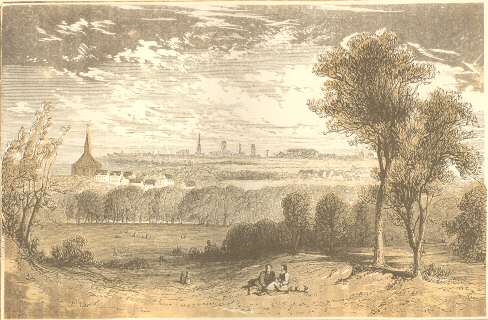
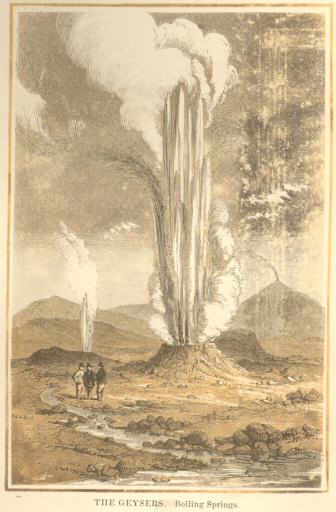
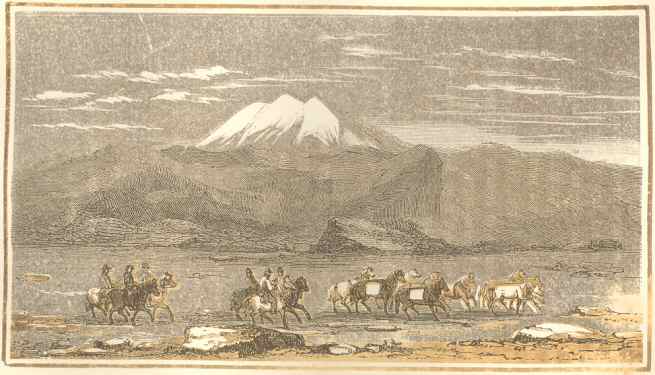
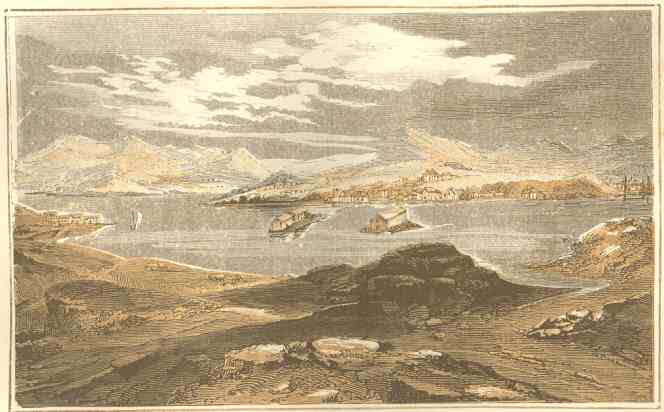
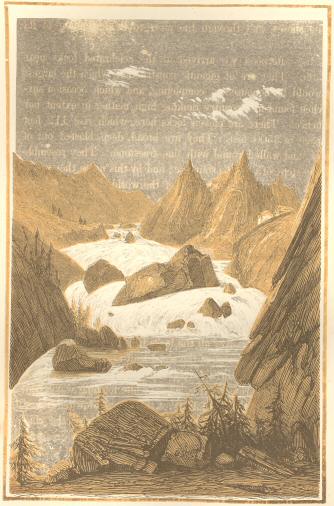
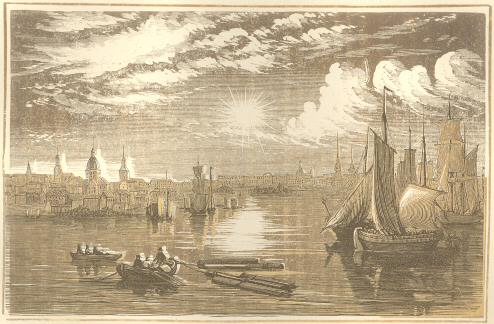
 Like
Like Dislike